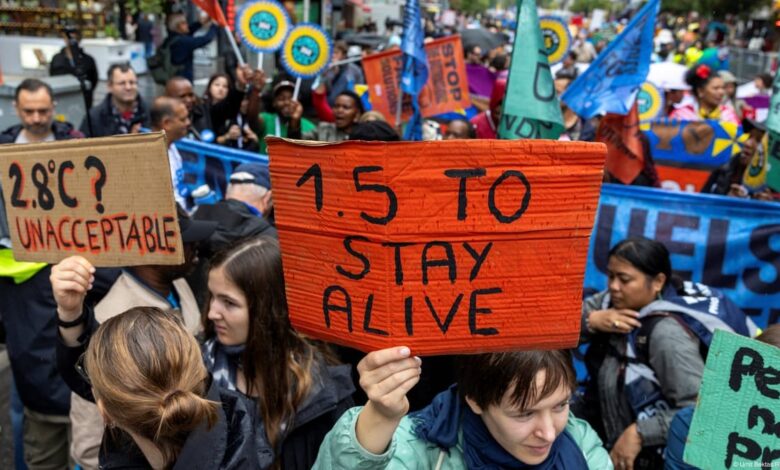
- Climate talks face pressure over fossil fuels, finance and global warming; activists demand stronger commitments as COP31 negotiations enter crucial phase
- With negotiations entering a crucial phase, the UN’s appeal for compromise and the growing pressure from environmental campaigners highlight the challenge facing governments of translating climate commitments into concrete action while balancing economic interests and geopolitical differences.
The United Nations has urged countries participating in the COP31 climate summit in Antalya, Turkey, to accelerate negotiations and overcome political differences, warning that delays and a lack of compromise could undermine efforts to reach an agreement to tackle global warming.
The appeal comes amid growing frustration among climate activists over the slow progress of negotiations and weakening government commitments to climate action.
Simon Stiell, executive secretary of the United Nations Framework Convention on Climate Change (UNFCCC), described reaching an agreement as difficult but essential, stressing that collective success would require compromise from all participating countries.
As negotiations enter their second week, Stiell urged delegates to address the most difficult issues without delay and avoid what he described as “tactical delays” that could prevent progress towards a meaningful climate deal.
More than 200 countries are represented at the summit in the Mediterranean city of Antalya, with the central objective of limiting global warming to well below 2 degrees Celsius above pre-industrial levels.
Outside the conference, thousands of environmental activists and civil society representatives from different countries marched through Antalya on Saturday, demanding stronger climate action, environmental protection and respect for human rights.
Organisers said tens of thousands participated in the demonstration, expressing frustration over the limited progress at the negotiations and what they described as the growing marginalisation of the climate crisis amid competing global priorities.
South African environmental activist Zaki Mamdoo told DW that the pursuit of profit at all costs continued to shape the global agenda, stressing the need for stronger public pressure to change the direction of international policies.
Luisa Neubauer, a leading organiser of Germany’s Fridays for Future movement, criticised the absence of German Chancellor Friedrich Merz and several other European leaders from the summit. She argued that meaningful solutions to global crises would remain out of reach without urgent action to address the destabilisation of the planet.
Turkish authorities allowed the demonstration to proceed despite restrictions on large public gatherings in the country. Alongside the march, hundreds of domestic and international civil society organisations also participated in a parallel People’s Climate Summit in Antalya.
Climate commitments face competing global pressures
The negotiations are taking place against a backdrop of economic and geopolitical challenges, including inflation, wars, industrial pressures and rising debt, which have increasingly pushed climate action down the priority lists of governments.
Several countries are reportedly reconsidering or weakening commitments to the clean energy transition and the financial support required to help developing nations adapt to climate change.
The United States has stayed away from the talks for the second consecutive year under President Donald Trump, who has dismissed climate change as a hoax and advocated continued use of fossil fuels.
Negotiators are also facing pressure from major oil and gas-producing countries to avoid imposing stricter targets for accelerating the phaseout of fossil fuels. The COP31 agenda includes mobilising finance and investment for climate action, reducing emissions of methane and other highly polluting gases, and strengthening food security.
These issues are considered essential to addressing the environmental and economic consequences of global warming, particularly in vulnerable developing countries.
Turkey pushes global electrification initiative
As host, Turkey is promoting an initiative to expand electrification worldwide. However, some environmental organisations have criticised the proposal for not placing sufficient emphasis on increasing electricity generation from renewable energy sources.
A United Nations report issued last month warned that the world is likely to exceed the 1.5-degree Celsius warming threshold within the next few years. The limit was established under the 2015 Paris Agreement at COP21 and represents a critical benchmark beyond which scientists expect increasingly severe consequences from climate change.
The COP31 summit is scheduled to continue until November 19. Australia’s Chris Bowen, president of negotiations at the conference, said the first draft of a proposed agreement was expected to emerge next week.
With negotiations entering a crucial phase, the UN’s appeal for compromise and the growing pressure from environmental campaigners highlight the challenge facing governments of translating climate commitments into concrete action while balancing economic interests and geopolitical differences.