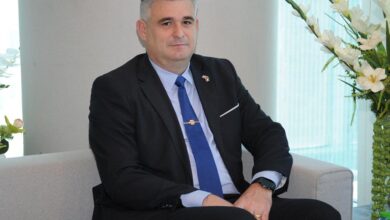
The five-year period of President Sadyr Japarov’s tenure has been marked by significant political and economic transformation for the Kyrgyz Republic. He assumed office in January 2021 amid domestic political turbulence and the effects of the COVID-19 pandemic.
The administration prioritized strengthening economic policy, increasing the state’s role in strategic sectors, and expanding the budget’s revenue base. These measures have created conditions for sustainable economic growth and enhanced financial stability.
The Kyrgyz economy showed a strong post-pandemic recovery as early as 2021-2022. Average annual GDP growth reached 8-9% in the following years, exceeding 10% in 2025. For a small open economy in Central Asia, these figures signal a transition from recovery to an accelerated growth phase.
Public finances improved significantly. Consolidated budget revenues increased severalfold between 2021 and 2025 due to more efficient tax and customs administration, digital fiscal control, and the gradual reduction of the shadow economy.
Importantly, this growth was achieved through better revenue collection rather than higher tax rates, allowing the government to expand investments and social spending without increasing the debt burden. The public debt-to-GDP ratio remained moderate at 36–40%, a level considered manageable by international financial institutions.
A major political achievement was the peaceful resolution of long-standing border negotiations with Tajikistan. This milestone strengthens regional stability, promotes cross-border trade, and facilitates joint infrastructure projects.
Energy and infrastructure modernization have been central to long-term development. Projects such as Kambar-Ata 1, small hydropower plants, and the modernization of energy capacities and road networks aim to reduce structural economic constraints.
Strategically, Kyrgyzstan seeks to eliminate seasonal electricity deficits while developing export-oriented energy potential. Large-scale energy projects will ensure reliable power for future investment, industrial, and infrastructure facilities.
International transport corridors have also advanced. A trilateral agreement on the “China-Kyrgyzstan-Uzbekistan” railway positions Kyrgyzstan at the center of the China-Europe route, linking the Middle and Southern Corridors and paving the way for future connections to Gulf countries. Digital logistics solutions and multimodal transport development further integrate Kyrgyzstan into global trade routes.
Investment climate improvements include simplified tax administration, expanded digital services, and active investment diplomacy. Attention focuses on attracting investments from the Eurasian Economic Union, China, and the Gulf states. In 2025, a new Law “On Investments in the Kyrgyz Republic” was adopted to ensure transparency, competitiveness, and stronger institutional guarantees. Joint investment and development funds facilitate collaboration between the state, banks, and private businesses.
Investment diplomacy has been key to promoting Kyrgyz economic interests. Over 200 investment and business forums have been held domestically and abroad, while foreign business delegations have visited Kyrgyzstan. Participation in international exhibitions supports export promotion and enhances tourism visibility. Trade houses and national pavilions in foreign countries and major commercial centers further these efforts.
Economic growth has spurred social and structural development. Residential construction expanded through state mortgage programs. Industrial and infrastructure projects – including the Uzbek-Kyrgyz Automobile Plant, facilities for irrigation equipment, logistics centers for coal, and a 400 MW solar plant in collaboration with Molin Energy Company Limited – have created jobs and boosted economic activity.
Tourism infrastructure has also developed, including the ski resorts “Ala-Too Resort,” “Baytik Mountain Resort,” “Chatkal Resort,” and the special financial-investment zone “Tamchy” on Issyk-Kul.
Rising household incomes, gradually falling unemployment, and increased regional investments reflect more balanced territorial development, with special attention to rural areas.
Overall, the past five years have been characterized by active economic policies, strengthened state roles in key sectors, infrastructure development, and expanded international initiatives. Continuing reforms, institutional modernization, and investment cooperation position Kyrgyzstan to consolidate progress and enhance its standing within Central Asia’s economic landscape.