By Reaven D”Souza
Executive Managing Editor
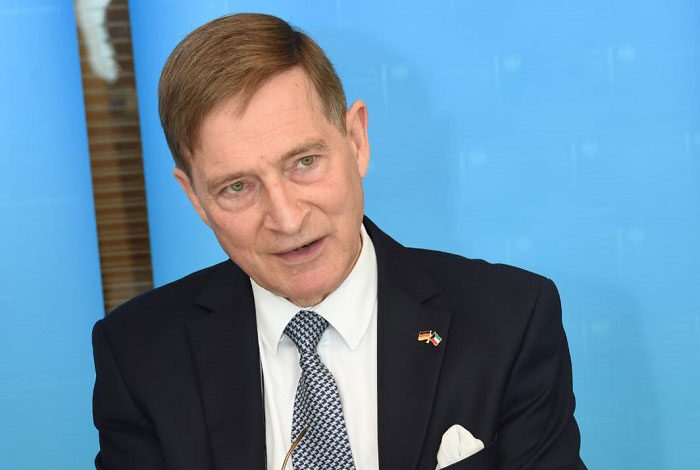
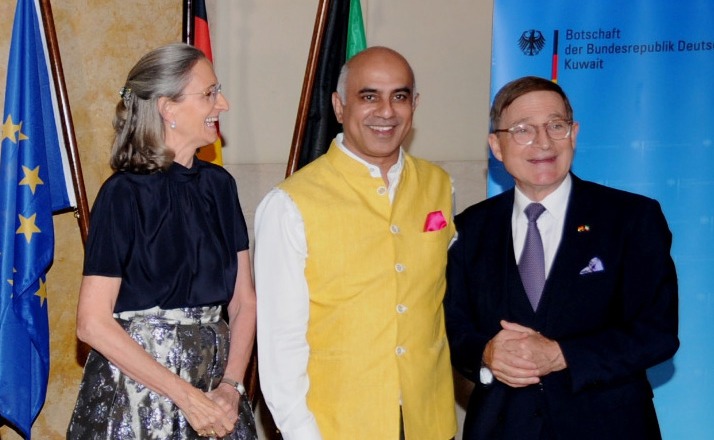
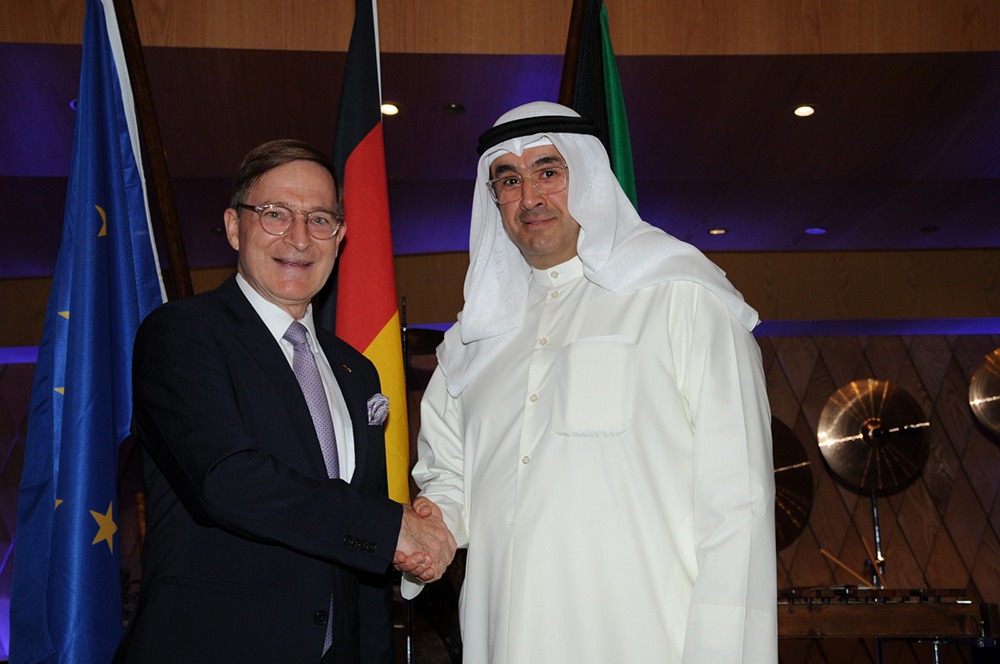
After serving as Ambassador of the Federal Republic of Germany to the State of Kuwait since 2022, H.E. Hans-Christian Freiherr von Reibnitz is preparing to bid farewell to a country that has left a lasting impression on both his professional and personal life. During his tenure, Germany and Kuwait navigated a period marked by regional uncertainties and global challenges, while continuing to strengthen cooperation across political, economic, cultural, and educational spheres.
In an exclusive interview with The Times Kuwait, Ambassador von Reibnitz reflects on his diplomatic journey, the future of Germany-Kuwait relations, the lessons he learned from the Gulf region, and the memories he and his family will cherish long after their departure.
A Tenure Defined by Friendship and Partnership
Looking back on his assignment in Kuwait, Ambassador von Reibnitz describes the experience as one that exceeded all expectations. “I was honoured to be entrusted with the task and thrilled by the prospect of representing my country in Kuwait,” he says. “Reality surpassed all my expectations when it came to the hospitality and friendliness of the Kuwaiti people.”
When asked about the achievements he values most from his years in Kuwait, the Ambassador points to both personal and diplomatic accomplishments.
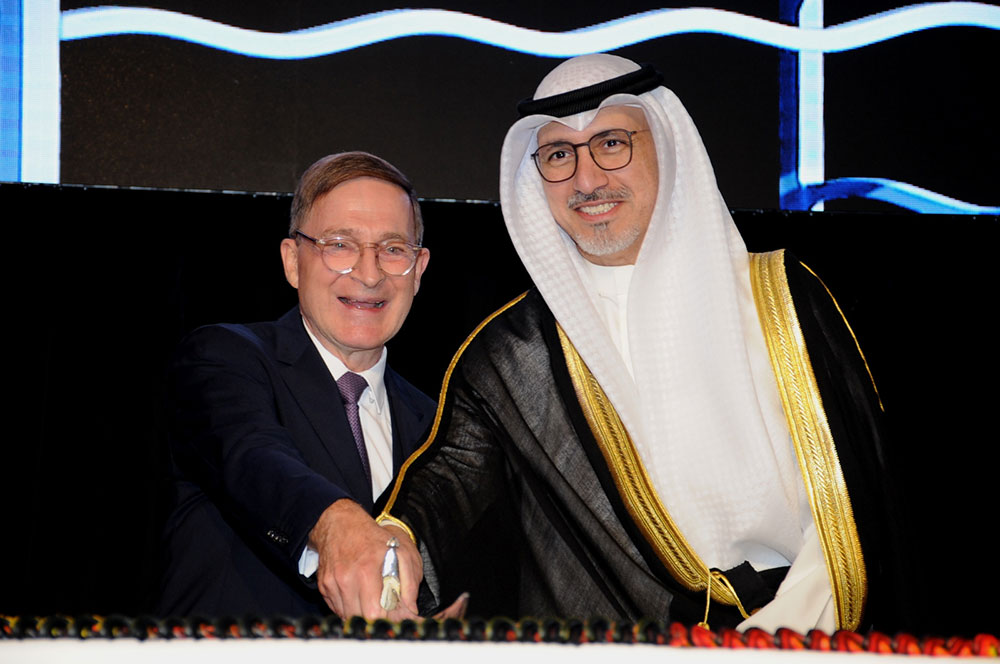
“Achievements always have an official and a private side,” he explains. “Privately, I consider my most significant achievement to have made friends in Kuwait, friendships that I can take along into my life after my active service.” On the official front, he highlights the strengthening of bilateral ties despite a challenging regional environment. “I think the most important achievement is that I was able to steer our bilateral relations through troubled times while strengthening them all along to reach a strategic dialogue level.”
Germany and Kuwait: A Relationship of Mutual Interest
Discussing Kuwait’s importance as a partner for Germany in the Gulf region, Ambassador von Reibnitz emphasizes that successful international relations are always reciprocal.
“The same question is valid also the other way round: How important is Germany for Kuwait in the Gulf region?” he notes. “Relations are always a two-way track. They can thrive when the interest in each other is corresponding.”
The Ambassador believes that Germany and Kuwait today have more opportunities for cooperation than ever before, particularly as both countries confront a rapidly changing geopolitical landscape. “The current crises in the region have put a very sudden end to many perceived certainties in both our countries both in political as well as economic terms,” he says.
While acknowledging that bilateral relations have experienced periods of both heightened and reduced engagement over the decades, he stresses that future cooperation matters most. “Looking to the future seems to me by far more important,” he explains. “Today we have more common interests to develop than ever before. Strengthening the rule of law both nationally and internationally, finding peaceful solutions to conflicts, and expanding our economic and cultural exchange would serve us both.”
Building Bridges Through Culture and Education
Ambassador von Reibnitz considers cultural and educational exchanges among the most important foundations of long-term bilateral relations. Every year, thousands of Kuwaitis travel to Germany for tourism, education, healthcare, and business, creating strong people-to-people connections that complement official diplomatic ties. “Cultural exchanges are essential for people to understand each other,” he says. Although regional developments since 2024 limited opportunities for greater cultural engagement, the Ambassador remains appreciative of the institutions that helped foster dialogue between the two nations.
“I would have loved to do more in this respect during my tenure, but for the restrictions following regional developments since 2024, the possibilities were limited.” He expressed particular gratitude to Dar Al Athar Al Islamiyyah and the National Council for Culture, Arts and Literature for their efforts in promoting cultural understanding and cooperation. “I am extremely grateful for the opportunities offered by Dar Al Athar Al Islamiyyah and the National Council of Culture, Arts and Literature and would wish for a substantial increase in educational exchanges.”
Lessons from a Life in Diplomacy
Before arriving in Kuwait, Ambassador von Reibnitz served in a variety of distinguished diplomatic assignments, including postings in Oman, Saudi Arabia, Afghanistan, and NATO Headquarters. Each assignment, he says, brought unique experiences and challenges.
“During my career I was blessed with some highly interesting postings and tasks that came along with very different challenges and opportunities for the family,” he reflects. “Looking back, they are all singular and incomparable.”
Yet Kuwait holds a special place in his memories.
“Kuwait is for sure outstanding for the openness of its people and the warm and uncomplicated hospitality many Kuwaiti families extended to me and my family during our stay.”
The Ambassador and his family immersed themselves in many aspects of Kuwaiti social life, gaining first-hand experience of traditions that are central to the country’s cultural identity.
“We learned so many things, in particular about the different occasions to meet in Diwaniyas, Ghabkas, and Kashtas,” he says. “We are grateful for every single moment they have offered us to spend with them.”
What the Arab World Has Taught Him
Having spent many years serving across the Gulf and the wider Arab world, Ambassador von Reibnitz identifies one enduring lesson that continues to inspire him.
“The capability to endure uncertainty,” he says.
“To deal with situations that are not decided, with strategic patience, and to sit in Shura until the time is ripe.”
The observation reflects his appreciation for the consultative traditions and long-term perspective that characterize many societies in the region.
 Asked about the most valuable lesson from a lifetime in diplomacy, the Ambassador offers a simple yet profound answer.
“To listen, But not only to listen, but to listen carefully.”
Among Kuwait’s many landmarks and cultural treasures, one destination left a particularly deep impression on him. “Apart from the main points of attraction, such as the old town around Mubarakiya, the Kuwait Towers, Salam Palace, and the cultural centres, I was fascinated by Failaka Island, which I visited in all seasons.” The island’s rich historical significance and complex legacy resonated strongly with him. “The wealth of its history, the tragedy of its population after the invasion, and the uncertainty of its future development have left me marked forever.”
A Family Enriched by Kuwait
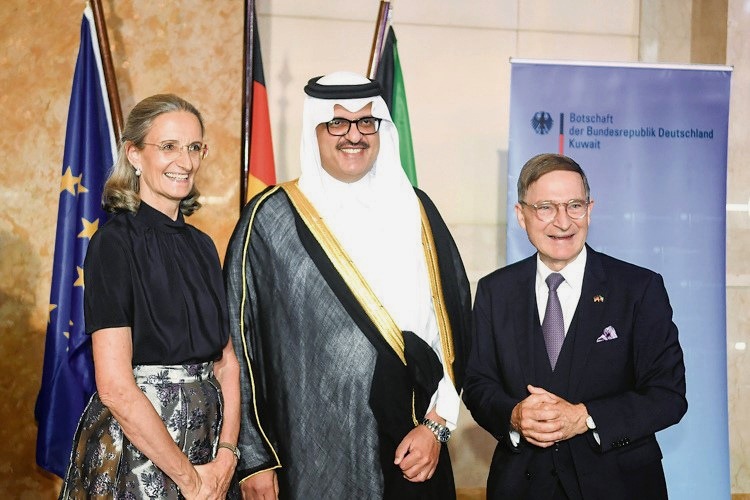
For Ambassador von Reibnitz and his wife, Mrs. Ina Freifrau von Reibnitz, Kuwait became much more than a diplomatic posting. Their years in the country were filled with meaningful personal encounters and experiences that enriched their understanding of Kuwaiti society. “Our experience has been full of enriching encounters with people from all walks of life,” he says.
Describing Kuwait as “lively and diverse,” he expresses hope that the qualities that make the country unique will continue to flourish in the years ahead. “We pray that these assets of Kuwaiti society may persist.” There are also some everyday comforts that the family will miss. “And we will miss the daily sunshine and the cozy warmth of it,” he says with a smile.
A Friend of Kuwait
As his diplomatic mission comes to an end, Ambassador von Reibnitz hopes that his years in Kuwait will be remembered not by titles or achievements, but by something far more personal. “A friend,” he says. “Nothing more and nothing less.”
It is a sentiment that encapsulates the relationships he built during his tenure and the affection he developed for the country and its people. In his final message to Kuwait, the Ambassador leaves behind words of optimism, partnership, and hope:
“The future is yours to shape. It will be better if we shape it together in peace.”