Harbajan Singh Vedi: The Man Who Chose to Stay When Thousands Were Leaving
How one community leader helped steer the largest civilian evacuation in history during Kuwait’s darkest days
The Times Kuwait Report
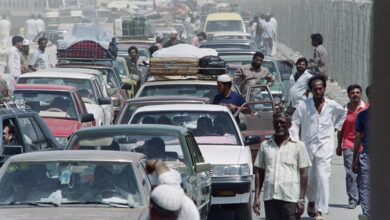
When Iraqi forces invaded Kuwait in the early hours of August 2, 1990, panic swept across the country. Nearly 170,000 Indians the largest expatriate community in Kuwait at the time found themselves trapped in an occupied nation, cut off from normal communication, uncertain of their future, and fearful for their lives.
As thousands searched desperately for a way out, one man made a decision that would define his legacy forever.
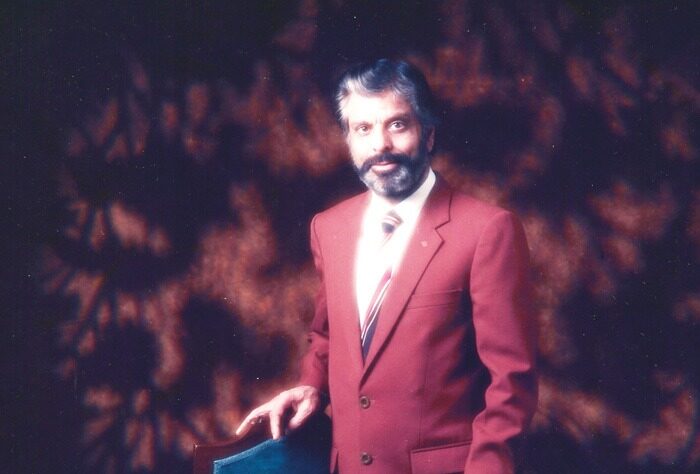
Harbajan Singh Vedi chose to stay.
At a time when many were seeking safety, Vedi remained in occupied Kuwait, determined to help fellow Indians navigate one of the gravest humanitarian crises in the Gulf’s modern history. His decision was not driven by politics or personal gain, but by an unwavering sense of responsibility to the community he had served for decades.
Within days of the invasion, community leaders came together to establish the Indian Citizens Committee (ICC), a volunteer body formed to assist the tens of thousands of stranded Indians. The committee initially comprised 51 members, with Vedi serving as Convenor and Secretary for Coordination. It was entrusted with an enormous task: to organize relief, restore communication, and ultimately help facilitate the safe evacuation of an entire community.
The circumstances could hardly have been more daunting.
Law and order had collapsed. Communication networks were severely disrupted. Banking services had ceased functioning, fuel was scarce, and food supplies were becoming increasingly difficult to obtain. Many expatriates had lost contact with their families in India, while countless others had been displaced from their homes by the fighting and occupation.

Operating under these conditions required courage, improvisation and extraordinary resolve. Working alongside dedicated volunteers, Vedi helped transform the Indian School in Salmiya into the operational heart of the community’s relief efforts. The school became far more than an educational institution it evolved into a shelter, information centre, medical assistance point and coordination hub for thousands of distressed Indians seeking guidance and support.
The committee organized food distribution, arranged temporary accommodation, assisted families separated during the invasion and worked tirelessly to reconnect stranded expatriates with their relatives. Volunteers risked arrest and harassment while travelling across occupied Kuwait to identify those in need and deliver essential assistance.
Yet humanitarian relief was only the beginning.
As it became evident that a prolonged occupation was inevitable, attention turned to an even greater challenge—bringing tens of thousands of Indians home safely.
Working closely with officials of the Indian Embassy and the Government of India, the Indian Citizens Committee became a crucial bridge between stranded expatriates and the authorities coordinating the evacuation. Vedi’s organizational skills and leadership helped bring structure to what could easily have descended into chaos.
The evacuation itself was unprecedented.
With Kuwait’s airport closed and commercial flights suspended, evacuees first had to travel by road through occupied territory into Iraq before crossing into Jordan, where Air India operated one of the largest humanitarian airlift operations ever undertaken. Convoys carrying thousands of men, women and children departed almost daily under difficult and often uncertain conditions.
The logistical challenge was immense.
Travel documents had to be prepared, passenger manifests coordinated, transportation arranged and vulnerable families given priority. Every convoy required meticulous planning and constant communication between volunteers inside Kuwait, Indian officials and transport operators outside the country.
Despite the dangers, the operation continued.

By mid-November 1990, more than 143,000 Indians had been safely repatriated from Kuwait through coordinated land, sea and air operations, while Air India went on to evacuate more than 150,000 people from Amman to India in what would later be recognized as the world’s largest civilian air evacuation.
What made Vedi’s contribution particularly remarkable was his decision to remain behind even after many others had left.
As the months passed, the original 51-member committee gradually diminished as volunteers departed with their families. Only a handful, including Vedi, continued operating inside occupied Kuwait until substantial numbers of Indians had been evacuated. Their commitment ensured that relief operations continued during some of the occupation’s most difficult weeks.
Those who worked alongside him recall a leader who remained calm under pressure, made decisions quickly and placed the welfare of others above his own safety. For countless Indians stranded during the occupation, the Indian Citizens Committee became a source of reassurance, and Vedi its steady guiding force.
His efforts also reflected something deeper than community leadership.
Having spent much of his life in Kuwait and enjoying a close relationship with the country and its people, Vedi viewed Kuwait’s tragedy as his own. The suffering of Kuwaitis during the occupation profoundly affected him, and he believed that assisting fellow expatriates was both a humanitarian obligation and a way of standing in solidarity with the nation that had become his second home.
The evacuation of Indians from Kuwait has since entered history as one of the greatest humanitarian operations ever undertaken. While governments, diplomats, Air India crews and countless volunteers all played indispensable roles, the success of the mission also rested on community leaders who refused to abandon those in need.
Among them, Harbajan Singh Vedi occupies a special place.
His legacy is not measured in buildings designed or businesses established, but in the thousands of lives that found hope amid despair because he chose duty over safety. During Kuwait’s darkest chapter, when fear and uncertainty gripped an entire nation, H.S. Vedi stood alongside fellow volunteers to ensure that humanity, compassion and courage prevailed.
More than three decades later, his story remains inseparable from the history of the 1990 Iraqi invasion not only as an inspiring chapter in the history of the Indian community, but also as a testament to the enduring bonds of friendship between India and Kuwait that were strengthened in one of history’s most difficult moments.
Certainly. Since Mathunny “Sunny” Mathews deserves to be remembered in his own right—and not simply as the inspiration behind Airlift—the article should focus on his humanitarian leadership during the Iraqi occupation, his role in the Indian Citizens Committee (ICC), and his efforts in organizing what became the world’s largest civilian evacuation.
Here’s a The Times Kuwait-style feature that complements the H.S. Vedi article while highlighting Sunny Mathews’ distinct contribution.