Gulf tourism at a crossroads
Why the next chapter must be about people, not just places

The Times Kuwait Report
For years, the Gulf’s tourism story seemed almost unstoppable. New hotels appeared almost overnight. Airports connected the region to virtually every corner of the world. Theme parks, museums, cultural districts and sporting venues transformed the visitor experience. Cities that were once primarily known as business or transit hubs began competing for tourists, families, events and international travellers.
Then came 2026
The regional conflict disrupted flights, affected airspace, forced changes to travel plans and shook visitor confidence across the Gulf. Hotels felt the impact. Airlines had to adjust operations. Events were postponed or reconsidered. Travellers who had planned holidays months in advance suddenly found themselves asking a question that no tourism campaign can answer on its own:
Is it safe to travel?
The shock was a reminder that tourism is built on something more fragile than airports, hotels and attractions confidence. But it has also revealed something encouraging. The Gulf tourism industry is proving capable of adapting.
The recovery is already underway, and it is revealing a new tourism landscape in which resilience, diversification and the quality of the visitor experience may matter as much as the number of people arriving.
Tourism is now an economic pillar
The scale of the Gulf’s tourism ambitions can be seen in the numbers. The six GCC countries welcomed more than 75 million inbound tourists in 2025, while tourism expenditure exceeded $131 billion. Intra-GCC tourism accounted for more than 20 million travellers, while tourism’s direct and indirect contribution to the regional economy reached around $254 billion, or 11.4 percent of combined GDP.
These are not simply tourism figures. Behind every visitor is a hotel room occupied, a restaurant table filled, a taxi journey made, a ticket purchased and a local business earning income. Tourism supports airlines, hotels, restaurants, retailers, transport companies, entertainment venues and thousands of jobs. That is why the disruption was felt far beyond the hotel sector. And that is also why the recovery matters so much.
One Gulf, different tourism stories
The disruption has also demonstrated that there is no single Gulf tourism model. Saudi Arabia has the strength of religious tourism alongside a rapidly expanding leisure and entertainment sector.
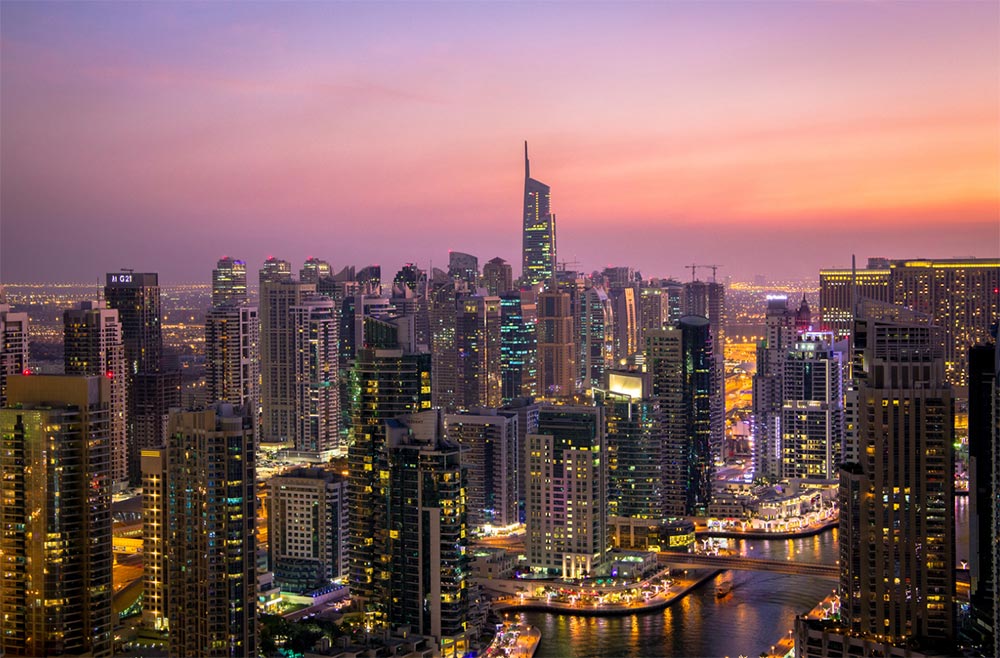
Dubai has built one of the world’s most recognisable city tourism brands around aviation, hospitality, shopping, entertainment and events.
Abu Dhabi has taken a more layered approach, combining culture, family entertainment, luxury hospitality, business tourism, sport and major events.
Qatar has used sport and events to strengthen its international tourism profile.
Oman has built around nature, heritage and authenticity.
Bahrain continues to benefit from its accessibility and short-break appeal.
And Kuwait has something different again: identity.
The future may therefore not belong to the destination that builds the biggest attraction. It may belong to the destination that gives visitors the most compelling reason to experience it.
Dubai shows the power of recovery
Few places illustrate the Gulf’s ability to bounce back better than Dubai. Hotel occupancy fell sharply during the worst phase of the disruption, reaching around 36 percent in March 2026.
By August, it had recovered to 66 percent. Dubai welcomed approximately 869,000 international overnight visitors in August alone, taking international visitation during the first eight months of the year to around 6.97 million.
The recovery did not happen by accident. Government agencies, airlines, hotels and tourism authorities worked together to restore confidence and connectivity.
A AED2.5 billion support package was introduced to assist tourism, hospitality and entertainment businesses, while airlines rebuilt capacity and tourism authorities intensified international promotion.
Tourism resilience cannot be left to hotels alone. It requires government, aviation, hospitality, transport and the private sector to move in the same direction.
Abu Dhabi’s quieter success story
But if Dubai has become the Gulf’s most famous tourism brand, Abu Dhabi offers perhaps one of the region’s most interesting lessons in how to build a destination without simply copying its neighbour. Abu Dhabi has steadily developed a tourism proposition based on culture, family entertainment, business events, sport, beaches, heritage and luxury hospitality.
The result is beginning to speak for itself. Abu Dhabi welcomed a record 26.6 million visitors in 2025, while hotel revenues rose 19.5 percent to AED9.1 billion. MICE delegates increased 40 percent to 2.2 million, while attendance at culture and leisure events rose 20 percent to 4.2 million.
The important point is not simply the number of visitors. It is the variety of reasons they have to come. A family can spend a day at Yas Island. A culture enthusiast can visit Louvre Abu Dhabi. A business traveller can attend a major international conference. A sports fan can come for a Formula 1 weekend. Another visitor may simply want the beaches, restaurants, museums and heritage experiences.
Saudi Arabia: diversification as protection
Saudi Arabia offers another important lesson. Its tourism strategy is built on several pillars rather than a single product. Religious tourism remains fundamental, but alongside it the Kingdom is developing heritage destinations, entertainment, sporting events, luxury resorts, cultural attractions and business tourism.
That diversity has provided a degree of resilience. The lesson is not that every Gulf country should follow Saudi Arabia’s model. It is that diversification gives tourism economies a shock absorber.
Qatar: turning an event into a destination
Qatar faces a different challenge. The 2022 FIFA World Cup gave the country extraordinary international visibility. But a major sporting event lasts weeks. A tour ism industry must last decades. Qatar has therefore been working to convert its event infrastructure and international profile into a broader tourism proposition built around sport, culture, business events and leisure.
Its push for greater GCC tourism integration is another part of that strategy. The question is no longer simply: How do we bring people here for an event? It is: What will make them come back after the event?
Kuwait should not try to become another Dubai
This is perhaps the most important lesson for Kuwait. Kuwait does not need to become another Dubai. It should not try. Dubai’s strength is global connectivity, scale, shopping, entertainment and a carefully developed international city brand.
Abu Dhabi has carved out a different identity through culture, family entertainment and major events. Saudi Arabia is building at enormous scale. Kuwait’s opportunity lies elsewhere. It lies in being unmistakably Kuwait. Kuwait has a story. It has its relationship with the sea. It has a pearl-diving heritage. It has traditional architecture and souqs. It has museums and cultural institutions. It has food. It has a distinctive social culture.
It has the story of a trading nation that built itself into a modern state. And it has the remarkable story of survival, liberation and reconstruction. These are not simply historical facts. They can become experiences.
The GCC should sell one region, not six countries
There is also a much bigger opportunity. The Gulf could increasingly be marketed as one interconnected tourism region. Imagine a visitor from India, Europe or China spending two weeks travelling through the GCC.
Three days in Kuwait. Four days in Saudi Arabia. Two days in Bahrain. Three days in Oman. Three days in the UAE. A sporting event in Qatar.
The visitor experiences different cultures, landscapes and lifestyles. The region gets a longer-staying visitor. Airlines, hotels, restaurants, retailers and attractions all benefit.
The GCC has already been moving towards stronger joint tourism promotion, intra-GCC travel, better data, digital transformation and coordinated recovery planning. The future could therefore be less about competition between Gulf destinations and more about complementarity.
But the Gulf has another problem: too many rooms?
The region is continuing to build hotels. Nearly 126,000 additional hotel rooms are expected to enter the GCC market by 2030, taking total supply to around 616,000 rooms.
That raises an uncomfortable question: Who will fill them? The answer cannot simply be more hotel rooms. The Gulf needs more reasons to travel. More festivals. More sporting events. More cultural programmes. More family attractions.
More business conferences. More regional tourism. More experiences that encourage visitors to stay for a week rather than a weekend. The future is not about counting arrivals alone. It is about value per visitor.
The traveller emerging from 2026 is likely to be more cautious. People have seen how quickly flights can be disrupted and how geopolitical developments can change travel plans. They want flexibility. Information, reassurance, They want to know what happens if their flight is cancelled. They want destinations that communicate quickly and honestly.
That means crisis communication is becoming part of the tourism product. So is safety, flexibility and increasingly, so is trust.
Despite the disruption, the fundamentals remain strong. The region has world-class airports and airlines, modern infrastructure, high-quality hotels, major investment capacity, sophisticated digital systems and rapidly expanding cultural and entertainment sectors.
What has changed is the understanding of what tourism resilience really means. It does not mean that disruption will never happen. It means that when disruption happens, the system can respond. Hotels can adapt. Airlines can restore connectivity. Governments can support businesses. Tourism authorities can rebuild confidence. Visitors can be reassured. And the industry can recover.
For years, Gulf destinations often competed for the same international visitors. That competition helped raise standards. But the next phase could be different. Joint tourism campaigns, Shared itineraries, Simpler visa arrangements, Cross-border packages, better regional transport and Coordinated crisis communication.
A unified tourism identity. These could turn the GCC into something more powerful than six successful tourism markets. It could become one of the world’s most diverse tourism regions.
The Gulf has survived the immediate tourism shock. The harder test is now beginning. Can destinations rebuild demand without depending heavily on discounts?
Can the region fill the enormous number of new hotel rooms coming onto the market? Can it persuade international travellers that the Gulf remains a safe and attractive destination? Can visitors be encouraged to stay longer? Can the GCC persuade travellers to experience several countries rather than just one?
And can Kuwait find its own distinctive place in that story? The answers may determine whether 2026 is remembered simply as the year Gulf tourism stumbled or the year it grew up.
A new tourism map
The old Gulf tourism map was built around individual stars: Dubai, Abu Dhabi, Doha, Riyadh, Muscat, Manama and Kuwait City. The emerging map could look very different. It could look like a constellation. Each destination different. Each destination stronger because the others exist. The traveller may no longer ask: “Which Gulf country should I visit?”
The question could become: “How much of the Gulf can I experience?”
For Kuwait, that represents an enormous opportunity. It does not have to become the Gulf’s biggest tourism destination. It simply has to become unmistakably Kuwait.
Because when people return home, they rarely remember the number of hotel rooms or the size of an investment. They remember the food , the people, the conversation, the unexpected discovery, the story they were told.
And perhaps that is where the Gulf’s next tourism revolution will begin.