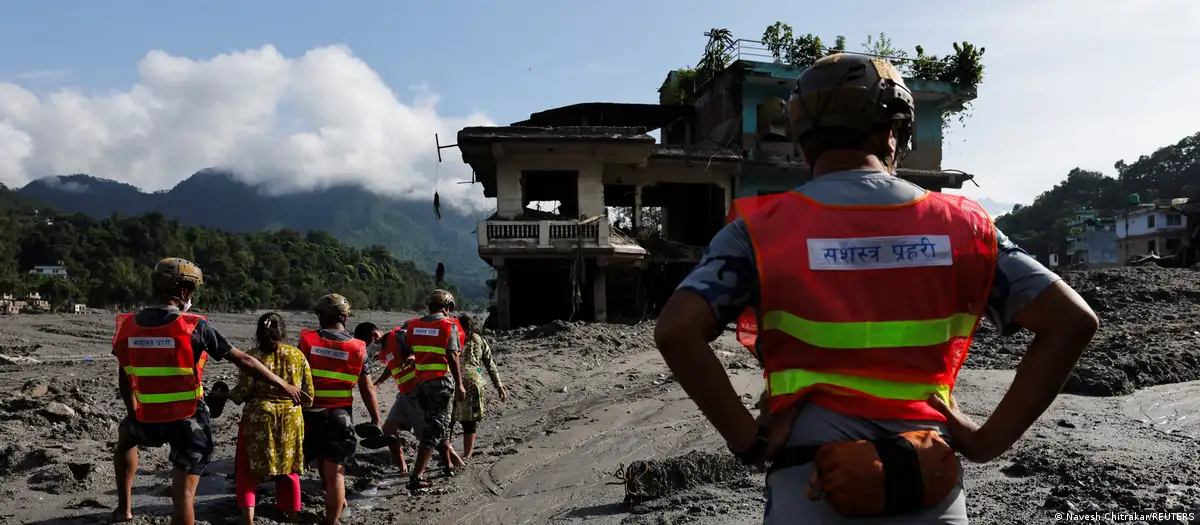
A new lake formed by a landslide on the Nepal-China border began overflowing on Friday, raising fears of another devastating flood in areas already badly hit by this week’s disaster. Authorities said the rising water forced rescue teams to temporarily halt operations, while residents in Nepal’s worst-hit Rasuwa district fled toward higher ground as river levels increased.

The danger also prompted Chinese rescue personnel to withdraw to a safe area, according to state broadcaster CCTV. Nepalese authorities temporarily suspended rescue operations for at least 90 minutes. The new lake was created when debris from the earlier glacier collapse and massive flood formed a natural dam upstream, adding a potentially dangerous second threat while rescuers continue searching for hundreds of missing people.

The scale of the disaster continues to grow. Nepal’s death toll rose to 538 on Friday, from 390 a day earlier, while China increased its reported deaths in Tibet from three to five. Across the two countries, 977 people remain missing, including as many as 517 foreign nationals from more than 30 countries.

The International Red Cross said more than 93,000 people have been directly affected and urgently need humanitarian assistance. The WHO also warned that displacement, overcrowding and damage to water, sanitation and health services could increase the risk of infectious diseases.
China said the newly formed lake contained about 2 million cubic meters of water as of Thursday and could receive another 3 million cubic meters over the following three days, with peak flow expected around September 1. The lake is about 150 meters long and 40-50 meters deep, and lies more than 10 kilometers from Gyirong Port, the border crossing destroyed by the initial flood, at an elevation about 1,000 meters higher.
Chinese engineers are studying the site and considering a drainage channel to lower the lake’s water level, but continued rain through the coming week could further destabilize the surrounding terrain. Chinese state media later reported that professional rescue teams had reached the main disaster zone.