













Cabinet approved draft law to reorganize judiciary, amend Nationality Law and economic court reforms
- Person who acquires Kuwaiti nationality through naturalization will not have the right to vote, stand for election or be appointed to any parliamentary body.
The Cabinet approved a package of legislative amendments covering the Kuwaiti Nationality Law, the organization of the judiciary, economic courts and the ranks of judges and members of the Public Prosecution, as part of efforts to update legislation and strengthen the efficiency of the justice system.
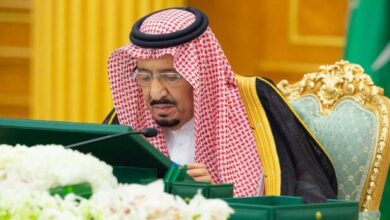
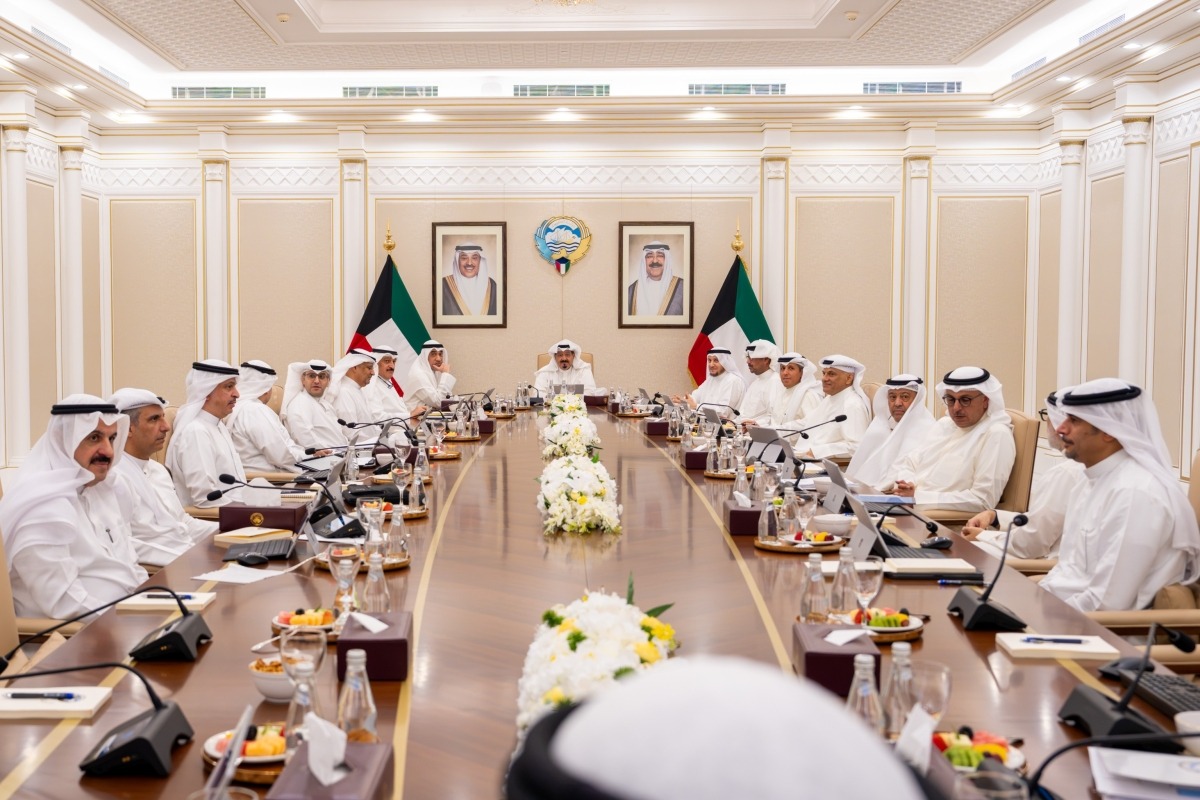
The decisions were taken during the Cabinet meeting chaired by His Highness Prime Minister Sheikh Ahmed Al-Abdullah. The Cabinet was also informed of His Highness the Amir Sheikh Mishal Al-Ahmad Al-Jaber Al-Sabah’s approval to sponsor the opening of a number of new health projects in Kuwait and to assign the Prime Minister to attend the opening as his representative.

Amendments to the Citizenship Law
The Cabinet approved a draft decree-law amending provisions of Amiri Decree No. 15 of 1959 concerning the Kuwaiti Nationality Law and referred it to His Highness the Amir.
Under the amendment to Article 14, if a person deliberately adds to his nationality file, or to the nationality file of another person, someone who is not his child or descendant, and this is established through an investigation by the Supreme Committee for Investigating Kuwaiti Nationality or through a final judicial ruling, the nationality of any of his children or descendants may be revoked if it is proven that they were aware of the matter.
The amendments also replace Article 19, providing that the Minister of Interior shall issue every Kuwaiti citizen with a certificate of Kuwaiti citizenship after verifying its validity in accordance with the law. The certificate will be issued electronically, with the Minister empowered to issue a decision setting out the technical and technological rules and requirements for its issuance, storage and use, as well as procedures for verifying its authenticity and cancelling or suspending its use.
Another amendment adds a new paragraph to Article 7, stipulating that persons who acquire Kuwaiti nationality through naturalization will not have the right to vote, stand for election or be appointed to any parliamentary body. The electronic citizenship certificate will have the same legal validity and effects as the paper nationality certificate and will replace it for the purposes of applicable laws, decrees and regulations.
Reorganizing the judiciary
The Cabinet also approved a draft decree-law on the organization of the judiciary aimed at developing the judicial system, raising the efficiency of judicial work and strengthening guarantees for the independence and integrity of the judiciary.
The draft updates the rules governing the selection, appointment and promotion of members of the judiciary and develops the powers of the Supreme Judicial Council and the rules governing its work.
It also strengthens oversight, accountability and litigation guarantees by developing rules for judicial inspection, accountability and discipline, while enhancing the rights of litigants and updating provisions governing the work and powers of the Public Prosecution.
The draft further strengthens the Public Prosecution’s role in monitoring places of detention and establishes an integrated mechanism for unifying the judicial principles of the Court of Cassation, with the aim of ensuring greater stability in legal principles and consistency in judicial rulings.
It also regulates trials and judicial procedures conducted through electronic means in line with legislative and technological developments and efforts to improve the efficiency of the justice system.
The Cabinet submitted the draft decree-law on the organization of the judiciary to His Highness the Emir.
The Cabinet also approved a draft decree replacing the table attached to Decree No. 126 of 2018 concerning the minimum periods required for judges and members of the Public Prosecution to remain in their respective ranks and submitted it to His Highness the Amir.
Economic courts to speed up dispute resolution
The Cabinet approved a draft decree-law establishing economic courts to keep pace with modern global and regional legislation and make greater use of advanced technological systems in the administration of justice. The proposed law seeks to balance the right to defence with the need for faster adjudication of cases through a number of measures.
It provides for the allocation of an economic circuit and a judge to handle the cases assigned to it, with the allocation extending to the expert appointed to examine disputes before the court and the execution judge responsible for enforcing its rulings.
The legislation also seeks to simplify litigation procedures by reducing certain procedural deadlines, preparing cases before they are referred to the competent department, notifying litigants of the case and allowing them to exchange memoranda and documents in advance.
Remote litigation will also be activated while ensuring the principle of confrontation between litigants and protecting the right to defence. The proposed legislation further provides for greater legislative flexibility to avoid rigidity in legal texts, which was identified as one of the major shortcomings of legislation. The Cabinet submitted the draft decree-law establishing economic departments to His Highness the Amir.
October 1 opening planned for Al Shaheed Park Phase Three
The Cabinet reviewed a visual presentation by the Undersecretary of the Amiri Diwan, Sheikh Abdulaziz Al-Mishal, and the committee responsible for managing and supervising the third phase of Al Shaheed Park regarding the final stages of the project’s operation and its scheduled opening to visitors on Thursday, October 1.
A carnival will be held to mark the opening, featuring entertainment activities, musical groups, light shows and programmes for families and children.
The project is envisioned as an integrated park featuring a range of sports and entertainment facilities. Its land covers 243,605 square metres, with a total building area of 203,162 square metres, a green area of 190,661 square metres and an investment area of 16,232 square metres.
The project includes the Al-Sur Theater building, comprising a Roman theatre, outdoor cinema, a multipurpose hall, a women’s health club, cafes and shops.
The sports building includes the upper garden, an ice-skating rink museum, an ice-skating rink, a snow games hall, an electric car racing circuit and a flying game. Outdoor facilities include a mosque, open-air theatre, outdoor games, a running track and fountains, along with parking facilities for 2,388 vehicles.