Hopes for a swift peace agreement between the United States and Iran are fading after US President Donald Trump warned that the ceasefire was “on the verge of collapse,” while Tehran threatened to raise uranium enrichment levels to 90 percent and broadened its definition of the Strait of Hormuz into what it described as a “wide operational area.”
Despite reiterating that Washington was “in no hurry” to reach an agreement with Tehran, CNN quoted sources as saying Trump is increasingly considering the resumption of major combat operations and has grown impatient over the continued disruption and closure of the Strait of Hormuz.
Speaking on Tuesday, Trump said his administration had maintained direct contact with Iranian officials, adding: “We need to move quickly toward an agreement with Iran, but we will not rush.”
The US president also referred to Iran’s underground stockpile of highly enriched uranium, saying Washington would otherwise face “nuclear dust.”
When asked whether he genuinely believed Tehran could be prevented from developing a nuclear bomb, Trump replied: “One hundred percent. They will stop, and they have told me so.”
He stressed that the United States could never permit Iran to possess a nuclear weapon, warning: “They will use it.”
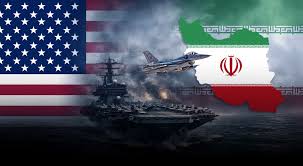
At the same time, Trump posted a series of messages on his Truth Social platform, including an image showing an American warplane targeting Iranian speedboats in the Strait of Hormuz, alongside another image depicting an American vessel being attacked by Iranian aircraft.
Earlier this week, Trump compared the fragile ceasefire to “a doctor walking into a room and saying your loved one has a one percent chance of survival.”
Meanwhile, Acting Pentagon Comptroller Joel Hearst informed US lawmakers that the ongoing conflict has so far cost Washington nearly $29 billion, an increase of $4 billion from estimates released late last month.
On the Iranian side, Parliament Speaker and chief negotiator Mohammad Baqer Qalibaf said there was “no alternative” to accepting what he described as the legitimate rights of the Iranian people under Tehran’s proposed 14-point framework.
Writing on X, Qalibaf warned that any alternative approach would lead only to “failure after failure,” adding that delays would increase the burden on American taxpayers.
Ebrahim Rezaei, spokesman for Parliament’s National Security and Foreign Policy Committee, warned that Iran could enrich uranium to 90 percent purity, a level associated with weapons-grade material, if the country were subjected to further attacks.
He wrote on X that enrichment to 90 percent “may be one of Iran’s available options” in the event of renewed aggression, noting that Parliament would discuss the issue.
At sea, Iran’s Islamic Revolutionary Guard Corps announced a significant expansion of its operational view of the Strait of Hormuz, reports Al-Rai daily.
According to Iran’s Fars News Agency, Revolutionary Guard Navy deputy political commander Mohammad Akbarzadeh said the strait was no longer viewed as a narrow maritime corridor surrounding Hormuz and Hengam islands.
Instead, he described it as a vast strategic zone extending from the city of Jask in eastern Iran to Siri Island in the west, calling it a “large operational area.”
Iranian media outlets Fars and Tasnim reported that the operational width of the strait has now effectively expanded from between 20 and 30 miles to between 200 and 300 miles, forming what officials described as a “complete crescent.”
Iranian state media also reported that the Revolutionary Guard carried out military drills in Tehran involving Basij forces in preparation for any possible future confrontation.
Meanwhile, Saudi Arabia strongly condemned what it described as the “treacherous targeting” of the territories and territorial waters of the United Arab Emirates, Qatar and Kuwait.
Riyadh reaffirmed its support for Gulf states and for all measures being taken to safeguard their security, sovereignty and regional stability.