WISH 2026 opens in Qatar, placing the future of global healthcare in the spotlight
Doha hosts world leaders, scientists and healthcare innovators to explore longevity, artificial intelligence and the next era of medical innovation
The Times Kuwait Report
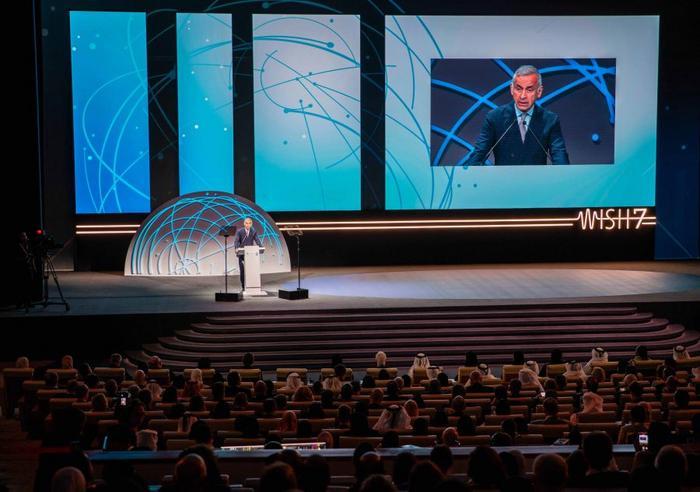
Qatar has opened the eighth edition of the World Innovation Summit for Health (WISH 2026), bringing together leading scientists, policymakers, healthcare professionals, researchers and innovators from around the world to address some of the most pressing challenges shaping the future of global healthcare.
Taking place on November 29–30 at the Qatar National Convention Centre (QNCC), the two-day international summit is organised by Qatar Foundation (QF), with the Ministry of Public Health (MoPH) serving as its strategic partner.
Held under the theme ‘The New Health Span’, this year’s summit moves beyond the traditional focus on extending human lifespan to examine how scientific discoveries, medical innovation and forward-looking health policies can help people live longer, healthier and more productive lives.
The opening ceremony on Sunday brought together prominent Qatari leaders and international healthcare experts, including Her Excellency Sheikha Hind bint Hamad Al Thani, Vice-Chairperson of Qatar Foundation, and His Excellency Mansoor bin Ebrahim bin Saad Al Mahmoud, Minister of Public Health. Professor the Lord Ara Darzi of Denham, Executive Chair of WISH, also addressed the gathering.
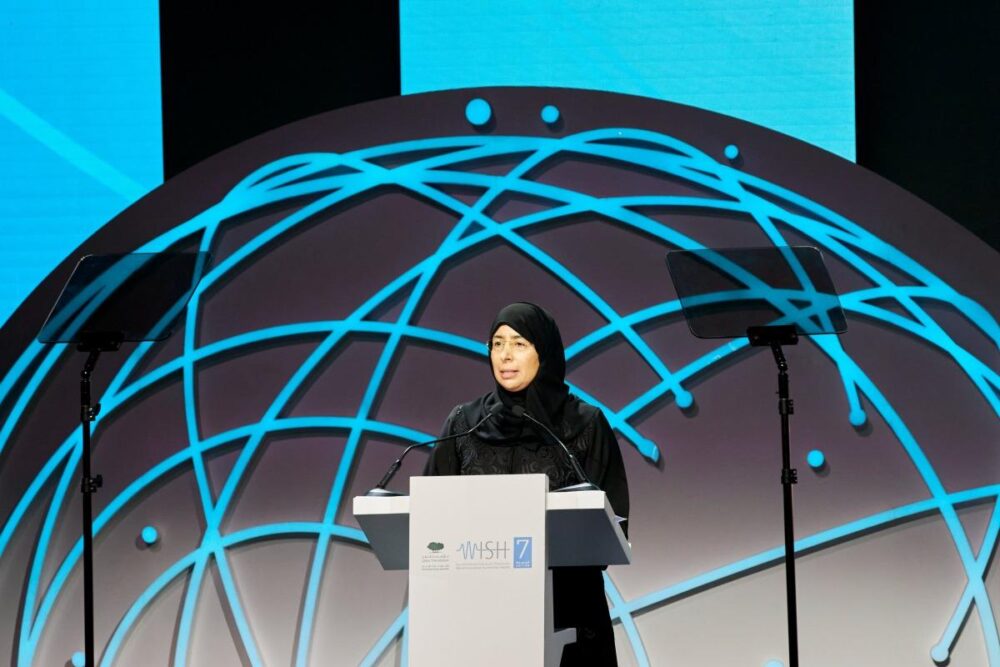
One of the major highlights of the opening programme was the keynote address by renowned Harvard Medical School geneticist and longevity researcher Dr David Sinclair, whose research has contributed significantly to the understanding of ageing, cellular health and the biological mechanisms associated with longevity.
The opening programme also featured an address by Lord Darzi, followed by a plenary session examining how advances in ageing science could influence public health policy and everyday healthcare practices.
From lifespan to healthspan
The central idea behind WISH 2026 is that living longer should also mean living better. As populations age and healthcare systems face increasing demands, the challenge for governments is to ensure that additional years of life are accompanied by good health, independence and quality of life.
The summit seeks to bring together scientific research, healthcare delivery and policymaking to address this challenge. It also examines how breakthroughs in medicine can be translated into accessible and affordable treatments rather than remaining confined to research laboratories or specialised institutions.
Five interconnected themes form the foundation of this year’s discussions:
The Longevity Dividend: Exploring advances in ageing biology, preventive healthcare and the science of extending healthy life.
Financing the Cure: Examining how healthcare systems can finance breakthrough treatments and ensure equitable access to medical innovation.
AI and Human-Centred Health: Assessing how artificial intelligence can improve diagnosis, treatment and healthcare delivery while maintaining patient trust and ethical safeguards.
Future of Fertility: Addressing reproductive technologies, fertility treatments, patient choices and the policy frameworks required to govern emerging developments.
Health Diplomacy 2.0: Exploring international cooperation and the role of healthcare in addressing global challenges, humanitarian crises and inequalities.
Global expertise and scientific leadership
WISH 2026 features an impressive international lineup of speakers from leading universities, healthcare institutions, research organisations and technology companies.
Among the prominent participants is Professor Andrea B. Maier of the National University of Singapore, who is contributing to discussions on longevity and the implications of ageing research for society.
The programme also brings together experts from the fields of artificial intelligence and digital healthcare, including Dr Dominic King, Corporate Vice-President and Health Lead at Microsoft AI, and Dr Ahmed Elmagarmid, Executive Director of Qatar Computing Research Institute.
Their discussions will examine how AI can be integrated responsibly into healthcare systems, improving clinical decision-making and patient outcomes without compromising safety, accountability or the human dimension of medical care.
Fertility and reproductive health will also receive considerable attention. Experts, including Dr Huda Abdulla Alsaleh of Hamad Medical Corporation and reproductive ethics specialist Dr Françoise Shenfield, will explore how emerging reproductive technologies are transforming patient choices and creating new regulatory and ethical considerations.
Four major research reports
An important component of WISH 2026 is the launch of four flagship research reports focusing on longevity, financing breakthrough treatments, artificial intelligence and fertility.
These reports aim to provide evidence-based recommendations for policymakers and healthcare leaders, addressing the practical challenges involved in translating scientific discoveries into meaningful improvements in healthcare.
The research is intended to contribute to international discussions on healthcare financing, responsible technological adoption, equitable access to treatment and the development of health systems capable of responding to changing demographic and medical needs.
Qatar strengthens its global healthcare leadership
The summit also reinforces Qatar’s growing role as an international platform for healthcare dialogue, research collaboration and innovation.
Through Qatar Foundation, the country has been investing in education, scientific research, medical innovation and the development of knowledge-based institutions. WISH provides an international platform through which these capabilities can be connected with global expertise and translated into policy discussions and practical partnerships.
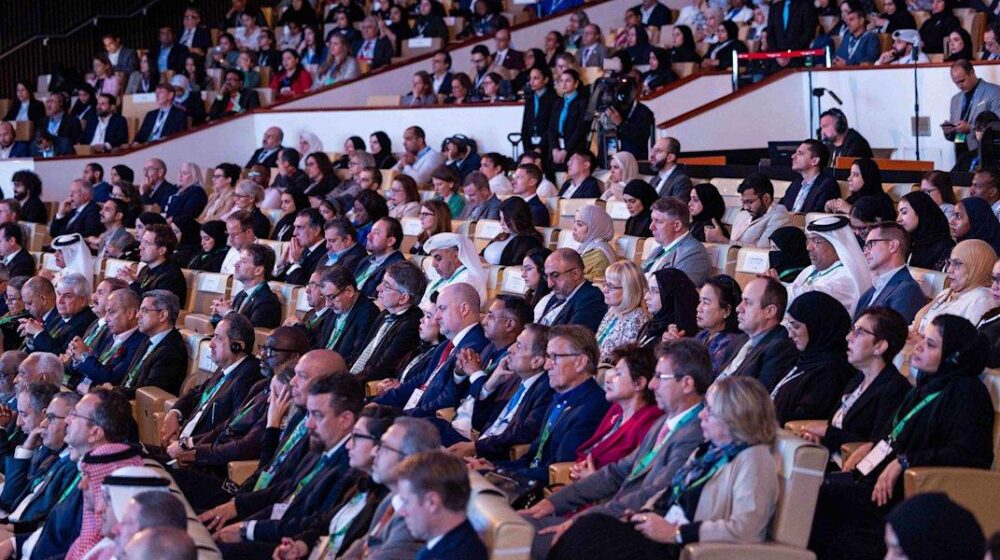
Qatar Foundation is also bringing together 21 of its entities at this year’s summit, highlighting the country’s contributions across healthcare research, artificial intelligence, longevity, education and innovation.
The programme includes an innovation showcase featuring emerging healthcare solutions and initiatives designed to encourage young innovators and entrepreneurs.
The Innovators of Tomorrow initiative, conducted with the Qatar Scientific Club, is another example of efforts to engage younger generations in addressing future healthcare challenges.
The Ministry of Public Health’s strategic partnership further strengthens the connection between international research discussions and national healthcare priorities. The collaboration also includes work on healthy longevity and the participation of ministry experts across the summit programme.
Turning innovation into meaningful healthcare outcomes
Beyond the scientific discussions, WISH 2026 seeks to address a fundamental question confronting healthcare systems worldwide: how can medical progress reach the people who need it most?
The rapid development of gene therapies, advanced medicines, reproductive technologies and artificial intelligence is transforming what modern medicine can achieve. However, access, affordability, regulation and the availability of specialised healthcare infrastructure remain significant challenges.
WISH aims to bridge this gap by bringing together governments, researchers, healthcare providers, technology companies and civil society to develop solutions that can be implemented beyond the conference environment.
As the two-day summit continues, Doha is positioning itself at the centre of an important international conversation about the future of medicine — one in which success will increasingly be measured not simply by how long people live, but by how well they live.
By placing longevity, equitable access and human-centred innovation at the heart of its agenda, WISH 2026 underscores Qatar’s ambition to contribute to a healthcare future that is more sustainable, inclusive and responsive to the needs of societies worldwide.