With ‘Threads of Exchange’, Kuwait, India weave 65 years of diplomatic friendship into art
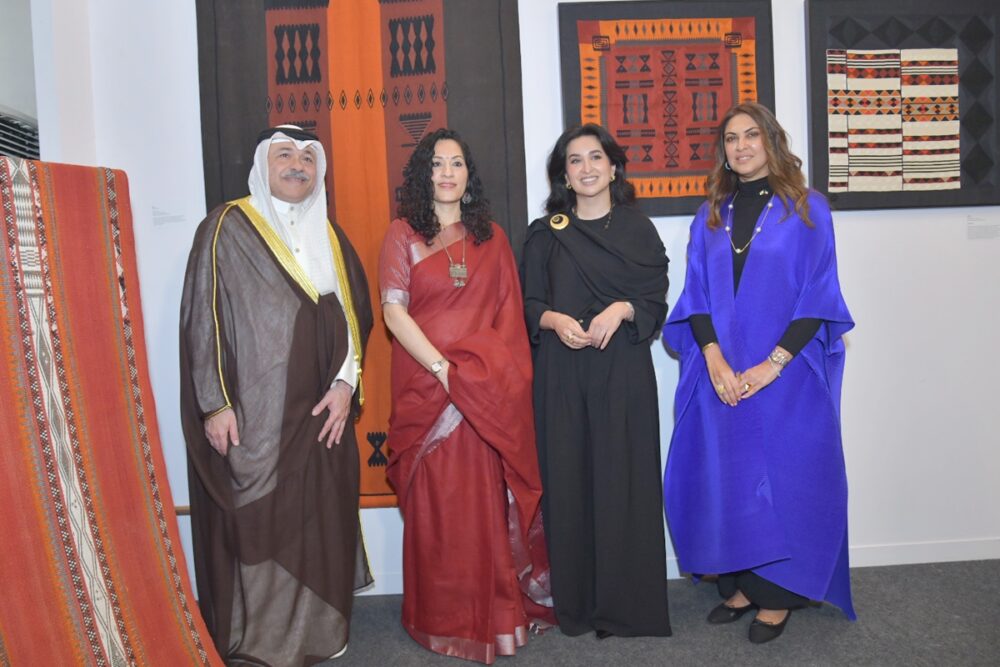
- From the geometric artistry of Kuwaiti Sadu to the intricate embroidery of Kashmir, a landmark New Delhi exhibition celebrates the cultural connections that have bound the two peoples for centuries. The three-day showcase adds a compelling artistic dimension to 65 years of diplomatic relations, demonstrating how shared heritage and traditional craftsmanship can strengthen an enduring bilateral partnership.
Kuwait and India have brought their rich artistic traditions together in a celebration of craftsmanship, cultural exchange and enduring friendship, with the opening of a three-day exhibition in New Delhi marking the 65th anniversary of diplomatic relations between the two countries.
Titled Threads of Exchange, the exhibition has been organised by the Kuwaiti Embassy in New Delhi in cooperation with the Kuwaiti Al-Sadu Handicraft Society and India’s Kashmir Loom House. Hosted at Bikaner House, the showcase explores the artistic connections between Kuwait’s traditional Sadu weaving and Kashmir’s celebrated embroidery, demonstrating how two distinct cultural heritages can converge through craftsmanship, design and creative collaboration.
The opening ceremony was attended by Kuwait’s Ambassador to India, Meshaal Al-Shamali, a Kuwaiti delegation led by Sheikha Bibi Al-Sabah, president of the Al-Sadu Handicrafts Association, alongside several ambassadors, intellectuals and representatives of the Indian government.
The exhibition forms part of the broader celebrations marking 65 years of diplomatic relations, offering a cultural perspective on a partnership that has developed through generations of maritime commerce, people-to-people contacts and mutual appreciation.
Addressing the opening ceremony, Sheikha Bibi Al-Sabah described Threads of Exchange as the outcome of cooperation between the Al-Sadu Association and Kashmir Loom House, bringing together two distinguished weaving traditions through a shared commitment to safeguarding traditional craftsmanship while reinterpreting it through contemporary artistic expression.
She emphasised that the initiative demonstrates how inherited skills and cultural knowledge can serve as inspiration for new creative possibilities, allowing traditional crafts to remain relevant while preserving their distinctive identities.
Highlighting the historical foundations of Kuwait-India relations, Al-Sabah recalled the centuries-old maritime connections between the two societies. Kuwaiti vessels once sailed to Indian ports carrying pearls, dates and Arabian horses, returning with timber, spices, grains and textiles.
These commercial voyages, she noted, established relationships that extended well beyond trade, creating enduring social and cultural connections that continue to underpin the friendship between the two countries. The exhibition brings this shared history into an artistic setting by combining the geometric patterns, nature-inspired colours and distinctive motifs of Kuwait’s Bedouin Sadu weaving with the intricate craftsmanship of Kashmiri Ari embroidery.
The latter is distinguished by its use of a specialised hook needle and characteristic chain stitch, through which Kashmiri artisans reinterpret the visual language of Sadu. The resulting creations establish an artistic meeting point between the two traditions, blending materials, techniques and designs while retaining the cultural identity of each craft.
Asif Ali, an official representing Dar Kashmir, said the collaboration originated through an initiative by Sheikha Altaf Salem Al-Ali, with Sheikha Bibi Al-Sabah subsequently advancing the project through further cooperation and creative development. He explained that the partnership involved exchanging ideas, developing joint designs and conducting workshops at Bait Al-Sadu in Kuwait, bringing together weavers and embroidery specialists who travelled from Kashmir to participate.
Ali stressed that cultural interaction and direct engagement between communities play an important role in strengthening bilateral relations. He also highlighted the appreciation and encouragement extended by the Kuwaiti side towards Indian handicrafts, describing it as an expression of the mutual respect and affection shared by the two peoples.
Expressing hope that the exhibition would pave the way for further direct cultural engagement, he commended the Kuwaiti Embassy, particularly Ambassador Al-Shamali, for its support and contribution to organising the initiative.
Beyond its artistic presentation, Threads of Exchange underscores how traditional craftsmanship can serve as a bridge between nations, connecting historical experiences with contemporary creativity. As Kuwait and India mark 65 years of formal diplomatic relations, the exhibition offers a compelling reminder that the foundations of their friendship were established long before diplomatic ties were officially inaugurated.