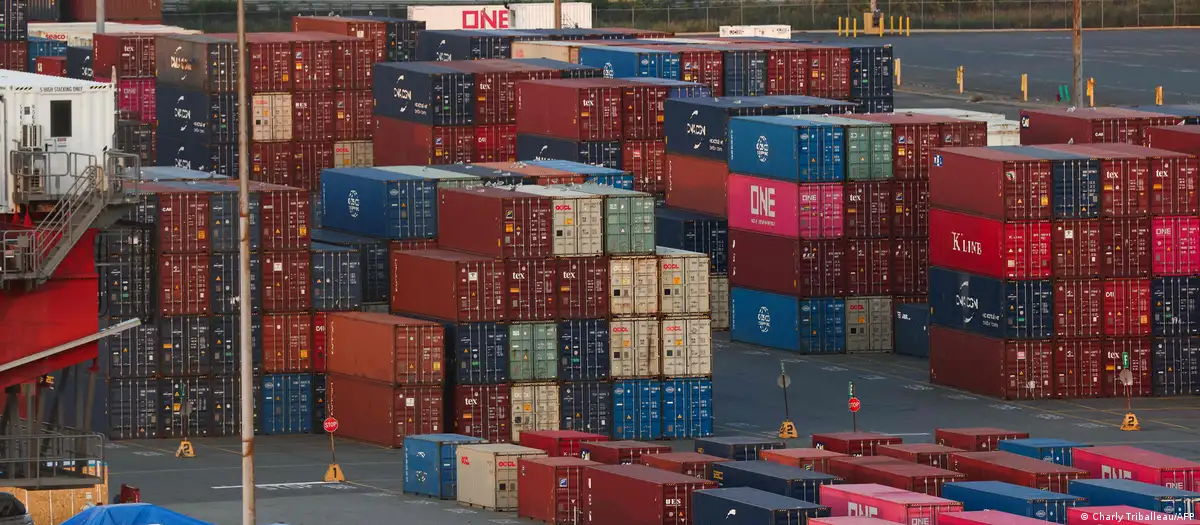
One year after Donald Trump unveiled sweeping “Liberation Day” tariffs, global trade flows have been dramatically reshaped, with clear winners, notable losers, and American consumers bearing much of the cost.
Announced on April 2, 2025, the policy imposed a baseline 10% tariff on imports from nearly every country, with higher rates of up to 50% targeting nations that exported more to the United States than they imported. While the move was later challenged by the US Supreme Court, the administration has continued to pursue aggressive trade measures.
Stockpiling Surge Before Tariffs Hit
Even before the tariffs came into force, US businesses moved quickly to limit exposure. Imports surged by roughly 20% between January and March 2025 compared to previous years, as companies rushed to stockpile goods ahead of higher costs.
The spike was particularly pronounced in commodities such as gold, with imports soaring to around $72 billion, nearly 50 times typical volumes, largely sourced from Switzerland, alongside smaller suppliers including Uzbekistan, the Philippines and Zimbabwe.
Manufacturing hubs across Asia also saw a sharp uptick in exports to the US, with Taiwan, Vietnam and India among the early beneficiaries of this pre-tariff surge, dw.com reports.
Supply Chains Shift Away from China
As tariffs took effect, US importers began rapidly reconfiguring supply chains. According to economist Haishi Li, imports “flowed like water” away from high-tariff countries toward lower-cost alternatives.
No country was hit harder than China, which saw US imports drop by $66 billion between April and July 2025 compared to previous years. Canada also experienced a $24 billion decline in exports to the US, although it offset much of the loss by expanding trade with other partners.
Meanwhile, so-called “10% countries”, including Australia and several Latin American economies, emerged as key beneficiaries, attracting increased US demand due to relatively lower tariffs.
Interestingly, some high-tariff nations such as Vietnam, Thailand and Taiwan still recorded significant gains, as US firms sought substitutes for Chinese manufacturing networks already well integrated into global supply chains.
Domestic Impact: Americans Foot the Bill
Despite the sweeping tariffs, there is little evidence that manufacturing has returned to the United States. According to Alex Durante of the Tax Foundation, sectors showing growth are largely those shielded by exemptions, such as technology and AI-related products.
What has increased sharply, however, is government revenue. In 2025, the US collected $287 billion in customs duties, roughly triple previous levels, with 2026 expected to exceed that figure.
But economists say the burden has largely fallen on domestic players. Studies indicate that US importers, not foreign exporters, have absorbed most of the tariff costs, passing them on to consumers.
On average, American households are estimated to have paid around $1,000 more in 2025 as a result of higher prices, reduced wages, or slower job growth.
A More Uncertain Global Trade Landscape
Since mid-2025, global trade has been marked by volatility, with rapidly negotiated deals often unraveling amid new tariff threats. The uncertainty intensified following a February ruling by the US Supreme Court that struck down the legal basis of the original tariffs.
With a revised 15% blanket tariff now in place, and further measures expected, businesses worldwide are struggling to plan ahead.
Economists warn that unpredictability has become the defining feature of the current trade environment. Governments are increasingly encouraging companies to diversify supply chains and reduce reliance on the US market.
While this shift may strengthen resilience in the long term, it underscores a broader reality: the global trading system is entering a new, less predictable era shaped by protectionism and geopolitical tensions.