- Search for thousands missing continues
- Miracles and mourning as Venezuela battles aftermath of twin earthquakes
- Hope fades in Venezuela as rescue efforts continue and burials begin
A key seaport in Venezuela’s earthquake-ravaged coastal region reopened Monday after repairs by the U.S. military, allowing humanitarian aid to reach survivors as the country began burying victims of the devastating twin earthquakes.
Five days after the powerful tremors struck, officials confirmed at least 1,700 deaths and around 5,000 injuries, while the number of missing remains unclear. Independent estimates suggest that tens of thousands of people may still be unaccounted for.
The reopening of La Guaira Port marks a significant step in relief operations. The USS Fort Lauderdale docked at the port to deliver emergency supplies, while nearby warehouses have been converted into temporary morgues holding hundreds of unidentified bodies in body bags and coffins.
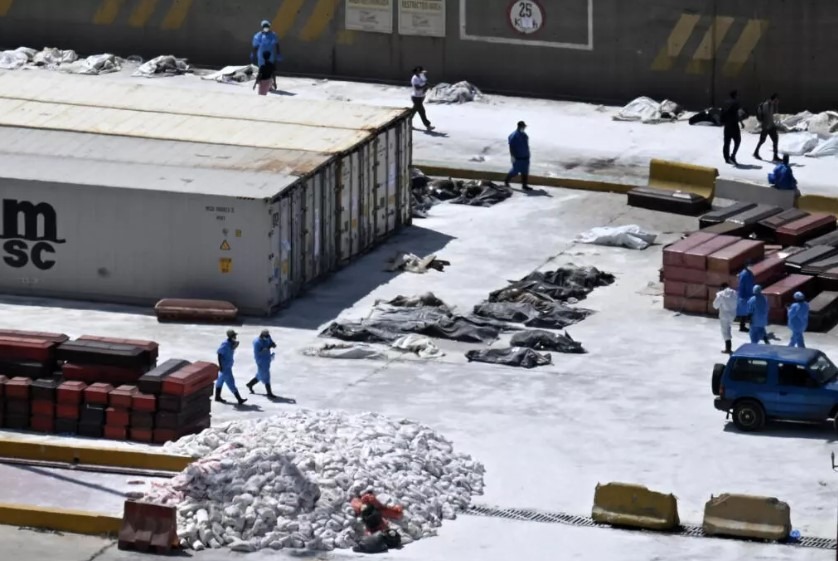
Outside the makeshift morgue, grieving families waited anxiously for news as forensic teams worked to identify victims. Rescue crews and volunteers continued digging through collapsed buildings in search of survivors, although hopes have diminished with each passing day.
U.S. military personnel are also helping restore operations at Simón Bolívar International Airport, which sustained heavy damage during the disaster. On Monday, a magnitude-4.6 aftershock rattled the region, renewing fears among residents.
Authorities have placed La Guaira under military control and require permits for entry into the disaster zone. Many residents have criticized the government’s response, saying aid has been slow to reach affected communities.

International assistance has grown rapidly, with 27 countries deploying nearly 40 search-and-rescue teams, more than 2,000 emergency personnel, and over 160 rescue dogs, according to the United Nations. The UN also announced it will provide 10,000 body bags, though officials hope the final death toll will remain below that number.
While the critical 72-hour rescue window has passed, isolated rescues continue. On Monday, a 21-year-old man was pulled alive from the rubble in the coastal town of Tanaguarena, offering a rare moment of hope.
The UN estimates that about seven million people have been affected by the earthquakes, with economic losses reaching $6.7 billion, equivalent to roughly 6% of Venezuela’s GDP.

At Caracas’ main public cemetery, crematoriums are operating continuously as families bury their loved ones. Funeral services have increased sharply, with dozens of burials taking place each day.
Many families are still searching for missing relatives.
“My family is there,” one resident told AFP while waiting to identify the remains of his sister, her children, and other relatives. “There were 11 people in my household. Only two of us survived because we were at work.”
The disaster has also intensified political tensions. Opposition leader and Nobel Peace Prize laureate Maria Corina Machado, currently in exile, accused interim President Delcy Rodríguez’s government of blocking her return by closing Venezuelan airspace. She vowed to return, saying she was “ready” to do whatever was necessary.
The Venezuelan government has not responded to the allegation, and U.S. officials coordinating relief efforts have declined to comment.