Tajikistan’s Independence, a Story of Resilient Growth, Strategic Transformation
The 34th anniversary of Tajikistan’s independence on 9 September, offers a compelling narrative of transformation from post-Soviet fragility to a nation of increasing strategic importance in Central Asia. This analysis celebrates the remarkable journey of political consolidation, economic modernization, and institution-building that has defined Tajikistan’s evolution since 1991.
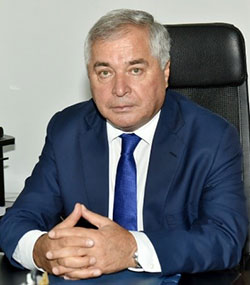
By H.E. Zubaydzoda Zubaydullo
Ambassador of the Republic of Tajikistan,
Dean of the Diplomatic Corps
The 34th anniversary of Tajikistan’s independence on 9 September, offers a compelling narrative of transformation from post-Soviet fragility to a nation of increasing strategic importance in Central Asia. This analysis celebrates the remarkable journey of political consolidation, economic modernization, and institution-building that has defined Tajikistan’s evolution since 1991. Beyond mere statistical achievements, Tajikistan’s story represents a testament to national resilience and strategic vision in a complex geopolitical landscape.
The country has not only recovered from civil conflict but has established itself as an emerging actor with growing regional influence through energy diplomacy and economic partnerships. This examination highlights the achievements while maintaining analytical balance regarding the challenges that remain on Tajikistan’s path to sustainable development.
Macroeconomic Performance: Tajikistan’s economic trajectory since independence represents one of the most impressive turnaround stories in the post-Soviet space. The economy has demonstrated exceptional growth dynamics, with GDP expansion reaching 8.4 percent in 2024 and maintaining a robust 8.1 percent in the second quarter of 2025. This performance exceeds many regional counterparts and reflects the effectiveness of economic policies implemented over the past decade. The International Monetary Fund projects continued strong growth of 7 percent in 2025, with sustainable growth rates of 6 percent and 5 percent expected in 2026 and 2027 respectively.
Energy Leadership: Tajikistan’s energy sector transformation represents one of its most notable success stories, leveraging natural advantages to create strategic opportunities. The country has successfully capitalized on its immense hydropower potential, which represents approximately 3,000 billion kWh of annual capacity, positioning Tajikistan as the eighth-largest holder of hydropower potential globally. This strategic focus has transformed energy from a domestic challenge into a tool of regional diplomacy and economic advancement.
The flagship Rogun Hydroelectric Power Plant, currently under construction, symbolizes Tajikistan’s ambitious vision. With six turbines planned for a total capacity of 3,600 MW and anticipated annual generation of 17 TWh, Rogun represents one of Eurasia’s largest hydro projects. Already operational since 2018-2019, Rogun generated 1.22 billion kWh in 2024, representing 5.5 percent of Tajikistan’s electricity output, with full commissioning expected by 2029. The Nurek Dam continues to be a fundamental pillar of energy security, supplying approximately 70 percent of the nation’s electricity.
Complementing its hydropower leadership, Tajikistan is making significant strides in solar energy diversification. The country is set to significantly expand its solar infrastructure in 2025, with plans to develop solar electric power stations (SEPS) in all districts and cities. The 200 MW Sughd solar plant, slated to begin construction in 2025, exemplifies this commitment to large-scale solar development. Tajikistan is also boosting its domestic solar panel production with international investment, aiming to have the first phase of a new manufacturing plant operational in 2025.
Tajikistan’s energy strategy has evolved from domestic focus to regional leadership. Agreements with Uzbekistan and Kazakhstan aim to export approximately 70 percent of generated power at competitive rates (~US 3.4¢ per kWh), reflecting growing regional energy cooperation. The execution of CASA-1000, a $1.16 billion infrastructure initiative, will enable the export of surplus electricity from Tajikistan (and Kyrgyzstan) to Afghanistan and Pakistan, positioning Tajikistan as a key energy player in South-Central Asia.
Trade and Economic Partnerships: Tajikistan’s integration into global markets has accelerated dramatically, with foreign trade reaching $3.91 billion in just the first five months of 2025. While trade patterns show the common developing economy characteristic of importing value-added goods and exporting raw materials, the diversification of partnerships and growing trade volumes reflect increasing economic engagement with the global economy.
Tajikistan has cultivated balanced economic relationships across multiple regions. China stands as Tajikistan’s largest trading partner with a bilateral trade volume of $964.1 million in the first five months of 2025. Russia follows as the second-largest partner ($899.5 million), with Kazakhstan ($481.4 million) and Uzbekistan ($274.3 million) representing important regional markets.
Notably, Tajikistan maintains positive trade balances with several countries including the Netherlands ($228.7 million surplus) and Turkey ($186.7 million total trade). The composition of Tajikistan’s exports reflects both traditional strengths and emerging capabilities. Unrefined gold and unprocessed aluminum lead export earnings, followed by lead-zinc ores and concentrates, cotton fiber, electricity, and cement. These six categories form the backbone of the country’s foreign currency earnings, with electricity exports poised for significant expansion as energy projects come online.
Strategic Vision and International Collaboration: The National Development Strategy (NDS-2030) outlines a comprehensive transformative agenda anchored in three main pillars: prevention, industrialization, and innovation. This strategy embodies Tajikistan’s ambitious yet achievable vision for structural economic transformation and inclusive development.
The quantitative targets include sustaining 7-8 percent annual economic growth, tripling national GDP, multiplying GDP per capita by over 2.5, halving poverty and eradicating extreme poverty, reducing import concentration from 83 percent to 58 percent, elevating industrial output and service complexity, and expanding the middle class to 50 percent by 2030.
Tajikistan’s development strategy has attracted substantial international support and collaboration. The European Union, German Federal Foreign Ministry (via KfW and the PATRIP Foundation), World Bank, Aga Khan Foundation (AKF), and Pamir Energy have supported critical infrastructure projects. As Tajikistan’s Minister of Energy and Water Resources, Daler Juma, states: “This project demonstrates what is possible when local leadership aligns with international cooperation to achieve transformative impact”.
Environmental Leadership: Tajikistan has emerged as an unexpected leader in sustainable energy. The Sebzor Hydropower Plant became the first globally certified project under the Hydropower Sustainability Standard, achieving Gold Certification in March 2023; cementing its leadership in environmental, social, and governance development. This certification demonstrates Tajikistan’s commitment to meeting international environmental standards while pursuing development goals.
In conclusion, over 34 years, Tajikistan has engineered one of the most notable post-conflict transformations globally, evolving from fragility to a trajectory of growing governance consolidation and economic resilience. The evidence presents a compelling picture of sustained progress: macroeconomic stability with consistent 6 to 8 percent growth, evolving energy independence through strategic hydropower development, as well as expanding regional integration through energy exports and trade partnerships.
The foundations for future success are firmly established: major energy infrastructure like Rogun HPP nearing completion; growing regional demand for Tajikistan’s electricity exports; a comprehensive development strategy (NDS-2030) with clear targets; and increasing international partnership and investment. As Tajikistan looks toward the next decade, its journey from independence to emerging regional actor offers valuable lessons in post-conflict recovery, strategic resource management, and sustainable development.
Tajikistan’s 34-year independence story ultimately reflects a nation leveraging its natural advantages, building strategic partnerships, and pursuing inclusive development with growing confidence and capability. The country stands well-positioned to achieve its ambitious 2030 goals and continue its remarkable transformation in the decades ahead.