- As events continue to unfold, the evolving confrontation is increasingly shaping not only the security landscape of the Middle East but also the trajectory of global energy security and international geopolitical stability.
- Among the locations cited by Iranian state media were military facilities in Kuwait, Bahrain and Jorda
- Iranian state media reported that one person was killed and four others injured following a strike on a water pumping station in the southwestern city of Mahshahr
The Gulf region entered another phase of heightened uncertainty on Monday as the military confrontation between the United States and Iran intensified, prompting several Gulf nations to activate air defence systems amid growing concerns over regional security, maritime trade and global energy supplies.
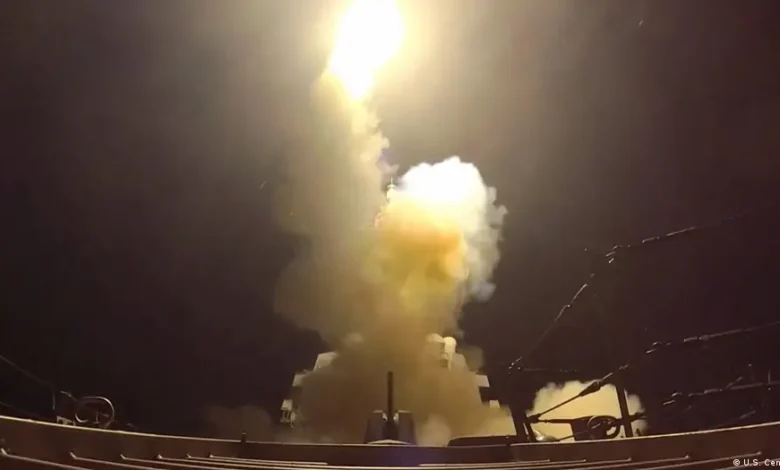
The latest escalation followed a fresh wave of precision strikes by the United States targeting Iranian military infrastructure near the Strait of Hormuz, one of the world’s busiest and most strategically important maritime corridors.
Washington said the operation was designed to reduce Tehran’s ability to threaten international commercial shipping, while Iran responded with a series of retaliatory actions directed at locations it claimed were linked to US military operations in the region, dw.com reports.
The US Central Command (CENTCOM) announced that its latest military campaign had concluded after targeting multiple Iranian military assets, including air defence systems, coastal radar installations, missile launch sites, drone capabilities and fast attack vessels operating near the Strait of Hormuz.
According to CENTCOM, the operation employed fighter aircraft, naval vessels and, for the first time, one-way attack aerial and maritime drones, reflecting an expanded operational strategy aimed at protecting freedom of navigation through international waters.
Iran responded swiftly, with the Islamic Revolutionary Guard Corps (IRGC) announcing missile and drone strikes against several military installations across the Gulf region that it alleged were supporting recent US military operations.
Among the locations cited by Iranian state media were military facilities in Kuwait, Bahrain and Jordan. Iranian officials also claimed responsibility for attacks targeting the Sheikh Isa Air Base in Bahrain and the Prince Hassan Air Base in Jordan, describing the operations as the initial stages of Tehran’s response to recent US actions.
Several of these claims have not been independently verified.
In Kuwait, the Armed Forces confirmed that air defence systems had been activated to intercept what were described as hostile aerial targets entering Kuwaiti airspace.
The renewed military exchanges have placed Gulf Cooperation Council (GCC) member states on heightened alert, reflecting growing concerns that the conflict could widen beyond direct US-Iran engagement.
Meanwhile, Iranian officials maintained that their military actions constituted legitimate self-defence under international law, arguing that the United States had expanded the conflict through continued strikes on Iranian territory.
Iran’s Foreign Ministry also accused Washington of undermining months of diplomatic engagement and contributing to renewed instability in the Strait of Hormuz.
The ministry further asserted that recent military operations had disrupted commercial shipping and complicated efforts to restore normal maritime activity in the Gulf.
Iranian Foreign Ministry spokesman Esmail Baqaei on Sunday called on United Nations Secretary-General Antonio Guterres to urge all parties involved in the Iran war to stop allowing the United States to use their territories as what he called “launchpads for aggression against Iran”.
Guterres had earlier released a statement expressing his concern over “the serious escalation and renewed military confrontations in the Gulf,” including the Iranian attacks on vessels in the Strait of Hormuz, the attacks by the US on Iran, and the attacks by Iran on targets in the neighboring nations.
The humanitarian impact is also beginning to emerge.
Iranian state media reported that one person was killed and four others injured following a strike on a water pumping station in the southwestern city of Mahshahr. The reports could not be independently confirmed, and there was no immediate response from US authorities regarding the incident.
Across the Gulf, governments continue to reassure citizens while enhancing precautionary measures around critical infrastructure, airports and military facilities.
Security analysts warn that the present confrontation extends beyond military calculations. The conflict now carries profound implications for global shipping, energy markets, investor confidence and international diplomacy.
The Strait of Hormuz remains the central flashpoint. Any sustained disruption to navigation through the narrow waterway would affect global oil supplies, freight costs and international supply chains, placing additional pressure on an already fragile global economy.
Diplomatic observers caution that while both Washington and Tehran continue to pursue military objectives, opportunities for dialogue are rapidly narrowing as retaliatory actions increase in both scale and frequency.
Despite repeated international appeals for restraint, neither side has indicated any immediate willingness to de-escalate.
For the Gulf region, the priority remains safeguarding national security, protecting critical infrastructure and ensuring uninterrupted maritime commerce through one of the world’s most vital strategic waterways.
As events continue to unfold, the evolving confrontation is increasingly shaping not only the security landscape of the Middle East but also the trajectory of global energy security and international geopolitical stability.