“A central component of the initiative is the evolution of the EU-GCC Business Forum, a platform for political and business leaders to advance mutual economic interests. The forum will serve as a hub for public-private dialogue, strengthening economic ties and promoting shared prosperity.”
The European Union has rolled out Phase II of the EU-GCC Dialogue on Economic Diversification, an ambitious regional initiative aimed at deepening economic cooperation and investment between the European Union (EU) and the Gulf Cooperation Council (GCC) countries. The initiative builds on the successful outcomes of Phase I, which ran from 2018 to 2024.
This next phase marks a significant milestone in bilateral relations to enhance institutional capacities, promote sustainable growth, and unlock expanded trade and investment opportunities. It is fully funded by the European Union and emphasizes strategic collaboration in policy-making, regulatory alignment, and technical expertise across priority economic sectors.
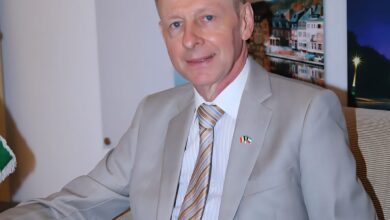
Team Leader of the project and a seasoned expert in sustainable development and economic cooperation, Dr. Rade Glomazić, said, “This project is not only about building stronger economies — it’s about matching ambition with innovation.”
He added that by aligning EU and GCC expertise, the initiative lays the groundwork for a resilient, future-ready economic transformation anchored in inclusivity, reform, and long-term partnership.
Phase II deepens strategic alignment between the EU and GCC, strengthening policy dialogue and technical cooperation to drive innovation-led economic transformation. The project empowers GCC institutions to lead internal reforms while fostering an integrated environment for trade and investment.
A central component of the initiative is the evolution of the EU-GCC Business Forum, a platform for political and business leaders to advance mutual economic interests. The forum will serve as a hub for public-private dialogue, strengthening economic ties and promoting shared prosperity.
The project is especially focused on future-oriented sectors, such as digitalization, artificial intelligence, sustainable tourism, smart specialization, and integrated value chains. These areas represent the economic frontiers where EU-GCC collaboration can yield transformative outcomes.
Dr. Glomazić went on to say, “this partnership is rooted in aligning complementary strengths and regional expertise.” He highlighted the project’s commitment to translating strategic visions into actionable results by integrating policy frameworks, facilitating knowledge exchange, and engaging the private sector.
Over four years, he emphasized, Phase II will continue to harness the lessons of Phase I while scaling impact across the GCC. One notable development includes the expansion of the EU Chamber of Commerce in Saudi Arabia, enabling it to serve businesses across all GCC countries and strengthening Europe’s commercial footprint in the region.
With trade between the EU and GCC reaching €174 billion in 2022, the importance of closer cooperation has never been more critical. Phase II focuses on promoting climate-friendly trade and economic development, supporting GCC nations’ diversification goals while encouraging sustainable and innovative investments, he disclosed.
Dr. Glomazić noted, “The complex, long-term path of economic diversification becomes more manageable when partners walk it together. The EU is committed to being a reliable partner to the GCC — sharing experiences, learning from our friends in the Gulf, and jointly addressing shared challenges.”
The initiative is being implemented by a consortium that includes the German Chamber of Commerce Abroad (AHK), the Institute of Communication and Computer Systems (ICCS) of the National Technical University of Athens, and a global expert team from DAI. This partnership brings together top-tier expertise in trade, regulation, innovation, and policy reform.
Dr. Glomazić brings nearly three decades of international experience to his leadership of Phase II. He has overseen more than 30 flagship economic reform and development programs across Europe, Asia, Africa, and the Middle East. His work has spanned global institutions, including the EU Commission, United Nations, OSCE, and national governments, making him well-equipped to steer the project toward impactful results.