
UN Kuwait and UNESCO calls its partners to jointly celebrate the 27th annual World Press Freedom Day (WPFD), under the theme “Journalism without fear or favour”.
Every year, 3 May is a date which celebrates the fundamental principles of press freedom, to evaluate press freedom around the world, to defend the media from attacks on their independence and to pay tribute to journalists who have lost their lives in the exercise of their profession.
This year’s celebrations are happening in the context of Covid-19. The World Health Organization (WHO) has denounced the “massive infodemic” of disinformation and misinformation swirling amidst the COVID-19 pandemic as a driver of the crisis itself. In the current context, dis- and misinformation represent a serious challenge in addressing a viral epidemic or other public health crisis. The outbreak of the pandemic as proven, once again, that press freedom is essential for our societies.
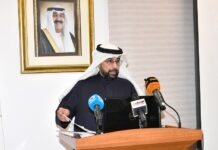
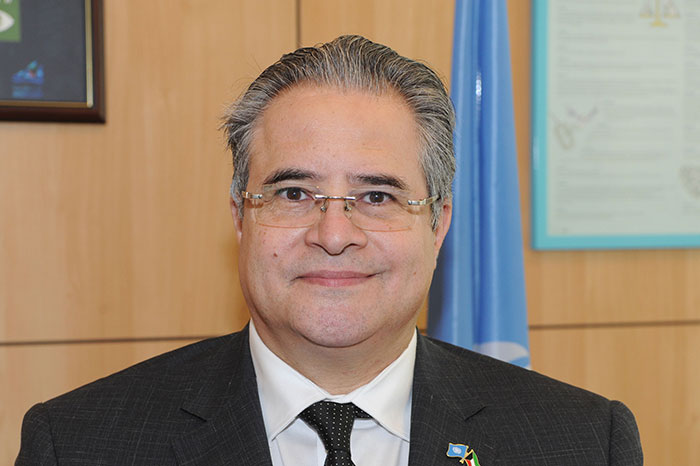
The United Nations Secretary-General Representative and Resident Coordinator to Kuwait Dr. Tarek Elsheikh takes this opportunity to remind us of UN Secretary-General Antonio Guterres call for solidarity “as the [COVID-19] pandemic spreads, it has also given rise to a second pandemic of misinformation, from harmful health advice to wild conspiracy theories. The press provides the antidote: verified, scientific, fact-based news and analysis.”
 “That Journalists and media workers are crucial to helping us make informed decisions and also to spread the global call for stopping wars and global ceasefire a call for peace and unifying efforts to fight the COVID19. As the world fights the COVID-19 pandemic, those decisions can make the difference between life and death”.
Dr. Elsheikh recognise the efforts the State of Kuwait for the measures put in place using innovative approach and technology to reach out to the wider public including all members of the society considering the diversity. The Ministry of Information launched a platform entitled (Tahaqaq) https://tahaqaq.media.gov.kw/ to combat fake news, to avoid rumors and misinformation as a tool to verify the news, photos and videos.
Furthermore, the Government of Kuwait is continuously reminding the general public and the media to take the government decisions seriously and not listen to rumors, requesting citizens to help not to contribute to their spread. As the Kuwaiti government is taking serious steps in filing lawsuits against people spreading rumors, xenophobic messages and discriminatory sentiments spreading in social media.
Dr. El-sheikh while recognizing all the efforts before and during COVID19 pandemic, he draws the government and media attention to the need for more efforts to allow for freedom of expression with ethical codes and availing more responsible space. It is important to note that Kuwait position on reporters without borders international ranking went down 30 places in the last seven years from 77/180 in 2013 to 108/180 in 2019.
Therefore, more efforts are expected in follow up to HH the Amir of Kuwait call who addressed the community in Kuwait stating: “We are fighting a decisive battle against a fierce enemy, which is a battle for everyone and requires serious commitment to the instructions of the health authorities, the most important of which is avoiding gatherings and the causes of infection, as it fuels the fire of the pandemic and does not pay attention to harmful rumors, that weaken the state’s efforts”. In addition to the negative impact the rumors can have in these hard times, damaging society’s morale, and obstacles to the state’s efforts and ability to overcome the serious health challenges. Rumors harm the society and spark panic and fear among its members.
Ms. Anna Paolini, Director, UNESCO Regional Office to the Gulf States and Yemen and UNESCO Representative in the Arab States of the Gulf and Yemen has discussed the role of journalism in time of Covid-19 pandemic through radio interviews.
Celebrating the WPFD during these peculiar circumstances should be an opportunity also to recall that “we can collectively overcome this difficult times only if we work together, fostering an enabling environment of respect for diversity, mutual understanding and free flow of information for all.
That´s why we need professional journalists and media workers helping the society to counter information disorder, diffuse hate speech and support citizens and governments in the region in relying factual and verified information”, highlights Ms. Anna Paolini.
That is why in response to the Covid-19 pandemic, UNESCO and its network have made available a series of publications, tools, resources, MooC for all media workers, journalists, volunteers, students to support their daily work. All resources are available at: https://en.unesco.org/covid19
In addition, on 3 May, UNESCO will organize a high-level dialogue on Press Freedom and Tackling Disinformation in the COVID-19 context. The event will be streamed online on Monday 4 May, 5pm Central European Time (GMT +2). Bringing together UN Secretary-General António Guterres, UN High Commissioner for Human Rights, Michelle Bachelet, journalist Younes Mujahid, President of the International Federation of Journalists, and the Secretary General of Reporters Without Borders, Christophe Deloire, among others prominent participants, the debate will address the danger of what the UN Secretary-General has described as the “dangerous epidemic of misinformation.”
On this occasion, the 2020 UNESCO/Guillermo Cano World Press Freedom Prize has been awarded to the Colombian journalist Jineth Bedoya. Jineth Bedoya is an investigative journalist currently working with El Tiempo. Born in 1974, her reporting has focused on the armed conflict and peace process in Colombia and on sexual violence against women. Jineth Bedoya Lima has been fighting against impunity for crimes against journalists for 20 years and has shown exceptional tenacity and commitment in this struggle.
You can share with us your initiatives on social media through the #JournalismUnfiltered #WorldPressFreedomDay
Happy World Press Freedom Day 2020!
World Press Freedom Day was proclaimed by the UN General Assembly in 1993 following a Recommendation adopted at the twenty-sixth session of UNESCO’s General Conference in 1991. This in turn was a response to a call by African journalists who in 1991 produced the landmark Windhoek Declaration on media pluralism and independence.