

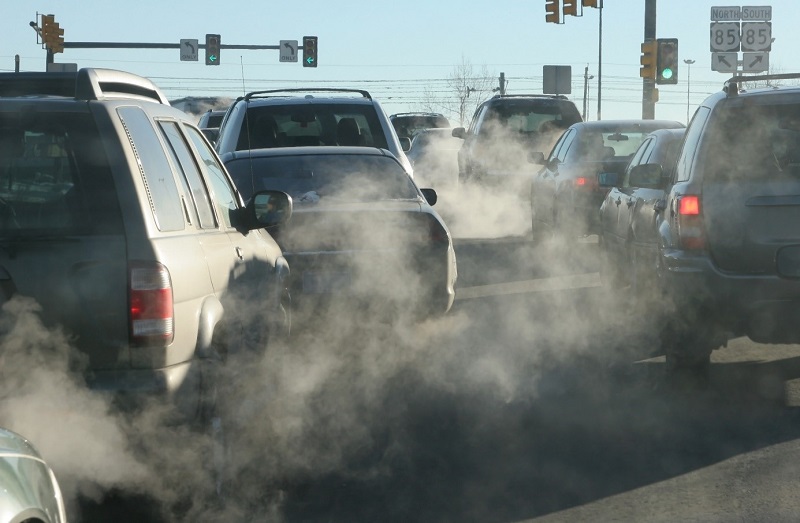
Air pollution is now recognized as the largest environmental threat to human health, impacting all major organ systems in the body. In many countries emissions from the transportation sector account for the biggest share of greenhouse gasses (GHG) pollution spewed into the atmosphere.
Burning of fossil fuels such as gasoline and diesel in vehicle engines releases carbon dioxide (CO2), a major GHG. Along with CO2, other gasses that contribute to the buildup of GHG in the atmosphere include methane (CH4), nitrous oxide (N2O), and hydrofluorocarbons (HFCs). Together these GHGs warm the Earth’s atmosphere and cause changes in the climate that contribute to many of the disastrous droughts, floods, heatwaves and forest fires witnessed today.
Records show that greenhouse gas emissions from transportation account for about 27 percent of total greenhouse gas emissions in the United States, making it the largest contributor to the nation’s GHG emissions. The burning of one liter of gasoline is estimated to impart around 2.3kg of CO2 to the atmosphere. The burning of a similar quantity of diesel released nearly 15 percent more CO2.
Additionally, traffic congestion has been shown to increase vehicle emissions that then further contribute to the pollution and degradation of surrounding air quality. Multiple studies around the world have revealed an increase in morbidity and mortality among drivers, commuters, pedestrians who are regularly exposed to vehicle emissions, as well as in households located near major highways.
A fresh study by researchers at the University of British Columbia (UBC) and the University of Victoria in Canada has now shown that even normal levels of traffic pollution can impair human brain function in only a matter of hours. The findings show that just two hours of exposure to diesel exhaust causes a decrease in the brain’s functional connectivity — a measure of how regions of the brain interact with each other.
The new study, which is the first of its kind in the world, provides the first evidence from a controlled experiment on humans, of altered brain network connectivity induced by air pollution. The prevailing wisdom among the scientific community until now was that the brain had protective mechanisms that protected it from the harmful effects of air pollution. The new study upends this long-held belief and provides additional evidence to support a connection between air pollution and cognition.
The study was conducted at UBC’s Air Pollution Exposure Laboratory, which is equipped with a state-of-the-art exposure booth that can mimic what it is like to breathe a variety of air pollutants. For the study, which was carefully designed and approved for safety, the researchers used freshly-generated exhaust that was diluted and aged to reflect real-world conditions. In the research, scientists briefly exposed 25 healthy adults to diesel exhaust and filtered air at different times in a laboratory setting. Brain activity was measured before and after each exposure using functional magnetic resonance imaging (fMRI).
The researchers analyzed changes in the brain’s default mode network (DMN), a set of interconnected brain regions that play an important role in memory and internal thought. The fMRI revealed that participants had decreased functional connectivity in widespread regions of the DMN after exposure to diesel exhaust, compared to filtered air. Altered functional connectivity in the DMN has been associated with reduced cognitive performance and symptoms of depression.
The researchers said it was seriously concerning to see traffic pollution interrupting these same networks. While more research is needed to fully understand the functional impacts of these changes, it is possible that they may impair people’s thinking or ability to work. It needs to be pointed out that the observed changes in the brain from exposure to vehicle exhaust were temporary and the brain connectivity of participants in the test soon returned to normal after the exposure.
Nevertheless, health experts warn that the effects could be more long lasting if exposure is over an extended period of time. The study recommended that people regularly exposed to vehicle emissions should be mindful of the air they are breathing and take appropriate steps to minimize their exposure to potentially harmful air pollutants like car exhaust.
Some of the steps that people can take on their own to protect against vehicle exhaust fumes include for drivers and passengers who are stuck in a traffic jam to make sure to roll up their windows. It is also important to ensure that the car’s air filter is in good working condition, and if you are regularly walking or biking down a street with a lot of vehicular traffic, you might want to consider choosing a less busy route.
With increasing incidence of neurocognitive disorders, and the cognitive impacts of traffic-derived air pollution found in the new study make it imperative for public health officials and policymakers, to evaluate the impact on the brain from exposure to other air pollutants, such as smoke from forest fires and from the combustion of waste material.