

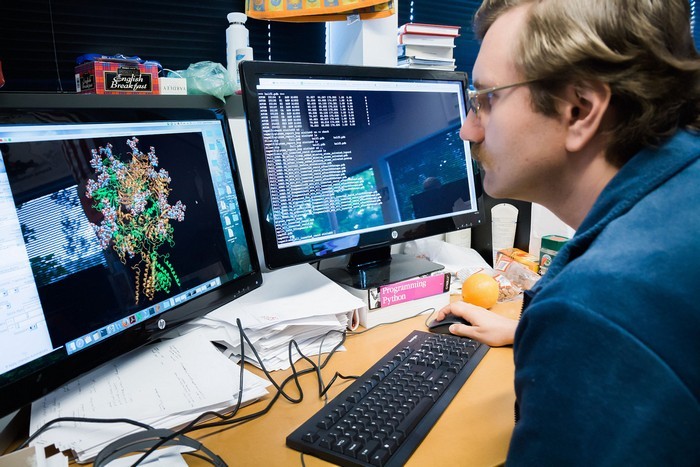
Stanford University Medical Center in the United States is seeking one million volunteers to help researchers develop treatment therapies for COVID-19, the novel coronavirus infection, through their distributed computing project ‘Folding@home’.
By downloading the Folding@home (FAH) software on your computer, you will be contributing to the computational power that Stanford needs to find new cures. And, by spreading the word through our print and online edition, we are giving even more people the chance to contribute and be ‘one in a million’.
There have been more than 89,000 confirmed cases worldwide of COVID-19, the illness caused by the coronavirus named SARS-CoV-2, which has been creating fear and panic among people worldwide. Since its emergence in late December 2019 in Wuhan, the capital of Hubei province in central China, the disease has spread to 65 countries and territories around the world. It has infected tens of thousands and killed more than 3,000 people worldwide.
Marked by a cough, fever, and shortness of breath, the illness is typically mild, affecting the elderly and those with underlying medical conditions most acutely. Nevertheless, the scale and rapidity of the viral infection have confounded scientists and sent the medical community scrabbling to find ways to combat the virus.
To explain the FAH project, we need to start with the basics of all life, proteins. Organic compounds called amino acids combine to form proteins, which in turn form the basis for how the body gets things done. As enzymes, they are the driving force behind all of the biochemical reactions that make biology work. As structural elements, they are the main constituent of our bones, muscles, hair, skin and blood vessels. As antibodies, they recognize invading elements and allow the immune system to get rid of the unwanted invaders.
Given the importance of proteins, scientists have sequenced the human genome — the blueprint for all of the proteins in the body. But knowing this sequence tells us little about what the protein does and how it does it. Since the sequencing, scientists have been learning about how the protein does what it does, but they are nowhere close to finding the way all proteins function.
What they do know is that, in order to carry out their function (e.g. as enzymes or antibodies), proteins must assemble themselves into a specific shape called a ‘fold’.This self-assembly into folds is called ‘folding’. Normally the folding takes place precisely, but sometimes proteins ‘misfold’ causing them to form clumps called aggregates. Many diseases such as Alzheimer’s, cystic fibrosis and even many cancers, are believed to result from protein misfolding.
The Folding@home project (FAH) is dedicated to understanding protein folding, the diseases that result from protein misfolding and aggregation, and novel computational ways to develop new drugs in general. The FAH project uses the processing capacity of networked computers to simulate the complex process of protein folding, to help determine how to best treat diseases like Alzheimer’s and cancer, and Severe Acute Respiratory Syndrome (SARS), another coronavirus.
For both the current 2019 nCoV and SARS, the first step of infection occurs in the lungs, when a protein on the surface of the virus binds to a receptor protein on a lung cell. This viral protein is called the spike protein… Proteins wiggle, fold and unfold to take on numerous shapes. We need to study not only one shape of the viral spike protein, but all the ways the protein wiggles and folds into alternative shapes.
Studying how the protein folds could eventually help researchers develop drugs that could treat infections of the virus.
But this kind of research requires substantial computational power, which FAH generates by tapping into volunteers’ CPUs when they are idle. To participate in the coronavirus project, download the FAH software, and your computer’s unused resources will go to the Folding@home Consortium, “where a research team at Memorial Sloan Kettering is working to advance our understanding of the structures of potential drug targets for 2019-nCoV that could aid in the design of new therapies,” explained a blog post from the FAH project.