‘Kuwait ready for Internet disruptions, but satellites cannot replace cables’
. . . advances AI, Cloud Computing and Digital Archives to modernize government; pushes digital resilience, AI and paperless government amid regional uncertainty

- Artificial intelligence was no longer a technological luxury but a necessity for improving competitiveness, raising service quality and strengthening the accuracy of decision-making — Minister Al-Omar
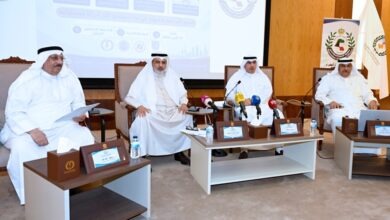
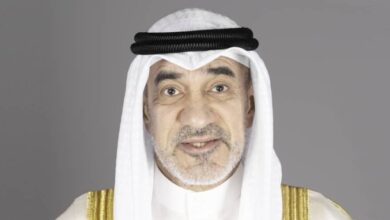
Kuwait is closely monitoring potential risks to internet cables amid regional developments and remains prepared to respond to any emergency, Minister of State for Communications and Information Technology and Acting Minister of Information and Culture Omar Al-Omar said, stressing that any disruption would affect the wider region rather than Kuwait alone.
“We do not want to assume the worst, but we are always prepared,” Al-Omar said, adding that alternative options would be available should circumstances require them.
He clarified, however, that satellite technology could not currently replace submarine and land-based cables, which provide significantly greater capacity. While satellites could support certain limited applications, including personal use, they were not yet capable of serving as a full substitute for conventional cable infrastructure.
Al-Omar made the remarks on the sidelines of the opening of Gulf Digitalization Week, which brings together the International Forum on Artificial Intelligence and Digitalization, held under the theme “Crisis Management, Innovation and the Future of Institutions,” and the Gulf Conference on Archiving, Documents and Archives Management.
The minister stressed that digital transformation remained a national priority regardless of prevailing circumstances. Kuwait was continuing with its digital development plans, he said, noting that the availability of online government services had proved particularly valuable during previous events and periods of disruption.
He said most government services were now delivered digitally, with the next phase focusing on greater integration between government entities and the development of connected digital services. Planned initiatives include integrated service journeys such as the “newborn journey” and the “home document,” which are intended to make government procedures more seamless.
Addressing questions about the availability of Microsoft Teams for the Ministry of Education, Al-Omar said each ministry was responsible for its own services, while the Ministry of Communications was responsible for ensuring the availability and quality of the underlying communications infrastructure.
He added that Kuwait was entering an important phase of development, with government data integration and the effective use of emerging technologies, including artificial intelligence, forming key priorities. Digitizing government archives is also a major project, supporting the country’s transition towards a paperless government.
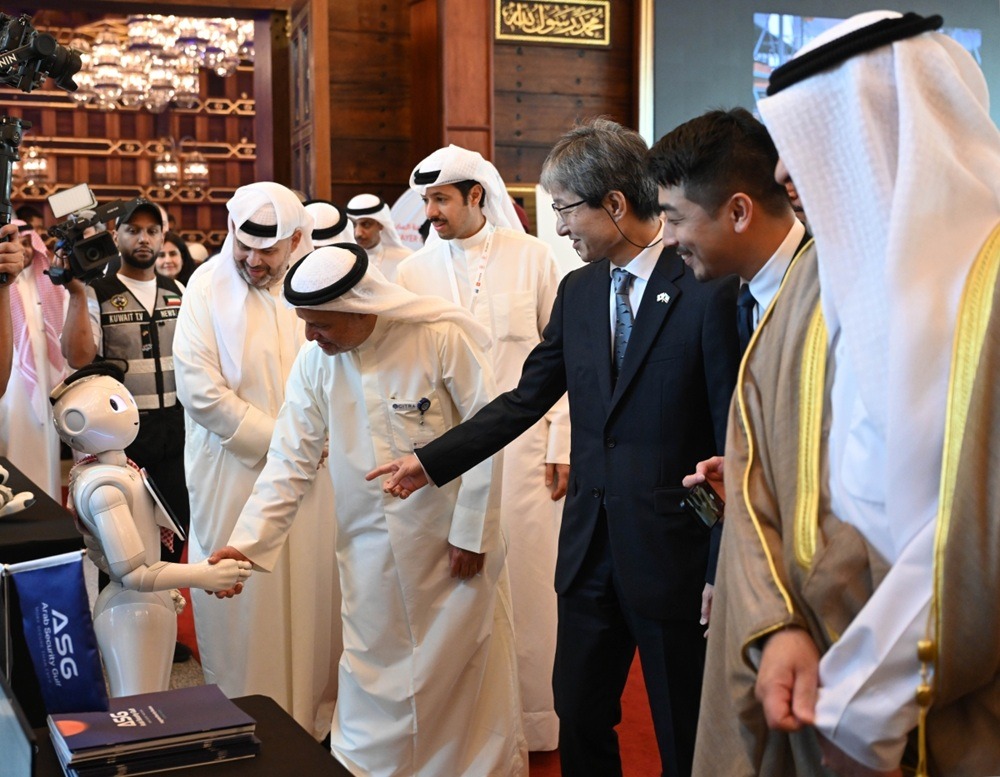
In his opening address, Al-Omar said artificial intelligence was no longer a technological luxury but a necessity for improving competitiveness, raising service quality and strengthening the accuracy of decision-making. He noted that AI was reshaping economies, government operations and labour markets, requiring countries to adopt technology responsibly while developing the necessary infrastructure, regulatory frameworks and skilled workforce.
The ministry and its affiliated bodies are working to integrate digital initiatives into a unified system serving citizens, residents and businesses. The Central Agency for Information Technology is leading national efforts to accelerate the adoption of cloud computing and establish a platform connecting government systems and standardizing the management of application programming interfaces.
These initiatives are expected to improve service efficiency, strengthen information security and facilitate data exchange between government entities. Al-Omar said AI should empower people rather than replace them, helping simplify procedures, support decisions and create opportunities for innovation and entrepreneurship, particularly among young people.
He emphasized that investment in artificial intelligence must be accompanied by investment in developing Kuwaiti talent and expertise. Kuwait has entered strategic partnerships with major global technology companies, including Microsoft, to establish an AI-powered cloud region and an innovation centre, alongside programs aimed at training thousands of national professionals.
The partnerships, he said, are intended to facilitate knowledge transfer, localize expertise and generate added value for the national economy. Turning to document and archive management, Al-Omar said reliable data was fundamental to the effective use of intelligent systems, describing institutional documents as part of the memory of both government entities and the state. He said the integration of artificial intelligence with modern archiving systems would help improve access to information while maintaining security and confidentiality.
The government archive digitization project, being undertaken in cooperation with Iron Mountain, aims to convert paper records into digital documents, streamline information retrieval and support the transition to a paperless government. The initiative is also expected to strengthen the information base required for sound government decision-making.

Al-Omar expressed hope that Gulf Digitalization Week would produce practical recommendations to deepen regional cooperation in digital transformation and artificial intelligence. He said the participation of Gulf and international experts offered an opportunity to exchange knowledge and translate technological advances into tangible improvements in government services and institutional performance.