Kuwait places sustainability, ESG at the heart of development, environmental protection
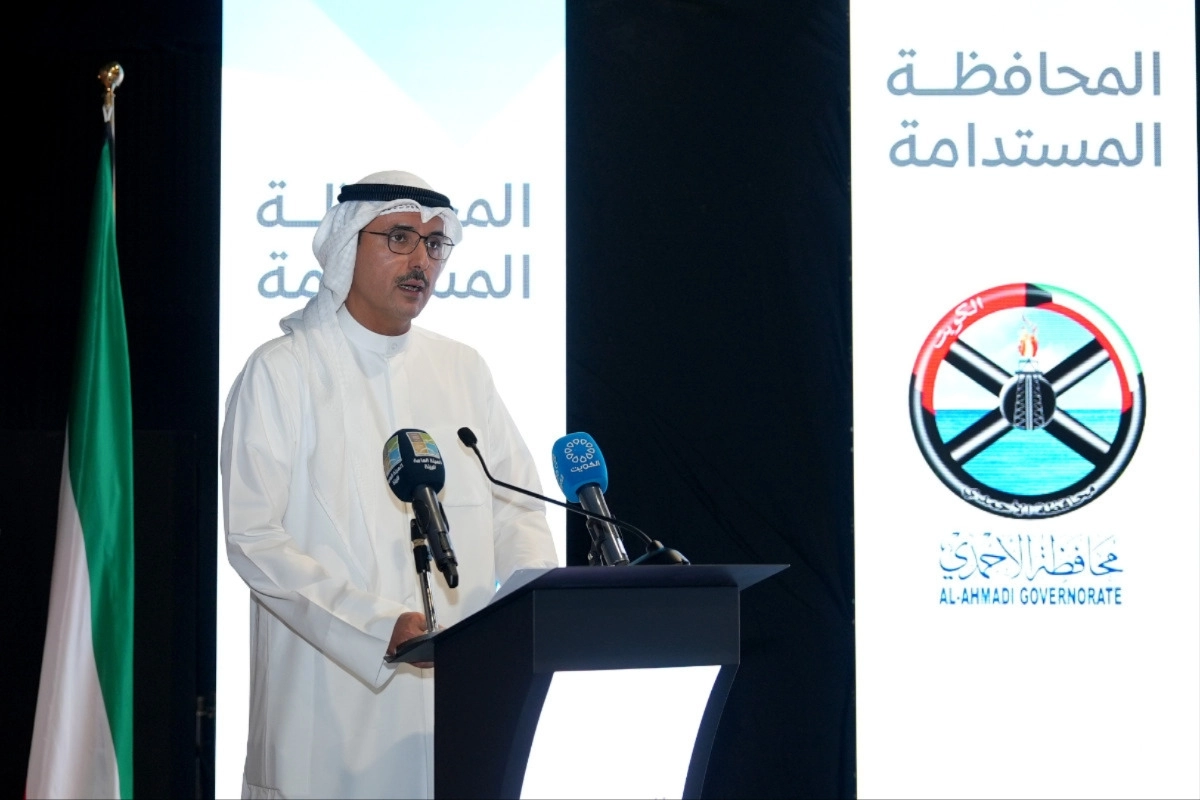
Sustainability should not be viewed simply through reports and indicators, but as a practical methodology whose impact can be reflected in government policies, development projects and institutional practices — Governor of Ahmadi Sheikh Hamoud Al-Jaber
Governor of Ahmadi Sheikh Hamoud Al-Jaber said, sustainability must evolve from a reporting requirement into an institutional approach that shapes policies, projects, resource management and everyday decision-making.
Speaking at the introductory “Sustainable Conservation” seminar, organized by the Ahmadi Governorate in cooperation with the Environment Public Authority (EPA) and the Kuwait Oil Company (KOC) at the KOC tent, Al-Jaber said sustainability is fundamentally about achieving an effective balance between development and environmental protection through the efficient use of resources, improved performance, stronger social responsibility and greater transparency and governance.
He stressed that sustainability should not be viewed simply through reports and indicators, but as a practical methodology whose impact can be reflected in government policies, development projects and institutional practices.

In this context, he highlighted the importance of sustainability reporting and environmental, social and governance (ESG) principles as tools that can strengthen decision-making and provide institutions with clearer foundations for evaluating performance and managing resources.
Economic role highlights importance of sustainability
Al-Jaber said the sustainability agenda carries particular significance for Al-Ahmadi Governorate, given its substantial economic and developmental importance and the presence of major national sectors, particularly the oil industry.
This position, he noted, gives the governorate an important role in adopting leading sustainability practices while ensuring that economic and development objectives remain compatible with environmental protection.
He praised the EPA for its efforts to advance environmental protection and public awareness, while also commending Kuwait Oil Company’s national role in developing environmental practices and supporting sustainability and social responsibility initiatives.
According to the Governor, achieving meaningful sustainability requires a coordinated effort involving government agencies, national institutions, the private sector and society as a whole. He emphasized the importance of institutional partnerships built around planning, measurement, disclosure and continuous improvement, with the ultimate objective of turning sustainability targets into measurable results.
He expressed hope that the seminar would strengthen cooperation among participating institutions and help translate sustainability objectives into tangible outcomes that support Kuwait’s ambitions for sustainable development and a more prosperous future.
Sustainability is now central to institutional performance
Acting EPA Director General Nouf Behbehani said sustainability is no longer an optional initiative or a label attached to individual projects, but has become an essential component of an institution’s ability to manage resources, mitigate risks, achieve growth and build a more efficient and resilient future.
Behbehani said the seminar forms part of the direction led by Minister of State for Development and Sustainability Dr. Reem Al-Faleej to establish sustainability as an integrated national approach and strengthen its role in planning and decision-making.
The objective, she explained, is to bring together the environmental, developmental, economic and social dimensions while helping state institutions move from fragmented initiatives towards sustainable institutional practices based on planning, performance measurement and maximizing impact.
She stressed that the real challenge lies not in adopting sustainability as a concept, but in translating it into institutional practices, measurable indicators and verifiable results.
A sustainable institution, she said, is not necessarily one that carries out the largest number of initiatives; rather, it is one that understands the impact of its actions, measures outcomes, reviews performance and uses data to improve its decisions.
ESG reports seen as tools for better decision-making
Behbehani highlighted the growing importance of sustainability reports and ESG principles, describing them as practical instruments for improving institutional performance rather than merely fulfilling disclosure requirements.
Such reports can provide a broader understanding of risks and opportunities, improve the efficiency of resource use, strengthen environmental and social responsibility, and reinforce transparency and governance, she said.
The EPA, she added, sees its role as extending beyond regulatory oversight to helping create an institutional environment that supports sustainability, improves the quality of environmental data, encourages impact measurement and promotes practices capable of delivering measurable results.
Behbehani described cooperation with Kuwait Oil Company as an important example of partnership between national institutions. KOC’s extensive experience and expertise in environmental operations and practices can be used to develop performance indicators, exchange knowledge, improve operational efficiency and convert accumulated expertise into wider institutional and national value, she said.
She called for a shift from managing initiatives to managing impact, from simply collecting data to using it in decision-making, and from meeting regulatory requirements to anticipating risks and converting them into opportunities for improvement and development.