Kuwait marks 64th anniversary of adoption of its Constitution
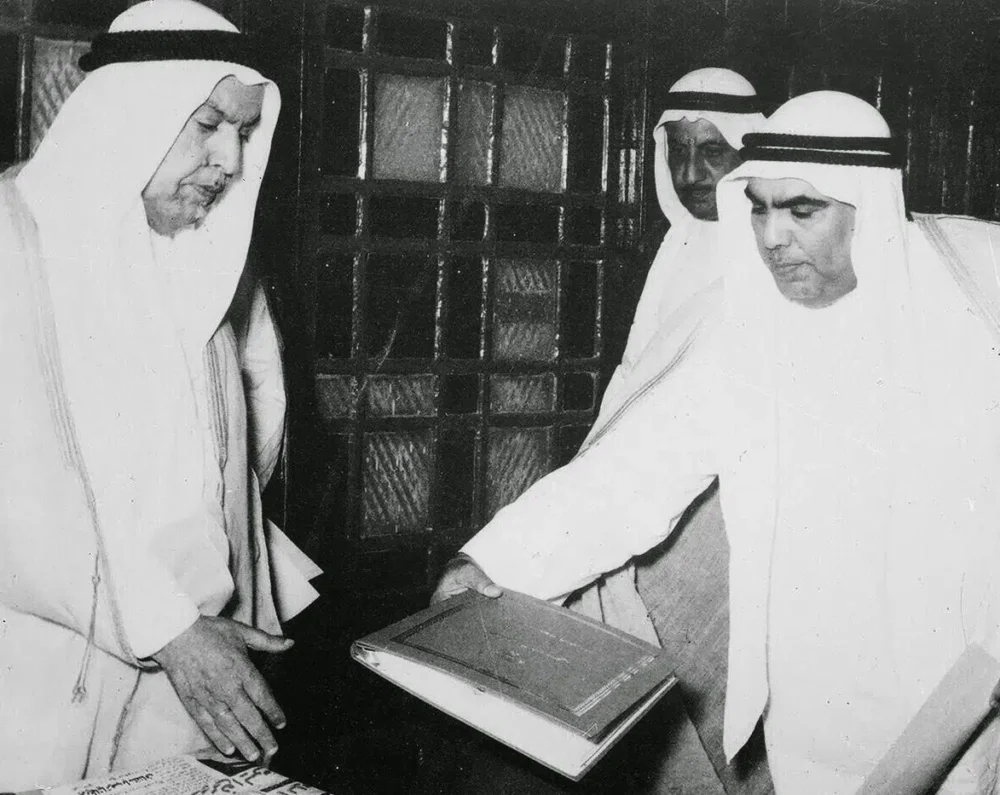
Kuwait on Wednesday marks the 64th anniversary of the adoption of its Constitution, a landmark in the country’s modern history that defines its system of government and regulates relations among the legislative, executive and judicial authorities.
The promulgation of the Constitution on November 11, 1962, marked a milestone in Kuwait’s democratic journey and crowned decades of efforts by Kuwaitis, beginning with the adoption of a constitutional document in 1938 that paved the way for the 1962 Constitution.
On this national occasion, Kuwaitis recall their country’s history with pride and reaffirm their commitment to democracy and the principles of justice, freedom, equality and equal opportunity. Kuwait commemorates the anniversary every November 11, the date on which the late Amir Sheikh Abdullah Al-Salem Al-Sabah ratified the Constitution in 1962.
On August 26, 1961, Sheikh Abdullah Al-Salem issued an Amiri decree establishing the basic framework for the transitional period and providing for elections to a Constituent Assembly tasked with drafting a permanent constitution.
Opening the Constituent Assembly on January 20, 1962, Sheikh Abdullah Al-Salem said, “In the name of Allah, the Most High, the Almighty, we open the proceedings of the Constituent Assembly, which is entrusted with laying the foundations of government for the future.”
At that sitting, members elected Abdullatif Mohammad Thunayan Al-Ghanim as speaker and Dr. Ahmad Al-Khatib as deputy speaker. At its sixth sitting, the Assembly formed a five-member constitutional committee chaired by then Minister of Interior Sheikh Saad Al-Abdullah Al-Salem Al-Sabah, who later became Amir. The committee also included Al-Ghanim, Minister of Justice Humoud Al-Zaid Al-Khaled and Assembly members Yaqoub Al-Humaidhi and Saud Al-Abdulrazzaq.
The committee submitted the final draft to the Constituent Assembly, which approved it unanimously on November 3, 1962. The Assembly then presented the text to Sheikh Abdullah Al-Salem, who ratified and promulgated it on November 11 as adopted by the Assembly. It was published in the Official Gazette the following day.
Kuwait’s Constitution comprises 183 articles divided into five parts. The first covers the State and the system of government, the second sets out the fundamental principles of Kuwaiti society and the third deals with public rights and duties. The fourth part covers the powers of the State in five chapters dealing with general provisions, the head of state and the legislative, executive and judicial authorities. The fifth contains general and transitional provisions.
Throughout Kuwait’s democratic history, the Constitution helped the country withstand internal and external challenges, particularly the Iraqi invasion in August 1990, when Kuwaitis at home and abroad rallied behind their legitimate leadership.
In an April 1991 address, the late Amir Sheikh Jaber Al-Ahmad Al-Jaber Al-Sabah said consultation and public participation in national affairs were longstanding features of Kuwaiti life and could take several forms. He said the restoration of parliamentary life was what Kuwaitis had agreed upon at the Popular Conference in Jeddah.
Parliamentary life resumed in October 1992, with the National Assembly returning to its legislative and oversight duties.
In the years that followed, Kuwait’s Amirs reaffirmed their commitment to the Constitution as the social contract between the ruler and the people and stressed the importance of upholding democratic principles and exercising them responsibly.
In an address to the National Assembly on October 26, 2010, the late Amir Sheikh Sabah Al-Ahmad Al-Jaber Al-Sabah said the Constitution safeguarded democracy by defining the remit, limits and powers of each authority. He added that breaches of those provisions violated the Constitution, harmed the public interest and undermined national objectives.
Speaking at the National Assembly on September 30, 2020, after taking the constitutional oath as Amir, the late Sheikh Nawaf Al-Ahmad Al-Jaber Al-Sabah expressed pride in Kuwait’s Constitution, its democratic tradition and its standing as a state governed by law and institutions. He reaffirmed his commitment to the spirit of unity that characterizes Kuwaiti society and to the country’s enduring principles.
His Highness the Amir Sheikh Meshal Al-Ahmad Al-Jaber Al-Sabah reaffirmed those principles on several occasions, including in his address to the National Assembly on October 8, 2020, when it endorsed his nomination as Crown Prince. His Highness pledged to promote public participation and work toward a future for Kuwait in which democracy fosters stability and the national interest takes precedence within the framework of the Constitution, guided by justice and the aim of ensuring a dignified life.
Kuwait’s Constitution remains the cornerstone of the State’s legal and political system and the principal reference governing relations among its three branches. It balances tradition with modernity and the powers of government with the requirements of public participation.
Source: KUNA