Kuwait banks move to phase out payment links as WAMD gains ground
Security, traceability and tighter financial controls drive shift to account-based instant payments
The Times Kuwait Report
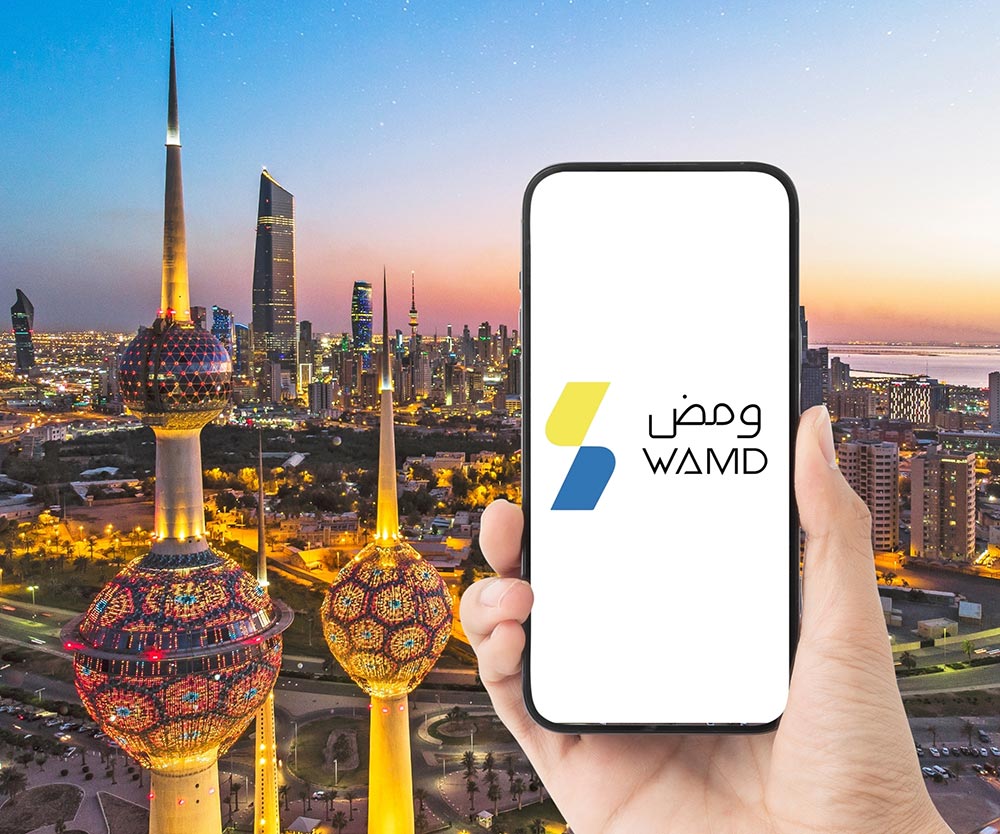
Kuwait’s banking sector is preparing to phase out the electronic ‘Payment Links’ service for individuals, with banks and KNET moving customers towards WAMD, the country’s account-based instant payment platform.
The move is being driven not simply by the availability of a newer technology, but by growing concerns over security, transaction traceability, fraud and financial-crime risks associated with payment links.
Banks, in coordination with KNET and under the regulatory framework of the Central Bank of Kuwait (CBK), are expected to launch awareness initiatives to explain the transition and encourage customers to use WAMD for instant transfers. The service, which has been available since 2015, is expected to be discontinued, although a specific date for its final closure has not yet been announced.
Why are banks phasing out payment links?
The central concern is who actually receives the money. Payment links can be shared or forwarded between individuals. This flexibility, which helped make the service popular, can also make it more difficult to establish the identity of the ultimate beneficiary in a transaction.
A link created for one person can potentially be passed to another person, creating an additional layer between the original sender and the final recipient. For banks and regulators increasingly focused on combating financial fraud, money laundering and other forms of financial crime, that lack of direct traceability presents an unnecessary risk.
WAMD takes a different approach
The service facilitates an instant transfer directly between bank accounts through the customer’s banking application, allowing the sender to identify the beneficiary before authorising the transaction. The Central Bank says WAMD was developed as part of Kuwait’s effort to improve the efficiency, flexibility and security of electronic payments.
The planned move reflects a wider change in Kuwait’s banking philosophy: convenience alone is no longer enough. As digital payments become an increasingly important part of everyday financial activity, banks need systems that provide a clear transaction trail, stronger customer authentication and better monitoring capabilities.
The CBK’s electronic-payment regulations place particular emphasis on risk management, anti-money laundering and counter-terrorist financing, cybersecurity, business continuity and protection of customer rights.
From this perspective, moving customers from payment links to WAMD provides banks with a more controlled and integrated payment environment. It also makes it easier to investigate disputed or suspicious transactions and establish the parties involved.
Fraud is another major concern
The growing sophistication of digital fraud has added urgency to the shift. Kuwait’s banks have repeatedly warned customers about scams involving payment links, including attempts to manipulate customers into clicking malicious links or transferring money to fraudulent beneficiaries.
Banks have also warned about scams in which fraudsters claim that money has been transferred accidentally and then ask victims to return it through a payment link. Such schemes can be used to obtain sensitive banking information or redirect funds.
For the banking industry, reducing the number of payment channels that can be easily forwarded or manipulated can help narrow opportunities for such abuse. The objective is therefore not merely to replace an old service with a new one. It is to reduce points of vulnerability across Kuwait’s digital financial ecosystem.
WAMD has already proved its scale
The strongest argument for the transition is perhaps the extraordinary growth of WAMD itself. According to the latest figures, WAMD payments reached KD7.7 billion during the first eight months of 2026, covering around 118.4 million transactions.
The figures show that customers have already embraced account-based instant payments on a massive scale. WAMD transactions reached around KD1.07 billion in August alone, demonstrating that the service has moved well beyond being an alternative payment facility and is becoming an integral part of Kuwait’s everyday banking system.
Earlier Central Bank data showed WAMD transactions during the first five months of 2026 had already reached KD4.52 billion through nearly 70 million transactions, a 53.4 percent increase over the corresponding period of 2025.
From flexibility to traceability
Payment Links became popular because they were simple. A customer could generate a link and send it to another person, making the transfer process convenient, particularly for small personal transactions.
But the same convenience created a potential weakness: the payment instrument could travel independently of the original banking relationship. The transaction remains within the banking ecosystem, with the sender initiating the transfer through the bank’s application and identifying the intended recipient.
For regulators, this provides greater visibility. For banks, it means stronger monitoring. For customers, it means a more direct and controlled transaction.
The change is part of a bigger transformation
The phase-out of payment links is also part of a much larger transformation underway in Kuwait’s national payment infrastructure. The CBK launched the Kuwait Dispute Management System (KDMS) in February 2026 as part of the second phase of the Kuwait National Payments System project.
The system provides an integrated electronic mechanism for submitting, processing and settling disputes arising from financial transactions, with the stated aim of improving transparency, reliability, security and efficiency.
The Central Bank has also emphasised that WAMD operates 24 hours a day, seven days a week, including public holidays, allowing customers to transfer money instantly between bank accounts. Kuwait is building a payment environment in which transactions are increasingly instant, digital, identifiable and centrally monitored.
What customers should expect
Customers who currently use payment links are unlikely to face an immediate disruption. Banks are expected to communicate the change in advance and encourage customers to move to WAMD and other approved digital banking channels.
For most users, the practical difference will be small. Instead of receiving a payment link, customers will increasingly make or receive transfers directly through their bank’s application.
Every transaction will sit within a more clearly defined banking relationship, giving financial institutions greater ability to identify suspicious activity, investigate disputes and protect customers.