Kuwait a strategic partner as Britain seeks deeper economic cooperation: Lord McNicol
. . . praises the warm Kuwaiti hospitality and said Kuwait’s openness, strategic outlook and investment capacity make it a key partner for the United Kingdom in the years ahead
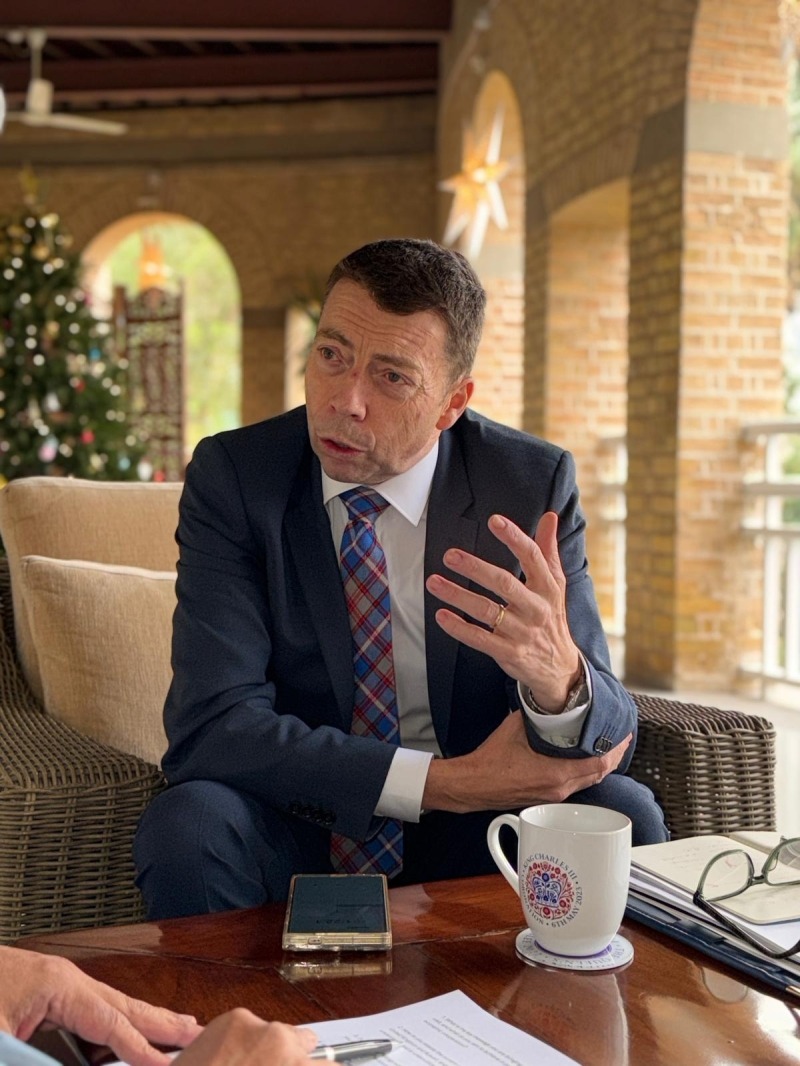
- The UK’s trade envoy to Kuwait, Lord Ian McNicol, outlines a roadmap for deeper bilateral cooperation, highlighting untapped opportunities in energy, infrastructure, healthcare and investment, while reaffirming Kuwait’s pivotal role in advancing economic ties and future-focused partnerships between the two countries.
At a time marked by rapid economic change and shifting global energy and trade balances, the visit of the United Kingdom’s trade envoy to Kuwait, Lord Ian McNicol, has reaffirmed the depth of Kuwaiti-British relations and highlighted broad prospects for expanding bilateral partnerships.
During his official visit, Lord McNicol held a series of high-level meetings with senior Kuwaiti officials, including Minister of Defense Sheikh Abdullah Ali Abdullah Al-Salem Al-Sabah, Minister of Electricity, Water and Renewable Energy, Minister of Finance and Acting Minister of State for Economic Affairs and Investment Dr. Sabih Al-Mukhaizeem, and Chairman of the General Authority of Civil Aviation Sheikh Hamoud Mubarak Al-Hamoud Al-Sabah.
Lord McNicol described Kuwait as a pivotal partner in the region, stressing that the United Kingdom is “open for business” and keen to deepen economic, trade and investment cooperation with Kuwait across multiple sectors, reports Al-Rai daily.
He explained that the visit, one of his first since assuming the role of UK trade envoy to Kuwait, aims to strengthen relationships with ministers, officials and business leaders, while exploring new opportunities beyond traditional areas of cooperation.
He emphasized that trade relations are a two-way street, encouraging Kuwaiti investment in the UK alongside greater British commercial engagement in Kuwait.
Lord McNicol said current trade relations are strong but still offer significant room for growth. While oil and gas have historically formed the backbone of economic cooperation, he identified healthcare, construction, infrastructure, energy and aviation as sectors with substantial untapped potential.
He pointed to the role of British companies in major Kuwaiti projects, including the new passenger terminal at Kuwait International Airport, designed by Foster + Partners, as evidence of successful collaboration.
He also noted growing opportunities for British firms in engineering, procurement and construction projects amid Kuwait’s ongoing urban expansion.
On shared economic visions, Lord McNicol highlighted a mutual focus on future-oriented cooperation, building on longstanding historical, security and defense ties. He said both sides are keen to encourage British companies to operate in Kuwait while expanding Kuwaiti investments in the UK through sovereign and private channels.
Energy security featured prominently in discussions, with Lord McNicol underscoring the UK’s experience in diversifying energy sources, including renewables and peaceful nuclear technology. He expressed readiness to share British expertise, research and regulatory frameworks to support Kuwait’s long-term energy strategy.
Regarding nuclear energy, he noted the UK’s advanced experience, including approvals for small modular reactors, and said British expertise in safety and regulation could be valuable should Kuwait explore this field in the future. He stressed that nuclear safety remains a top priority, citing the UK’s decades-long record without nuclear accidents.
Lord McNicol also praised Kuwait’s constructive role in advancing negotiations on the UK-GCC free trade agreement, noting that Kuwait has played a leading role in moving talks forward over the past year.
He highlighted the long history of Kuwaiti investment in the UK, recalling that the Kuwait Investment Authority was the first sovereign investment office established in Britain in 1953. He said the UK is keen to expand public-private partnerships that offer attractive returns for Kuwaiti investors while supporting major infrastructure projects.
Looking ahead, Lord McNicol expressed optimism about the future of bilateral economic relations, noting that annual trade volume already exceeds £6.5 billion and is poised for further growth, particularly in food, agriculture, energy and services.
Concluding the visit on a lighter note, he praised the warm Kuwaiti hospitality and said Kuwait’s openness, strategic outlook and investment capacity make it a key partner for the United Kingdom in the years ahead.