Al-Yousef: Zero tolerance in war on narcotics under Kuwait’s toughest law yet
Among the most serious aggravated cases included in the legislation are: the exploitation of minors in drug-related activities; committing crimes in treatment, rehabilitation, educational, sports, or prison facilities; forcing others to use drugs; establishing or managing criminal gangs or organizations engaged in drug-related crimes; planting narcotics to falsely accuse others; and abusing public office or influence to commit such offenses.
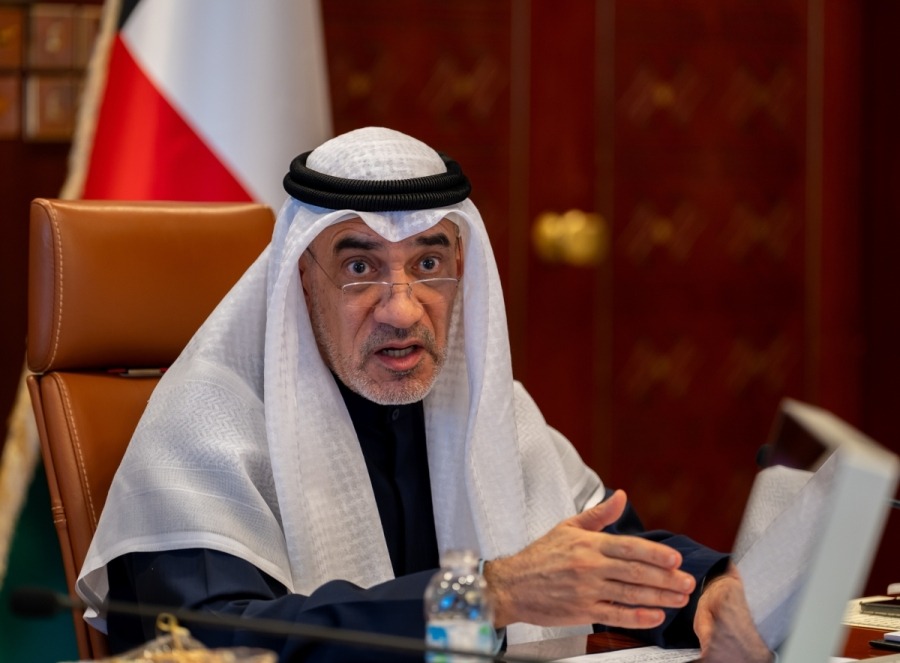
The First Deputy Prime Minister and Minister of Interior, Sheikh Fahd Yousef Saud Al-Sabah, affirmed that the issuance of Decree Law No. 159 of 2025 on combating drugs and psychotropic substances signals Kuwait’s entry into a new phase of legislative firmness.
He stressed that the Ministry of Interior will continue its war against narcotics with no leniency toward anyone who threatens the security of society.
His remarks came after the Official Gazette, Kuwait Alyawm, published the full text of the law in its Sunday edition. The legislation is scheduled to come into force on December 15.
Sheikh Fahd Al-Yousef said in a statement issued by the Ministry of Interior that the new law unifies and significantly toughens penalties covering all forms of narcotic and psychotropic substances, reports Al-Rai daily.
He described it as a rigorous deterrent framework within Kuwait’s legal system, with maximum penalties reaching the death sentence, life imprisonment, and fines of up to two million Kuwaiti dinars for crimes including importation, smuggling, manufacturing, and cultivation.
He noted that the law imposes stricter punishments for crimes involving trafficking, promotion, sale, purchase, and barter.
Among the most serious aggravated cases included in the legislation are: the exploitation of minors in drug-related activities; committing crimes in treatment, rehabilitation, educational, sports, or prison facilities; forcing others to use drugs; establishing or managing criminal gangs or organizations engaged in drug-related crimes; planting narcotics to falsely accuse others; and abusing public office or influence to commit such offenses.
Al-Yousef highlighted that recent years have seen record seizures of narcotics and psychotropic substances and the foiling of numerous smuggling attempts.
The new law, he said, strengthens the capacity of security agencies to impose deterrence and tighten the net around criminal networks through what he described as the strongest punitive framework ever enacted in Kuwait.
The Minister added that the law enhances penalties for the misuse, issuance, or dispensing of narcotic substances for consumption, while also intensifying penalties for drug use within prisons, police stations, rehabilitation and addiction treatment centers, educational institutions, places of worship, and other designated facilities.
He explained that the law will take effect 14 days after its publication in the Official Gazette, allowing the public sufficient time to familiarize themselves with its provisions, and enabling relevant authorities to complete the necessary regulatory procedures for implementation.
Reaffirming a zero-tolerance approach, Sheikh Fahd stressed that the Ministry of Interior will not relent in confronting any crime that targets citizens or threatens public security. He called for strengthened community cooperation, describing the fight against drugs as a shared national responsibility.
On the humanitarian side of the legislation, the Minister pointed out that the law provides legal pathways for treatment. These include voluntary admission and reports filed by relatives up to the third degree, with strict guarantees to preserve the confidentiality of data and penalties for unauthorized disclosure or malicious reporting.
As part of the implementation phase, Al-Yousef announced that the General Department of Security Relations and Media will launch a comprehensive awareness campaign under the slogan “We Protect the Homeland.” The campaign will inform the public about the provisions of the law, associated penalties, and available treatment options.
It will run across television, radio, official ministry platforms, cinema screens, exhibitions, and electronic billboards on main roads, in cooperation with various state bodies to enhance public understanding and responsiveness.