By Shouq AlMulla
Special to The Times Kuwait
In the northernmost tip of Qatar, where the desert meets the sea and silence carries its own kind of wisdom, stands a place that redefines what wellness can mean for our region. Zulal Wellness Resort is often described as a retreat, but after three days immersed in its philosophy, I would argue it is something far more profound. Zulal is a conversation between past and present, a bridge between ancient healing traditions and the modern search for balance. It is also a powerful symbol of Qatar’s growing leadership in wellness tourism and cultural innovation across the Gulf.
Operated by the world-renowned Thai wellness brand Chiva-Som, Zulal represents a groundbreaking fusion of global expertise and regional heritage. To the best of public knowledge, it is one of the world’s first full-scale wellness resorts to center its entire philosophy on Traditional Arabic and Islamic Medicine (TAIM). This is the heart of the resort’s identity, woven into every aspect of the guest journey. From personalized mizāj (temperament) assessments and herbal formulations to nutrition, movement, spa therapies, and holistic healing. This pioneering model has earned Zulal multiple international awards, positioning it as a benchmark for culturally rooted, modern wellness.
My journey began on a quiet road that cuts through the desert. A private driver welcomed me at Hamad International Airport and guided me along the hour-long drive north. Doha’s bustling cityscape slowly faded behind us, the towers, the movement, and the noise replaced by the serenity of desert calm. Upon arrival, I was offered a warm herbal infusion in the tea room, a space that blends the simplicity of an apothecary with the elegance of a Gulf majlis. Shelves of herbs, flowers, and white honey reflected centuries of traditional healing. I was immediately captivated by the earthy architecture, the vast library stretching to the ceiling, the silence that filled every corner, and the presence of the grand Sidr trees, symbols of heritage and healing across the Arab world.
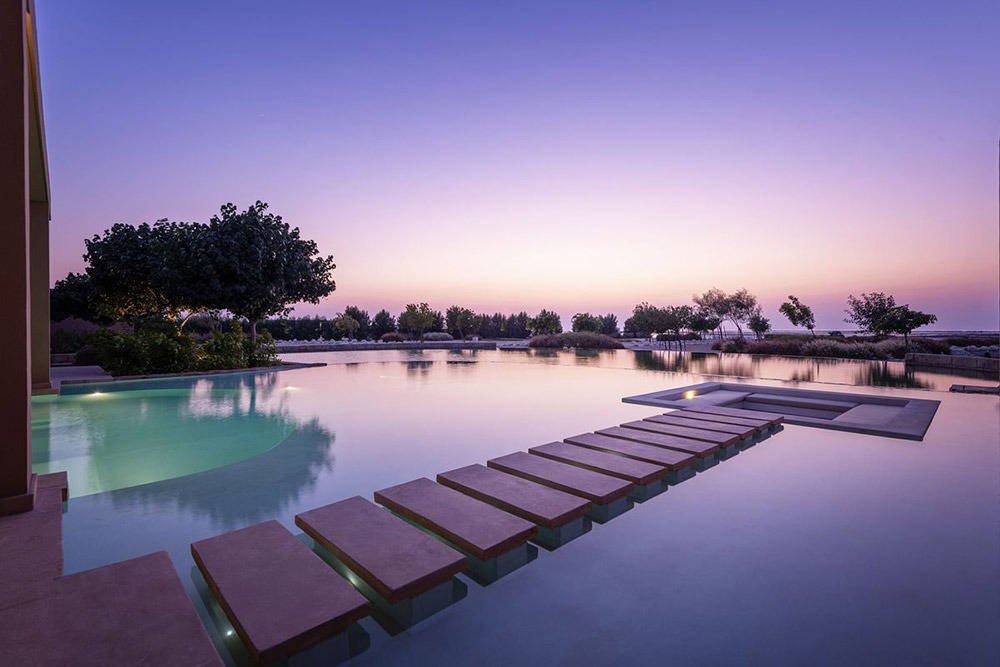
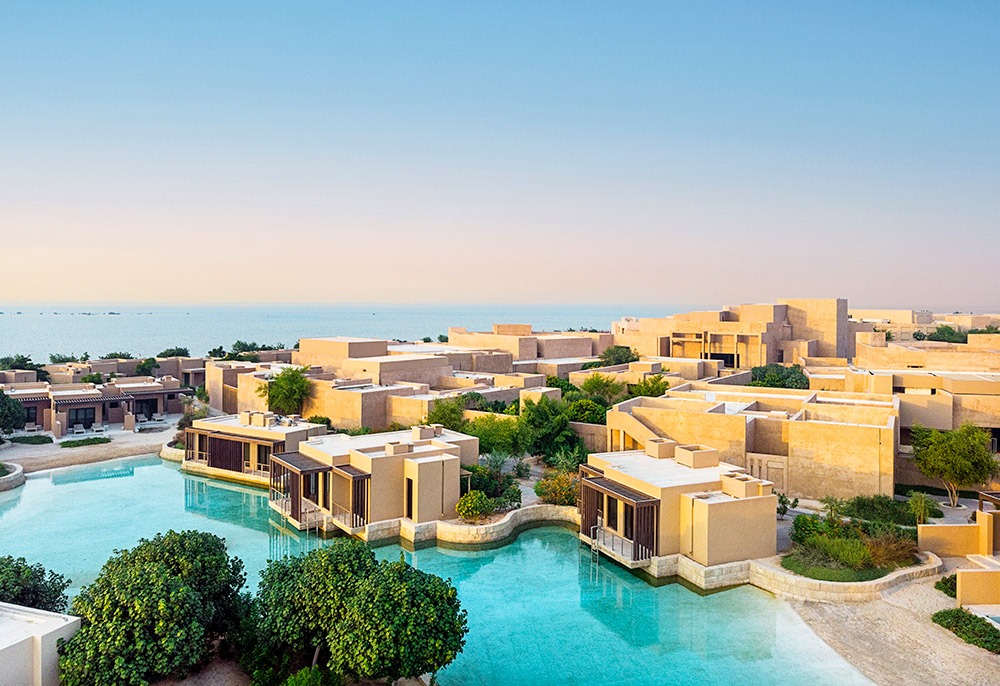
My suite in the adults-only Serenity section opened onto a tranquil lagoon, its still surface reflecting the sky like glass. The natural textures and soft lighting allowed the surrounding landscape to speak for itself. I also had my own private pool, a hidden sanctuary where I spent my free time reading and writing. In contrast, the facility includes the Discovery wing, designed for families, reflecting the resort’s belief that well-being is a shared journey for all ages.
The next morning, I met with the professional, and incredibly kind wellness team. They were attentive, detailed, and committed to making my stay as comfortable as possible. This consultation was nothing like the clinical detachment of Western medical forms; it felt like sitting with someone who genuinely wanted to understand how my life, responsibilities, and emotions were carried in my body. That is where Zulal begins: by listening.
From this conversation came a personalized program integrating movement, breath-work, physiotherapy, meditation, nutrition, and a TAIM consultation—the philosophical anchor of the resort. What struck me most was the depth behind every element and the richness of Arab-Islamic medicine that is deeply rooted in our region’s history. Wellness here was not treated as a passing trend but as a lived expression of heritage—something our ancestors mastered centuries before the modern world rediscovered mindfulness, herbalism, or holistic healing.
Listening to the TAIM practitioner explain humoral theory and the legacy of Ibn Sina was a fascinating discovery, a new horizon in understanding the human body, mind, and spirit. He explained that wellness is not something external we chase, but an internal landscape we learn to interpret. The principle is simple: treat every imbalance with its opposite. Excess heat is cooled, dryness is nourished, stagnation is moved. These classical teachings, drawn from centuries of Islamic scholarship, felt remarkably relevant to the pressures of modern life.


Throughout my stay, I explored the resort’s world-class facilities: hydrotherapy pools, ice and snow rooms, Himalayan salt chambers, meditation suites, physiotherapy clinics, and fitness studios. I took part in sound-healing sessions, meditation classes, corrective physiotherapy exercises, and a floating-water therapy session under the stars, an experience that felt like releasing every burden into the night sky. It was one of the most transformative moments of the entire retreat.
Meals were another reflection of Zulal’s philosophy. Restaurants such as Acacia, Al Sidr, Aizoon, and seasonal beachside venues served beautifully prepared dishes crafted using ingredients selected for their healing properties. This was not deprivation but nourishment, thoughtful, flavorful, and customized according to each guest’s health goals and nutritional needs.
Zulal is more than a resort; it is a statement about where Qatar, and the wider Gulf is heading. It demonstrates that we no longer need to look abroad for world-class wellness experiences. They are being built here, rooted in our own identity. More importantly, Zulal symbolizes partnership: between ancient healing and modern science, between Gulf heritage and global innovation. It embodies the collaborative spirit shaping the region today, a spirit that values knowledge, sustainability, health, and human development.
When I left Zulal, I felt lighter, clearer, and more grounded. But more than anything, Zulal reminded me that our region’s strength has always been its ability to balance heritage with progress, stillness with ambition, and culture with care. On Qatar’s quiet northern shore, that balance has been perfected, and I cannot wait to return.