The UN Budget: Between Reform and a Growing Funding Crisis
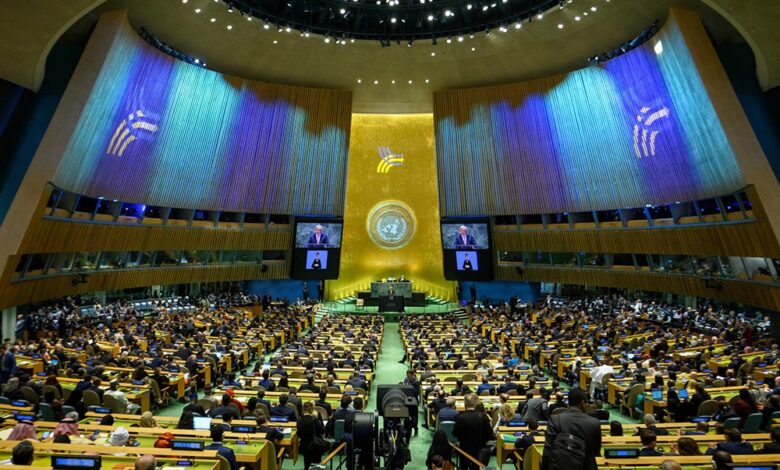
From $3.72 billion in 2025 to $3.45 billion in 2026, the United Nations’ regular budget has fallen by about 7.3%. What does this mean for the Organization’s future?
By Tareq Yousef Alshumaimry
Former Observer of the Executive Council and Chairman of the Budget Committees at the Permanent Court of Arbitration – The Hague
The United Nations is facing a familiar but increasingly difficult question: how can it continue to meet expanding global responsibilities while operating under tighter financial constraints?
The UN budget is more than a collection of figures. It reflects the priorities agreed upon by Member States and, increasingly, the differences between them over spending, efficiency and the role the Organization should play in addressing global challenges.
From peacekeeping and humanitarian assistance to human rights, development and political mediation, the UN operates across a broad range of areas. Yet the resources available to it depend ultimately on decisions taken by its Member States.
The debate today is therefore not simply about whether the UN has a large or small budget. It is about what is being funded, who pays, when payments are made and how efficiently available resources are used.
How does the UN budget work?
The basic principle is set out in Article 17 of the UN Charter, which provides that the Organization’s expenses are borne by Member States according to assessments determined by the General Assembly.
Member States do not simply choose what they wish to contribute. The General Assembly approves a scale of assessments based on recommendations from the Committee on Contributions.
The system is primarily based on a country’s capacity to pay. Under the assessment scale for 2025–2027, the minimum assessment is 0.001 percent, while the ceiling applicable to the least developed countries is 0.01 percent. No single Member State can be assessed more than 22 percent of the regular budget.
These assessed contributions are financial obligations rather than conventional voluntary donations. They are also separate from voluntary contributions that governments provide to individual UN programmes, funds and agencies.
Who decides how much the UN spends?
The process begins with the Secretary-General’s proposed budget. It is then examined and negotiated through the relevant UN financial and administrative committees before recommendations are submitted to the General Assembly, which has the final authority to approve the budget.
The UN has also moved towards a more frequent budget review. After operating experimentally with an annual budget cycle from 2020, the General Assembly decided in December 2022 to retain the annual system permanently.
The change gives Member States an opportunity to reassess priorities and resources more frequently. At the same time, it means that the Organization’s finances are more closely tied to annual negotiations and the economic circumstances confronting governments each year.
The numbers tell the story
The UN regular budget has moved significantly over the past several years. The General Assembly approved approximately $3.12 billion in 2022, followed by around $3.4 billion in 2023. The figure increased to approximately $3.59 billion in 2024, before reaching $3.72 billion in 2025.
For 2026, however, the approved regular budget stands at $3.45 billion. That represents a reduction of approximately $270 million, or about 7.3 percent, compared with 2025. Yet viewed over a longer period, the picture is different. The 2026 budget remains approximately $330 million, or 10.6 percent, higher than the 2022 level.
The figures therefore point to a reduction from last year, but not necessarily to a long-term contraction in the UN’s regular budget.
UN80: Reform at a critical moment
The budget reduction comes as the United Nations pursues the UN80 Initiative, launched in 2025 as the Organization marked its 80th anniversary.
The initiative focuses on three broad areas: improving efficiency and reducing operating costs; reviewing UN functions to identify duplication and overlapping responsibilities; and examining how the wider UN system can be restructured to become more efficient and responsive.
From a professional perspective, the reduction in the 2026 budget can therefore be viewed in the context of an effort to reform administration and improve efficiency rather than simply as an automatic decline in support for the United Nations.
The real test, however, will come with implementation.A smaller budget does not automatically mean a more efficient organization. The outcome will depend on whether reforms actually reduce duplication, improve management and ensure that resources reach the programmes and activities considered most important by Member States.
Approved budget does not mean cash in hand
One of the less visible aspects of the UN’s financial situation is the distinction between an approved budget and the cash actually available to the Organization. Even when the General Assembly has formally approved a budget, delayed payments by Member States can create cash-flow pressures.
In 2025, the Organization faced reported liquidity pressures and introduced measures that included expenditure reductions and delays in some recruitment activities. This distinction is important. A budget can exist on paper, but the Organization still needs Member States to meet their financial obligations on time for programmes and operations to function according to schedule.
The United States and China carry a substantial share
The United States remains the largest contributor to the UN regular budget, with an assessment of 22 percent, the maximum share assigned to a single Member State under the 2025–2027 scale. China is assessed at 20.004 percent. Together, the two countries account for approximately 42.004 percent of the regular budget. They are followed by Japan, Germany, the United Kingdom and France among the major contributors.
The concentration of contributions means that the financial positions and payment schedules of major contributors can have a significant effect on negotiations and, when payments are delayed, on the Organization’s liquidity.
A debate over priorities, not simply cuts
Member States do not all approach budget reductions in the same way.Some favour reducing administrative expenditure and eliminating duplication while seeking to protect field operations. Others support additional resources for particular programmes while calling for reductions elsewhere.
The disagreements consequently extend beyond the headline budget figure. They concern which functions should be reduced, which programmes should be protected, when changes should take effect and what level of financial oversight should apply.
The consequences may also differ from one country or region to another. Countries carrying large assessed contributions could see their future financial obligations reduced if overall budgets decline. The Organization itself could benefit if reforms succeed in eliminating duplication and improving management.
But countries dependent on UN programmes or hosting UN missions could face consequences if resource constraints translate into reduced services or programmes. Areas potentially affected include humanitarian assistance, support for refugees and displaced people, human rights programmes, development activities and conflict-prevention efforts.
Peacekeeping is a separate equation
There is another important point when assessing the UN’s financial position: the $3.45 billion regular budget does not represent the Organization’s total expenditure. Peacekeeping operations have a separate budget. The peacekeeping budget for the 2024–2025 financial period was approximately $5.6 billion.
Peacekeeping operations require substantial and continuous resources for troops, equipment, transportation, security and logistics. Delays in contributions can therefore create operational pressures even after a budget has formally been approved.
Any assessment of the UN’s finances must consequently distinguish between the regular budget, peacekeeping expenditure, voluntary funding for programmes and funds, and in-kind contributions.
The wider funding challenge
Countries can face difficulties meeting their financial obligations for a variety of reasons, including inflation, higher interest rates, wars and other crises that place additional demands on national budgets.
Domestic economic pressures can also contribute to financing difficulties. But these factors do not necessarily explain every payment delay, as the circumstances differ from one Member State to another.
This is why the reduction in the UN budget cannot be judged by the headline figure alone. The more important questions are: Which programmes will be affected? How many positions will be eliminated or redistributed? Where will resources be reallocated? And will the reforms produce measurable improvements in efficiency?
It is equally important to distinguish between proposed budgets and actual expenditure, and between approved appropriations and the cash available to the Organization.
The challenge ahead
The United Nations enters this period with a difficult balancing act. Member States want greater financial discipline and more efficient use of resources. At the same time, the Organization is expected to continue addressing conflicts, humanitarian emergencies, development challenges, human rights concerns and other global issues.
The central challenge is therefore not simply whether the UN should spend more or less.It is whether the resources available can be used more effectively without weakening the responsibilities that Member States have assigned to the Organization.
The reduction from $3.72 billion in 2025 to $3.45 billion in 2026 will inevitably intensify that debate.
Ultimately, the success of the reform process will depend not on the size of the reduction alone, but on whether the United Nations can demonstrate that every dollar available is being used where it can have the greatest institutional and human impact.