Kuwait spent 357.88 million dinars on food and construction subsidies in 2025
- Kuwait targets price stability with subsidies and strategic food reserves
- Consumer protection measures expand; strengthens food security with six-month strategic reserve
- Subsidies cover food, infant formula and construction material
- Kuwait keeps essential goods prices under control, leaves luxury items to market forces
Kuwait’s Ministry of Commerce and Industry maintained its focus on keeping essential goods available at reasonable prices in 2025, combining subsidies, market
inspections and strategic reserves as part of the government’s response to rising living costs.
According to the ministry’s annual report, price controls are applied primarily to essential goods and basic materials, while prices of luxury products are generally left to supply, demand and competition in line with Kuwait’s free-market economy. The ministry said its role is to prevent manipulation and exploitation while maintaining a balance between consumers and merchants.
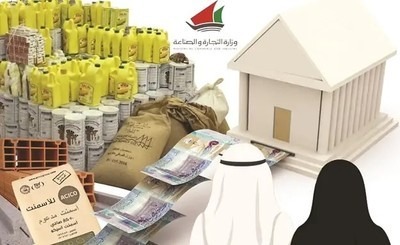
The government’s subsidy system remains a major part of that strategy. The ministry said total subsidies paid during 2025 for basic commodities, milk and infant formula, and construction materials reached approximately 357.88 million dinars. Of this amount, 170.5 million dinars went to basic commodities, 17.7 million dinars to milk and infant formula, and 169.5 million dinars to construction materials.
The basic commodity basket covers nine essential items, Peshawar rice, sugar, powdered milk, vegetable oil, tomato paste, chicken, lentils, flour and bread. Support for these products remained at 170.5 million dinars, unchanged from 2024. Subsidies for milk and baby food rose 7 percent to 17.7 million dinars, while support for construction materials fell 19 percent to 169.5 million dinars.
The scale of consumption highlights the importance of the subsidy programme to households. During the year, Kuwait recorded consumption of about 118 tons of Peshawar rice, 23.9 tons of sugar, 51 million subsidized chickens and 92 million loaves of bread. The reported value of the rice subsidy alone reached 45 million dinars.
Food security is also being supported through a strategic reserve designed to cover six months of population needs. The reserve includes rice, vegetable oils, powdered and liquid milk, sugar, lentils, flour, tomato paste and chicken, providing a buffer against emergencies and potential disruptions to supplies.
To protect the subsidized supply, the ministry prohibits the export of state-subsidized goods. It also works with the Kuwait Supply Company, the Union of Cooperative Societies and Kuwait Flour Mills and Bakeries Company to ensure supplies reach consumers, with support covering areas such as warehousing, refrigerated storage, transportation and distribution.
The ministry said consumer protection also depends on continued inspections of businesses and public markets to prevent fraud and price manipulation. It is working to raise consumer awareness of their rights, available choices and the laws governing prices and commercial activity.
Another development is the expansion of the ration-card system. The number of subsidized and reduced-price items increased from 108 to 116 by 2025, following the addition of new food products. The ministry is also working to connect and operate the automated ration-card system in cooperative society branches across Kuwait and upgrade it for a future smart card system.
For construction materials, the subsidy programme covers 14 categories, including cement, iron, bricks, concrete, electrical wires, ceramics and porcelain, sanitary ware, waterproofing materials, paints and aluminum. The ministry said support for these materials amounted to 169.5 million dinars in 2025, compared with 208.4 million dinars in 2024.
The ministry also reported that it issued 46 ministerial decrees during fiscal 2024/2025 as part of efforts to regulate commercial activity and strengthen oversight. Among the measures was a requirement to identify the actual beneficiary of businesses, alongside decisions adding new commercial activities and expanding the range of subsidized ration-card products.
Overall, the ministry’s approach combines targeted price intervention for essential goods with market-based pricing for non-essential products, while relying on subsidies, strategic reserves, inspections and distribution controls to protect household purchasing power and maintain the availability of basic commodities.