- BRICS leaders at the summit discuss Iran war, energy security, shipping and global trade at the top of the agenda.
- 10 member-BRICS represents more than 40 percent of the world’s population and nearly a quarter of the global economy.
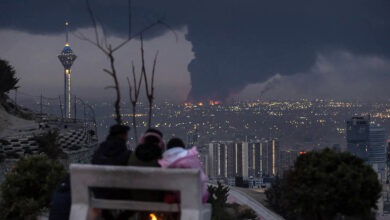
- India is pressing for protection of commercial shipping and seafarers as Iran conflict disrupts regional energy supplies and maritime trade.
- BRICS finance officials are pushing IMF and World Bank reforms, stronger cross-border payments and reduced reliance on Western financial systems.
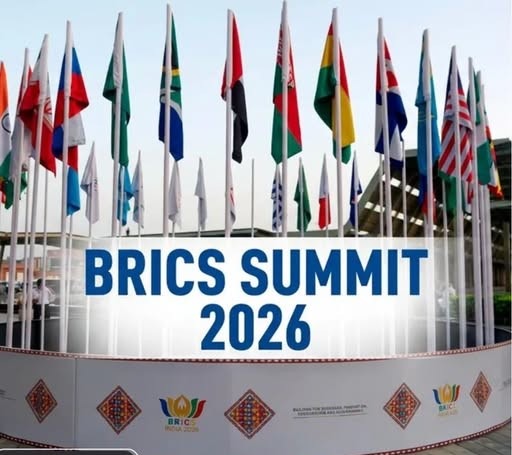
BRICS leaders have gathered in New Delhi for the bloc’s annual summit, with the Iran war, energy and shipping security, global trade, financial reform and the future of the expanded grouping high on the agenda as India seeks to use its presidency to strengthen the voice of emerging economies.
The two-day summit began on Saturday, September 12, with Indian Prime Minister Narendra Modi hosting leaders of the expanded BRICS grouping. The meeting comes at a particularly sensitive moment, with the United States-Iran conflict disrupting energy markets and maritime trade while the war in Ukraine and tensions between Washington and Beijing continue to shape the global economic environment.
BRICS now brings together Brazil, Russia, India, China, South Africa, Egypt, Ethiopia, Iran, the United Arab Emirates and Indonesia, with Saudi Arabia having been invited but not formally joining. The grouping represents more than 40 percent of the world’s population and almost a quarter of the global economy, giving its discussions significant weight in international economic and political affairs.
The Iran conflict is particularly important for India because of its impact on energy supplies and shipping. India’s talks with Iranian President Masoud Pezeshkian on Friday, ahead of the summit, focused heavily on regional stability, freedom of navigation, maritime commerce and the safety of seafarers.
Modi told Pezeshkian that India supports resolving conflicts through dialogue and diplomacy and stressed the need to protect navigation, commercial shipping and seafarers. India has been directly affected by attacks on shipping in the region, with at least 10 Indian nationals killed in recent maritime incidents, according to Reuters.
Pezeshkian, meanwhile, called for BRICS to help create conditions in which legitimate international trade could continue without being disrupted by economic pressure. Speaking at the BRICS Business Forum, he argued that the increasing use of economic measures to exert pressure on countries was threatening legitimate trade.
Modi and Russian President Vladimir Putin held talks in New Delhi on Friday, with energy, defence, trade and wider strategic cooperation among the issues discussed. India and Russia have set a target of increasing bilateral trade to $100 billion by 2030 from nearly $70 billion in 2024-25.
Putin has also pushed for BRICS to become a more practical economic platform, with greater cooperation in technology, infrastructure, payments and investment. He has argued that the grouping should provide an alternative avenue for global economic growth less dependent on Western rules.
The summit is also significant for India-China relations. Chinese President Xi Jinping is attending the meeting, his first visit to India in seven years. His presence provides an opportunity for Modi and Xi to build on a cautious improvement in relations following the military tensions and deadly border clash of 2020.
India and China have taken steps toward easing tensions since a 2024 disengagement agreement, including the resumption of direct flights and some easing of visa and investment restrictions. However, major differences remain over security, trade and their disputed border. A Modi-Xi meeting on the sidelines of the BRICS summit is therefore being closely watched.
Economic and financial reform is another major priority. BRICS finance ministers and central bank governors, meeting ahead of the leaders’ summit, called for reforms to institutions such as the International Monetary Fund and World Bank to make them more representative of emerging economies.
They also criticized unilateral trade and financial measures, including tariffs, that they said distort global trade and conflict with World Trade Organization rules. The finance officials called for closer coordination on cross-border payment systems and for faster, cheaper and more secure international payments.
BRICS is also working to reduce dependence on Western-dominated financial infrastructure. Members are developing the BRICS Pay initiative, aimed at connecting national fast-payment systems and facilitating cross-border settlements without relying exclusively on dollar-based banks. The group is also exploring greater use of national currencies and possible links between central bank digital currencies.
However, reaching agreement on geopolitical issues could prove difficult. The expanded BRICS membership includes countries with sharply different positions on the Iran conflict. Those differences have already created difficulties. BRICS foreign ministers failed to issue a joint statement after their May meeting in New Delhi, underscoring the challenge India faces in producing consensus among the expanded group.
The Ukraine war is another sensitive issue. Russia views BRICS as an important platform for challenging Western influence, while India and Brazil have generally placed greater emphasis on dialogue, diplomacy and economic cooperation. The differing approaches could make a strong unified position difficult.
For India, the summit is also an exercise in diplomatic balancing. New Delhi maintains strategic relationships with Russia and Iran while simultaneously deepening ties with the United States, Europe, Israel and the Gulf Arab states. The disruption to shipping and energy supplies caused by the Iran conflict has made that balancing act even more difficult.
Beyond immediate geopolitical crises, India is seeking to use its BRICS presidency to advance cooperation in areas including technology, trade, investment, energy and institutional reform. The broader objective is to strengthen the role of developing economies in global decision-making and push for a more representative international system.
The New Delhi summit is expected to conclude on Sunday with a leaders’ declaration setting out the bloc’s collective positions and priorities. The key test will be whether the expanded BRICS grouping can overcome its internal differences and produce concrete agreements on trade, financial cooperation, energy security and the conflicts affecting global markets.
With wars disrupting energy and shipping routes and major powers increasingly divided over the rules governing global trade and finance, the outcome will offer an important indication of whether BRICS can translate its growing economic weight into greater political and institutional influence.