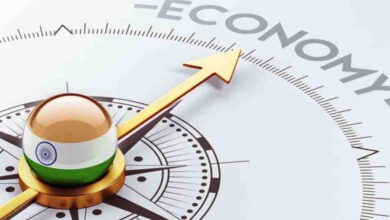
From Midnight Freedom to a Global Power
Why India’s Independence Story Still Matters
The Times Kuwait Report
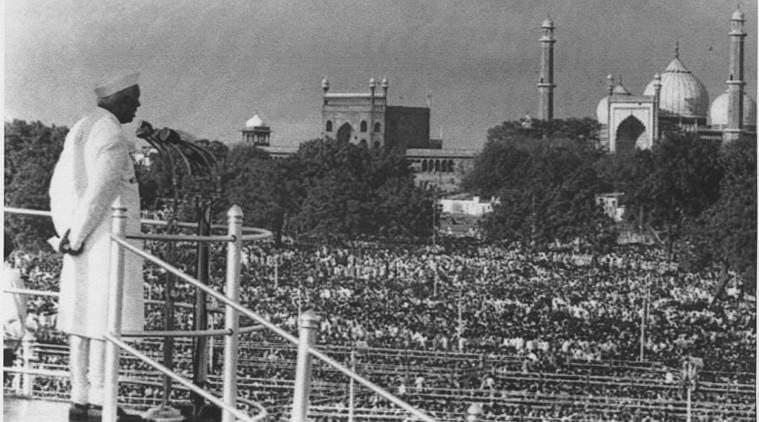
At the stroke of midnight on August 15, 1947, India awoke to freedom.
After nearly two centuries of British colonial rule, a nation that had endured enormous hardship finally had the right to decide its own future. It was a moment that changed the destiny of one-fifth of humanity.
But India’s independence was never simply about lowering one flag and raising another. It was about something far more personal, the freedom of ordinary people to determine the direction of their own lives, their families and their country.
Nearly eight decades later, that journey is still unfolding. The India of today is vastly different from the India that emerged in 1947. It is now one of the world’s largest economies, a major technology and pharmaceutical hub, a spacefaring nation and an increasingly influential voice on the world stage.
Yet perhaps the most remarkable part of India’s story is not simply how far it has come, but how many people helped make that journey possible.
Freedom was never won by one person
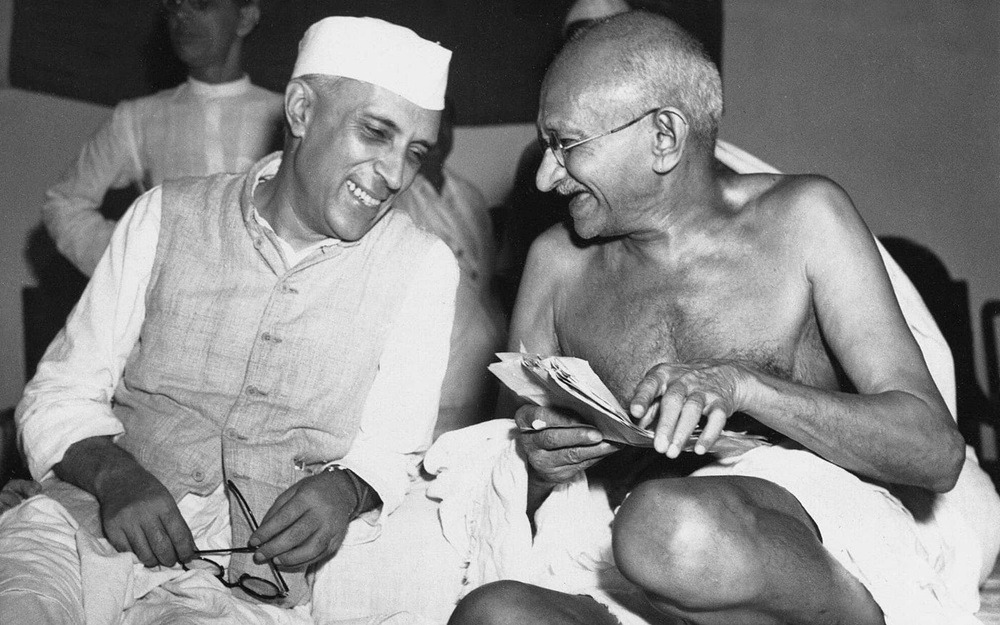
History often reduces great movements to a few familiar names. Mahatma Gandhi is undoubtedly the most recognizable face of India’s freedom struggle. Through the Non-Cooperation Movement, the Salt March and the Quit India Movement, he showed how non-violent resistance could become a powerful weapon against colonial rule.
But Gandhi was only one part of a much larger story. Jawaharlal Nehru imagined an India built on democracy, science, education and industrial progress. Sardar Vallabhbhai Patel took on the enormous task of bringing more than 560 princely states together, helping create the political foundation of modern India. Dr. B.R. Ambedkar played a central role in shaping the Constitution, embedding principles of justice, equality and the rule of law into the new republic.
And there were others who chose very different paths. Subhas Chandra Bose and the Indian National Army inspired thousands with the call for freedom. Bhagat Singh, Chandrashekhar Azad, Ram Prasad Bismil, Ashfaqulla Khan, Rani Gaidinliu, Sarojini Naidu, Begum Hazrat Mahal, Matangini Hazra, Alluri Sitarama Raju, Birsa Munda, Velu Nachiyar and Rani Lakshmibai of Jhansi represented different regions, communities and ideologies.
Their methods and beliefs were not always the same. Their destination was, A free India. And behind these famous names were millions whose stories rarely found their way into history books farmers, workers, students, teachers, journalists, lawyers, poets and ordinary citizens who took enormous risks because they believed their country could be free.
Freedom came with a heavy price
The night of independence was filled with celebration, but it was also marked by unimaginable pain. Partition divided British India into India and Pakistan and triggered one of the largest human migrations in history. Millions were forced to cross newly created borders, leaving behind homes, possessions and, in many cases, loved ones. Violence and uncertainty became part of what should have been a moment of pure celebration.
India therefore entered freedom carrying both hope and trauma. And yet, in the middle of that turmoil, it made a remarkable choice. It chose democracy.
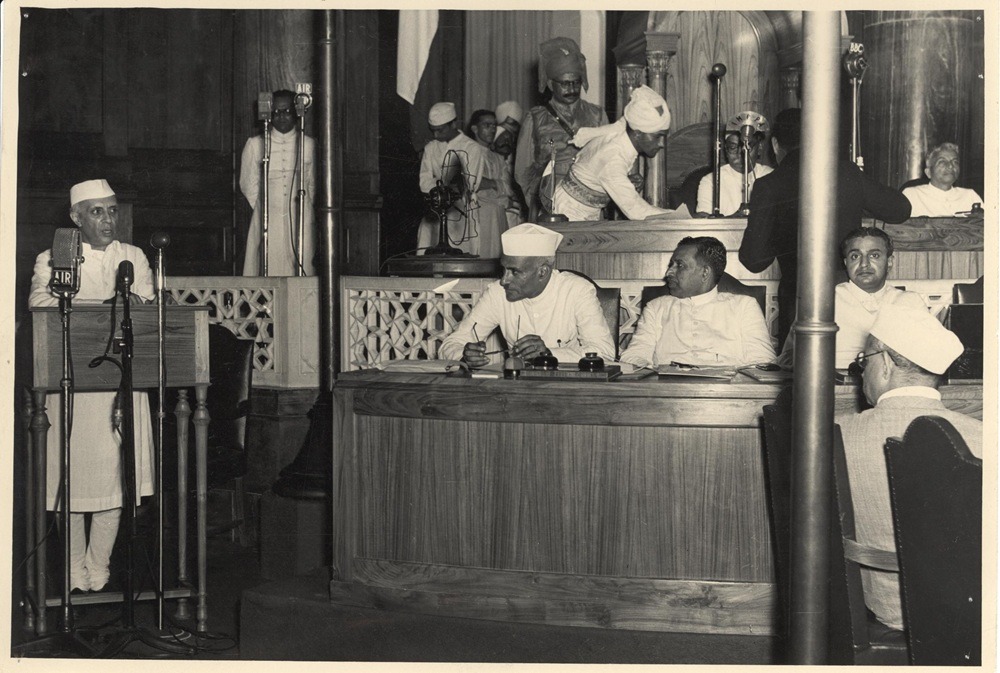
At a time when many newly independent nations were struggling with instability, India adopted a Constitution based on democratic principles and gave every adult citizen the right to vote regardless of wealth, education, gender or social background.
For a country as vast and diverse as India, that was an extraordinary leap of faith.
Building a nation from the ground up
Political freedom was only the beginning. The new India inherited enormous problems. Poverty was widespread. Literacy was low. Life expectancy was short. Infrastructure was limited, industry was underdeveloped and food shortages were a persistent challenge.
The country had to build almost everything and it had to do so while trying to hold together a society of extraordinary diversity. Over the decades, successive governments invested in dams, power projects, universities, scientific institutions, public-sector industries and agricultural reforms.
The results gradually changed the country. The Green Revolution helped transform India from a food-deficit nation into one of the world’s major agricultural producers. The White Revolution turned India into the world’s largest milk producer. Institutions such as the IITs, IIMs, ISRO and numerous research centres created the foundations for India’s scientific and technological capabilities.
These achievements may seem distant when viewed through today’s lens. But they were the building blocks of the India the world knows today.
The India the world sees today
Walk into a technology company in Silicon Valley, a pharmaceutical laboratory, a university, a hospital or a corporate boardroom anywhere in the world, and chances are you will encounter Indian talent.
India has emerged as a major centre for information technology and digital innovation and a leading producer of pharmaceuticals, vaccines and engineering talent. Indian companies operate across continents, while Indian entrepreneurs, scientists and professionals have taken leading positions across industries.
India has also reached beyond Earth. Its scientists have taken missions to the Moon and are preparing for human spaceflight. At the same time, Indian cinema, music, literature, cuisine and yoga have become familiar parts of global culture.
From space missions to medical research, from technology startups to international sporting arenas, India’s influence continues to grow.
The achievement we sometimes take for granted
There is another achievement that deserves attention.India has remained the world’s largest democracy despite its enormous size and extraordinary diversity.
More than 1.4 billion people, hundreds of languages, multiple religions and countless cultural traditions coexist within one democratic framework. Every general election brings hundreds of millions of citizens into the political process, making Indian elections among the largest democratic exercises anywhere in the world.
That democratic resilience is not a small accomplishment. It is one of the defining features of the Indian story.
What does independence mean today?
For the generation that experienced 1947, freedom meant sovereignty the right of a nation to govern itself. For today’s generation, the meaning has expanded.
Freedom can be seen in a young entrepreneur building a company that reaches customers around the world. It can be seen in a scientist preparing a mission into space, an athlete standing on an international podium, or a filmmaker telling an Indian story to a global audience.
It can be found in digital technology connecting millions of people and in women breaking barriers across professions. In other words, independence is no longer only about what India escaped from. It is increasingly about what Indians are able to create.
The road ahead
India’s transformation does not mean its challenges have disappeared. Climate change, rapid urbanization, employment, healthcare and sustainable development remain major issues. The country’s next chapter will depend not only on economic growth, but on how effectively that growth improves the lives of its people.
But adaptation has always been part of India’s story. The same spirit that once fuelled the struggle for political freedom now drives scientific discovery, entrepreneurship, technological innovation and cultural confidence.
Freedom is a journey, not a destination
Every August 15, the Tricolour serves as a reminder of the sacrifices that made independence possible. But it should also remind India of the responsibility that comes with freedom.
The men and women who fought for independence dreamed of a country where every citizen could aspire to a better life. Nearly eight decades later, that dream is still being written.
India’s independence story, therefore, is not simply a story about how a nation won its freedom in 1947. It is a story about what it chose to do with that freedom. And perhaps that is what makes the journey so remarkable.
The flag was raised in 1947. The journey continues today.