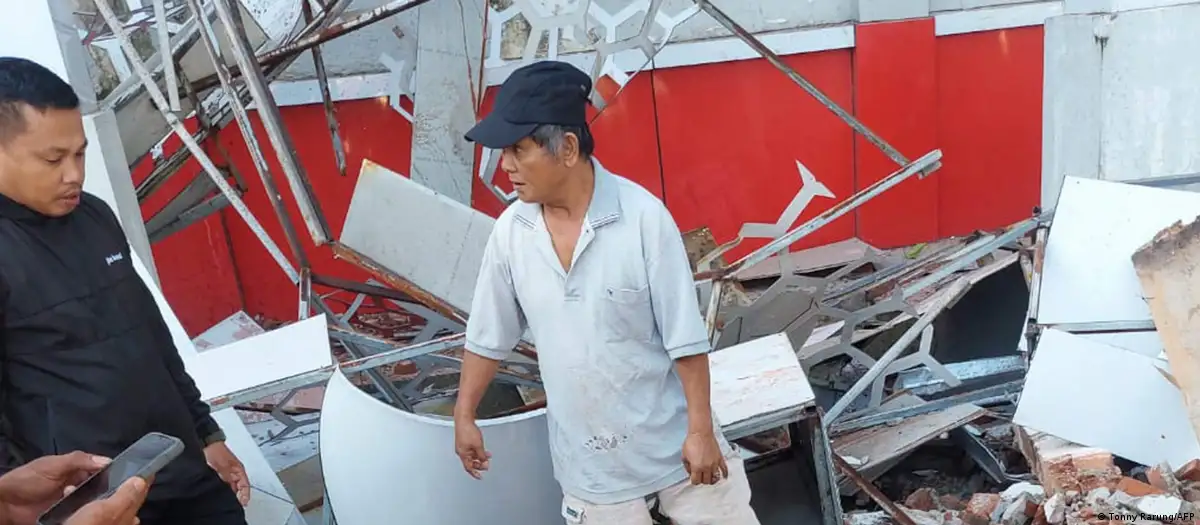
A powerful 7.4-magnitude earthquake struck northern Indonesia early Thursday, killing at least one person and causing widespread damage across several coastal cities, before an initial tsunami warning was later lifted.
According to the United States Geological Survey (USGS), the quake hit the Molucca Sea off the coast of Ternate at a shallow depth of about 35 kilometers, intensifying its impact across nearby areas.
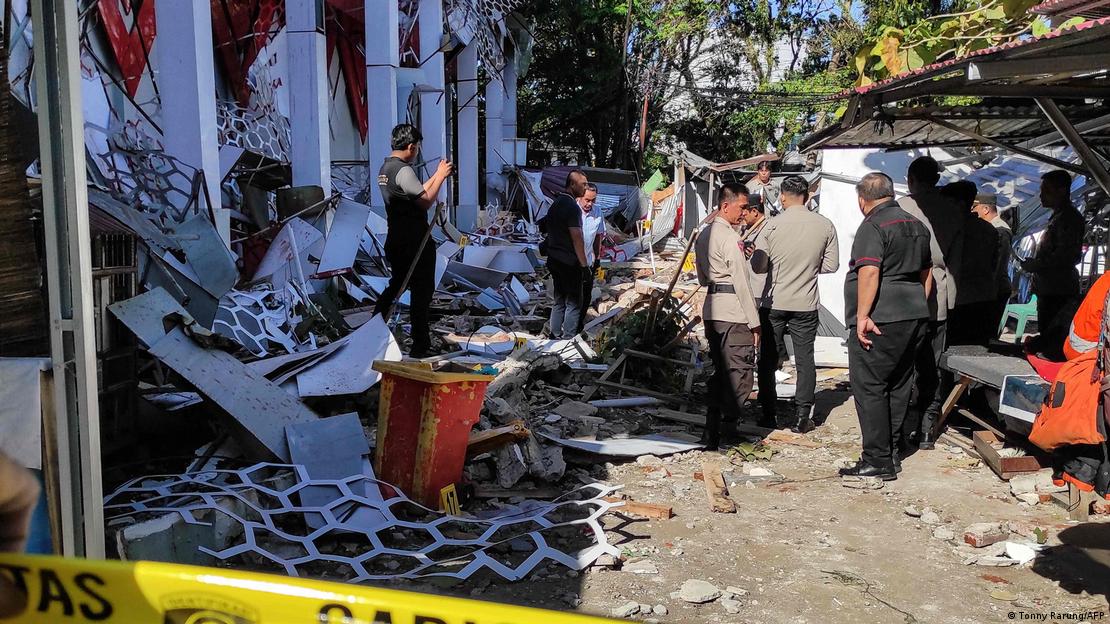
The tremor sent shockwaves through parts of North Sulawesi and North Maluku, with buildings reported damaged or partially collapsed in Bitung, Manado, and Ternate. Emergency teams rushed to assess the situation as residents fled homes and public buildings in fear, dw.com reports.
In Manado, a 70-year-old woman was killed after being trapped under the rubble when a structure collapsed, according to Indonesia’s search and rescue authorities. Several others were injured, with at least three people hospitalized in Ternate.

Search and rescue official George Leo Mercy Randang said the victim had been buried beneath debris, highlighting the destructive power of the quake.
Tsunami Alert and Aftershocks
The earthquake initially triggered a tsunami warning across Indonesia and neighboring countries including the Philippines and Malaysia. Monitoring agencies warned of potentially hazardous waves within a 1,000-kilometer radius of the epicenter.
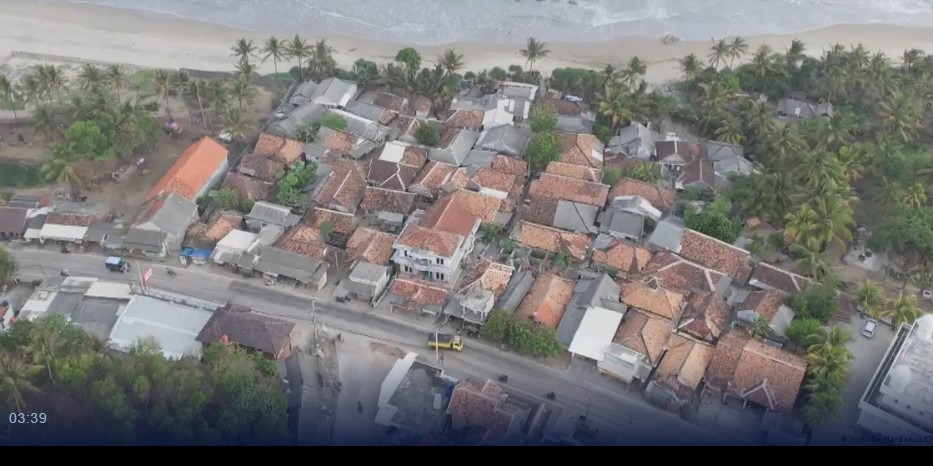
Sea level fluctuations of up to 75 centimeters were recorded along parts of the Molucca Sea coastline before authorities officially lifted the alert.
Meanwhile, the USGS reported dozens of aftershocks, including a strong 6.2-magnitude tremor, raising concerns over further structural damage and public safety.
High-Risk Seismic Zone
Indonesia sits along the Pacific “Ring of Fire,” one of the world’s most seismically active zones, making earthquakes a frequent and often devastating occurrence in the region.
Experts note that shallow earthquakes like this one tend to cause greater destruction, as seismic energy is released closer to the Earth’s surface.
As emergency crews continue damage assessments, authorities remain on high alert amid fears of additional aftershocks and the potential for further disruption in the already vulnerable region.