Ports, power, and new cities, Kuwait’s development revolution accelerates through Chinese partnership
Kuwait–China mega projects enter the era of real execution; 2026 Kuwait’s strategic partnership with China transforms vision into reality
The pace of Kuwaiti-Chinese partnership projects has accelerated significantly under the supervision of the ministerial committee chaired by His Highness the Prime Minister Sheikh Ahmed Abdullah Al-Ahmed Al-Sabah, marking a clear transition from theoretical cooperation to tangible implementation on the ground.
Recent developments reflect a qualitative shift, as several joint projects have moved beyond planning and agreement-drafting stages into active execution — a strong indication of the growing depth and seriousness of strategic cooperation between Kuwait and China.
This progress is not a temporary response to circumstances, but rather the outcome of a clear government vision aimed at transforming memoranda of understanding into concrete achievements and converting political will into measurable development outcomes, reports Al-Rai daily.
Despite the scale and technical complexity of these projects, government efforts are advancing steadily, supported by initiatives to create flexible administrative and procedural frameworks capable of ensuring implementation according to precise timelines.
The partnership spans multiple development paths, beginning with infrastructure modernization across vital sectors and extending to renewable energy initiatives that support energy diversification and environmental sustainability.
It also includes environmental protection programs aligned with sustainable development goals, alongside major housing and urban expansion projects designed to stimulate economic growth.
At the forefront stands the Mubarak Al-Kabeer Port project, whose contract was signed on August 22, becoming the first project to officially enter the execution phase. The port is viewed as a strategic logistics hub that will strengthen Kuwait’s position on regional trade routes and expand prospects for long-term economic integration.
Observers describe 2026 as a decisive year for projects implemented by leading Chinese companies. Among the most prominent is the North Kabd wastewater treatment plant, valued at approximately one billion dinars and designed to process nearly one million cubic meters of wastewater daily using advanced technologies.
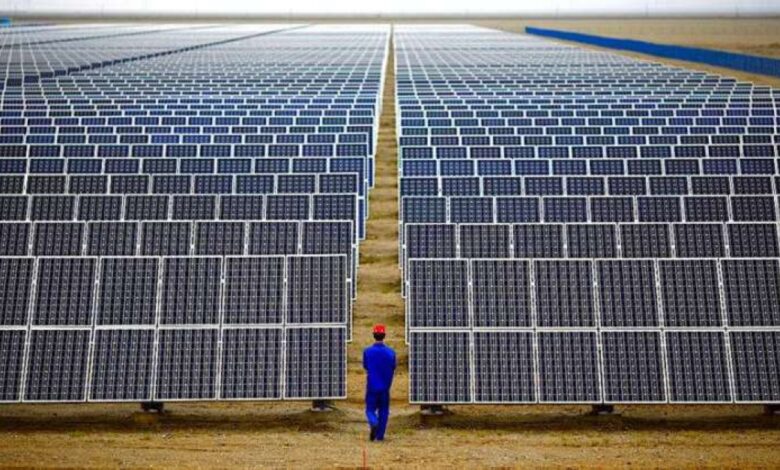
Contracts are also expected to be finalized for the Shagaya Renewable Energy Project (Phases Three and Four) and the Abdaliyah Power Plant, which will generate about 3,200 megawatts. Both projects have progressed significantly following approval of their economic feasibility studies by the Ministry of Electricity, Water and Renewable Energy.
Government agencies are working under direct directives to accelerate regulatory approvals, while the ministerial committee coordinates closely with Chinese partners to remove obstacles and ensure smooth field implementation.
Experts believe that executing these projects according to agreed timelines will create a major developmental leap for Kuwait. Mubarak Port is expected to strengthen Kuwait’s share in global trade and position the country as a regional logistics center, while renewable energy projects will support Kuwait’s goal of generating 15 percent of its electricity from renewable sources by 2030.
Most contracts linked to the seven memoranda of understanding signed between Kuwait and China are expected to be finalized this year, covering key development sectors.
The roadmap also includes waste recycling initiatives, afforestation programs, and environmental protection projects aimed at improving air quality, preserving natural resources, and promoting balanced sustainable development.
Mubarak Al-Kabeer Port — A flagship project intended to transform Kuwait into a regional trade hub and a key link in the Belt and Road Initiative.
North Kabd Wastewater Treatment Plant — Designed to treat one million cubic meters of wastewater daily through advanced operational systems.
Renewable Energy Projects — Including the Shagaya Renewable Energy Complex and Abdaliyah Power Plant to expand clean energy production capacity.
Housing Development — Plans for new cities, including Al-Sabriya city and workers’ residential cities in Al-Sabriya and South Al-Jahra.