As 2025 draws to a close, the Gulf Cooperation Council (GCC) states mark a year defined by decisive political action, deepened integration and expanding global influence. The year was shaped by two landmark summits — one extraordinary — that reaffirmed the unity of the Gulf bloc, alongside sustained diplomatic efforts that helped bring an end to the devastating war in Gaza after nearly two years.
Building on momentum from previous years, GCC countries in 2025 strengthened their strategic positioning at the center of shifting global geopolitics and economics. This was achieved through expanded international partnerships, high-quality outward investments and a growing leadership role in future-oriented sectors, from artificial intelligence and digital transformation to energy transition and advanced industries.
Throughout the year, the GCC consolidated its regional and international standing through parallel tracks of accelerated development, reinforced collective security, deeper political coordination and active mediation in some of the world’s most complex diplomatic arenas.
A defining moment came when Doha hosted an extraordinary GCC summit and an Arab-Islamic summit following Qatar’s interception of an unprecedented Iranian attack on Al-Udeid Airbase in September.
The extraordinary GCC summit affirmed full solidarity with Qatar and underscored the principle that the security of any Gulf state is inseparable from that of the entire bloc.
Leaders directed the unified military command to activate joint defense mechanisms, enhance deterrence capabilities and implement necessary operational measures to safeguard regional stability.
The Joint Defense Council approved expanded intelligence-sharing frameworks, accelerated the Gulf early-warning missile defense system and updated joint defense plans through closer coordination among member states’ military and training bodies.
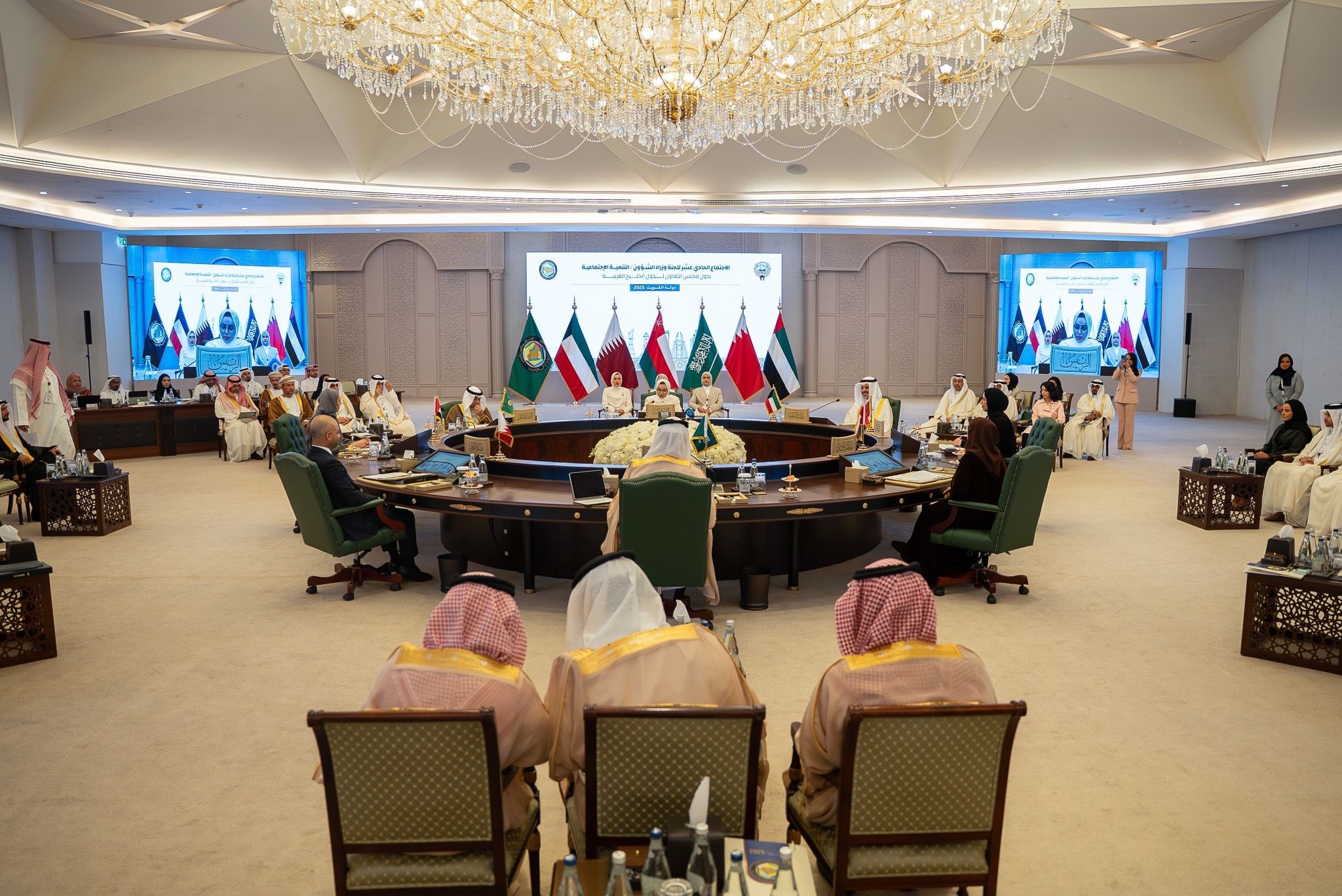
Momentum continued at the 46th regular GCC summit, held in Bahrain in early December, where leaders emphasized advancing integration across political, economic and institutional spheres.
The final communiqué reiterated commitments made during the extraordinary and Arab-Islamic summits and stressed full implementation of the Custodian of the Two Holy Mosques’ vision to strengthen joint Gulf action.
Key decisions included approval for the phased operation of the customs data exchange platform beginning in the second half of 2026, the establishment of a GCC Civil Aviation Authority headquartered in the UAE, and adoption of the agreement linking member states to the long-awaited Gulf railway project.
GCC leaders also pushed to accelerate joint action plans with international partners following summits with the United States, the European Union, ASEAN and China, reinforcing the bloc’s outward-looking economic and strategic engagement.
During 2025, Gulf capitals hosted and participated in numerous high-level forums, including the GCC-US Summit in Riyadh attended by US President Donald Trump, alongside ministerial and international meetings addressing Syria and broader regional challenges.
Economic transformation remained a central theme, with Gulf states prioritizing digitalization, innovation and knowledge-economy development. The region positioned itself as a global hub for major international events spanning mining, real estate, labor markets, Islamic finance, media and governance, most notably the World Governments Summit.
Technology and artificial intelligence saw major advances, highlighted by Saudi Arabia’s LEAP 2025 conference, which attracted record regional investments, and by expanding international partnerships, including framework agreements led by the UAE with global technology partners.
The GCC reaffirmed its unwavering commitment to the Palestinian cause through sustained diplomacy, mediation and humanitarian action. Gulf states participated actively in summits, ministerial committees and international conferences, while also supporting emergency financial sustainability initiatives for the Palestinian Authority.
The 46th GCC summit sent clear messages calling for Palestinian statehood on the 1967 borders, an end to occupation, the lifting of the Gaza siege and the reaffirmation of Palestine as a central issue in Gulf foreign policy.
This position was reinforced during the UN Security Council’s emergency session on “The Situation in the Middle East, including the Question of Palestine,” where Kuwait delivered the GCC statement on behalf of His Highness the Amir Sheikh Meshal Al-Ahmad Al-Jaber Al-Sabah and His Highness the Crown Prince Sheikh Sabah Khaled Al-Hamad Al-Sabah, reaffirming firm Gulf support for the Palestinian people.
Gulf mediation efforts extended well beyond the region. The UAE played a pivotal role in facilitating prisoner exchanges between Russia and Ukraine, as well as between Washington and Moscow. Qatar contributed decisively to stabilizing the Gaza ceasefire and helping broker the agreement to halt hostilities in the Strip.
Oman facilitated US-Iranian dialogue and contributed to agreements involving regional actors, while Saudi Arabia hosted talks bringing together the foreign ministers of Russia and Ukraine — the first such meeting since the war began in February 2022 — in support of broader efforts to restore international balance.
The GCC also continued efforts to support stability in Syria and its reintegration into Arab and international frameworks, alongside mediation initiatives addressing African, regional and international conflicts. The UN General Assembly’s adoption of a resolution on cooperation between the United Nations and the GCC reflected growing recognition of the Council as an effective regional partner for peace and security.
Integration efforts advanced through executive measures and bilateral agreements, including the establishment of the Kuwaiti-Saudi Coordination Council in Riyadh, the entry into force of the Bahrain-UAE investment protection agreement and a Saudi-Qatari memorandum to enhance sports media cooperation.
Economic coordination featured prominently, with the 43rd Gulf Development Forum addressing energy transition and climate challenges, while GCC financial and economic committees reviewed policies to strengthen joint financial frameworks. Kuwait hosted key meetings on trade integration, free trade negotiations and unified commercial legislation.
Industrial cooperation also advanced with the launch of the first unified Gulf industrial platform, providing an integrated database for industrial projects across member states.
International assessments reflected these developments, with the World Bank projecting Gulf economic growth of around 4.5 percent in 2026, driven by diversification and non-oil expansion.
The year also saw new defense and security agreements, expanded humanitarian airlifts to Palestine, Syria and Sudan, and sustained Gulf leadership in global relief efforts, ranking among the world’s largest humanitarian donors.
In parallel, GCC states strengthened cooperation in education, research, innovation and digital infrastructure, while the region successfully hosted major international sporting events, reinforcing its soft-power influence.
As 2025 concludes, the GCC stands as a more integrated, influential and outward-looking bloc, having translated unity into action and diplomacy into tangible outcomes — laying a strong foundation for the next phase of Gulf cooperation.
— KUNA