DRDO advances India’s semiconductor and quantum technology ambitions
As India pursues its Aatmanirbhar Bharat and Viksit Bharat 2047 ambitions, developing domestic expertise in semiconductors and quantum infrastructure is becoming an important part of its technological and industrial strategy.
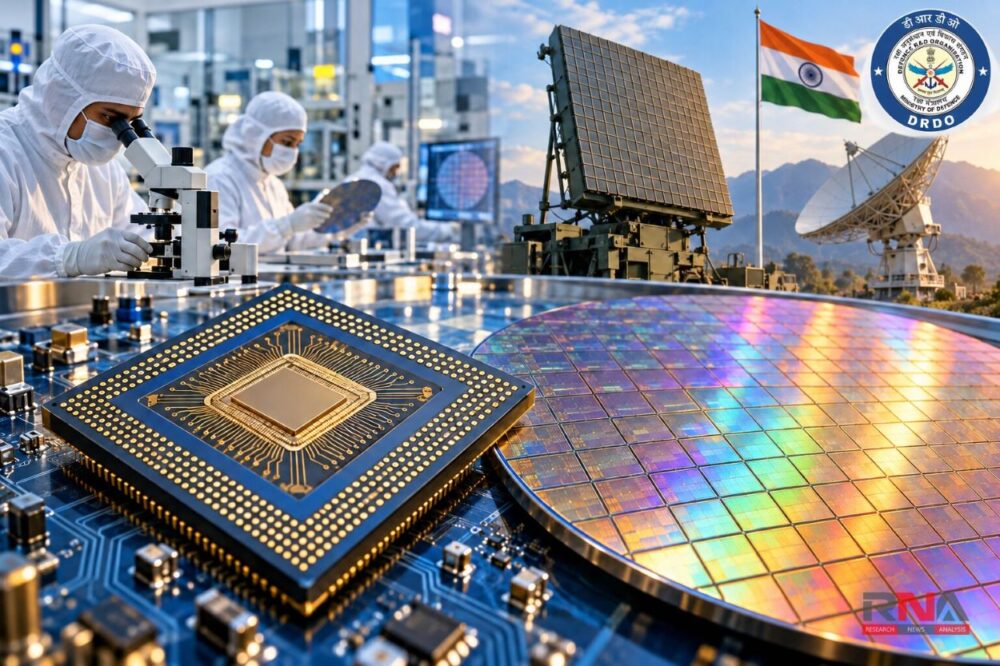
India is stepping up efforts to strengthen its semiconductor and advanced technology capabilities, with the Defence Research and Development Organisation (DRDO) bringing indigenous chip development, artificial intelligence, quantum computing and defence research closer to industrial application.
The initiative reflects the growing strategic importance of semiconductors, which underpin modern defence systems, telecommunications, artificial intelligence, navigation, surveillance and aerospace technologies. For India, developing domestic expertise in these fields is increasingly linked to national security, technological self-reliance and its ambition of becoming a developed economy by 2047.
At the Emerging Science, Technology and Innovation Conclave (ESTIC) 2026, held at Bharat Mandapam in New Delhi from October 27 to 29, DRDO led a dedicated session on semiconductors and next-generation chips, while showcasing technologies developed across its laboratories. The discussions brought together industry representatives, researchers, academia and indigenous chip-development organisations to explore opportunities in advanced semiconductor design and manufacturing.
The session, chaired by Distinguished Scientist and Director General of Electronics and Communication Systems Dr BK Das, examined artificial intelligence System-on-Chips (SoCs), intelligence at the silicon edge and emerging microprocessor technologies. Discussions also focused on strengthening collaboration with Indian industries and start-ups to accelerate indigenous chip development.
Among the key technologies displayed were Gallium Arsenide (GaAs) and Gallium Nitride (GaN)-based Monolithic Microwave Integrated Circuits (MMICs), Multi-Chip Modules and Infrared Focal Plane Arrays (IRFPAs), developed by DRDO’s Solid State Physics Laboratory in Delhi.
These specialised semiconductor components have direct applications in advanced radar systems, electronic warfare and missile technology. MMICs support high-frequency and high-power electronic systems, while infrared focal plane arrays enable imaging systems in tactical missiles to detect and track targets during their terminal flight phase.
The exhibits included Short-Wave Infrared, Mid-Wave Infrared and Long-Wave Infrared technologies, highlighting India’s growing domestic capabilities in advanced infrared sensing and defence electronics.
Beyond conventional microelectronics, DRDO showcased scramjet engine technology, neuromorphic accelerators, Photonic Integrated Circuits, Quantum Random Number Generators and laser proximity sensors. The organisation also displayed advanced communication systems, quantum technology prototypes, energy management systems and protective equipment for military personnel.
Neuromorphic accelerators, inspired by the human brain’s information-processing architecture, are being explored for more efficient computing, pattern recognition and real-time artificial intelligence applications. Photonic integrated circuits and quantum technologies represent other emerging areas with potential applications in advanced communications, sensing and computing.
Quantum technology receives fresh impetus
A significant development in India’s quantum technology programme came on September 24, when DRDO signed its first high-value deep-tech project agreement with Zero mK India Private Limited, a start-up based in Alwar, Rajasthan.
The agreement, signed under DRDO’s Technology Development Fund (TDF) scheme, covers the indigenous development of a 20 millikelvin dilution refrigerator for quantum applications. It is the first high-value project under a dedicated corpus of Rs 500 crore approved by Defence Minister Rajnath Singh.
A dilution refrigerator is specialised equipment capable of producing extremely low temperatures approaching absolute zero. Such conditions are essential for operating and testing certain quantum computing systems, particularly those using superconducting processors.
The project aims to strengthen India’s domestic expertise in advanced cryogenic equipment, reduce dependence on imported systems and create opportunities for deep-tech start-ups to participate in strategic technology development.
It also complements the National Quantum Mission, approved in April 2023 with an allocation of Rs 6,003.65 crore. The mission focuses on developing domestic capabilities in quantum computing, communications, sensing and quantum materials.
Semicon 2.0 strengthens domestic chip ecosystem
DRDO’s research is part of India’s wider effort to establish a comprehensive semiconductor industry. The Union Cabinet approved Semicon 2.0 in July 2026 with a financial outlay of Rs 1,27,500 crore, expanding the country’s ambitions across chip design, semiconductor manufacturing equipment and materials, fabrication, advanced packaging, research and development, and talent development.
The first phase of the India Semiconductor Mission, launched in December 2021 with an initial allocation of Rs 76,000 crore, secured approval for 12 projects across six states, involving investments exceeding Rs 1.64 lakh crore. Five projects had commenced commercial production by October 2026.
The programme has also supported 105 start-ups with access to electronic design automation tools, while 24 start-ups have received funding. Under the Chips to Startup programme, 332 institutions have received access to design tools and approximately 70,000 students have undergone training.
On November 6, Electronics and Information Technology Minister Ashwini Vaishnaw launched the Semicon 2.0 web application portal and announced 12 additional approvals under the Electronics Components Manufacturing Scheme.
India’s semiconductor research infrastructure also includes institutions such as the Gallium Arsenide Enabling Technology Centre, Semiconductor Technology and Applied Research Centre and Semiconductor Laboratory, which contribute to specialised semiconductor devices, micro-electromechanical systems and silicon-process technologies.
Building long-term technological self-reliance
The combination of DRDO’s defence-focused semiconductor research, government-backed manufacturing initiatives and collaboration with domestic start-ups reflects India’s effort to develop capabilities across the advanced technology value chain.
Indigenous chips and specialised electronic components are particularly important for defence systems that require high reliability, precision and performance under demanding operating conditions. At the same time, investments in artificial intelligence, photonics and quantum technologies could support wider applications in communications, computing, aerospace and industrial research.
As India pursues its Aatmanirbhar Bharat and Viksit Bharat 2047 ambitions, developing domestic expertise in semiconductors and quantum infrastructure is becoming an important part of its technological and industrial strategy.