No war, no escalation, no deal, Trump chooses economic strangulation against Iran
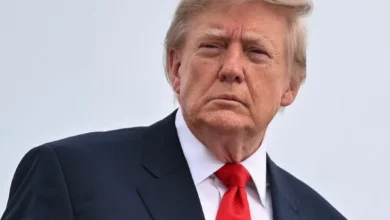
US President Donald Trump has opted to maintain economic pressure on Iran rather than resume military escalation or pursue an agreement, with Washington adopting what has been described as a “third option” to weaken Tehran, according to a report by Axios.
US Secretary of State Marco Rubio briefed his G7 counterparts on the approach during a closed-door meeting in Paris on Tuesday, citing three sources who attended the discussions. Rubio reportedly said the administration had not set a deadline for ending its punitive measures against Iran, while warning that any violation of US red lines by Tehran could trigger action by American forces.
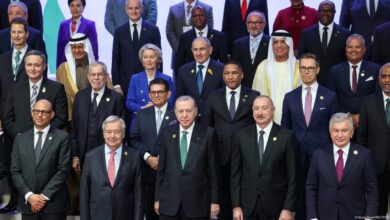
Meanwhile, G7 foreign ministers called on Iran to stop its continued attacks on civilian vessels in the Strait of Hormuz, warning that, in the absence of a diplomatic solution, they would work together to reduce Tehran’s economic and political capacity to fuel instability in the region and internationally.
In a statement following their November 9-10 meetings in Paris, the ministers praised regional mediation efforts and reaffirmed support for diplomatic initiatives aimed at achieving a lasting settlement that addresses international concerns over Iran’s nuclear programme. They stressed that Iran must never be allowed to develop or possess nuclear weapons and urged Tehran to stop supporting armed groups outside state structures in the region.
The G7 strongly condemned Iranian attacks on neighbouring countries and the disruption to international trade, energy security and the global economy caused by restrictions on shipping through the Strait of Hormuz. The statement also expressed grave concern over Iran’s alleged involvement in violent plots targeting citizens and territories of member states, referring to Britain’s accusation that Tehran was responsible for the September 27 incident near RAF Fairford. The ministers stressed that the G7 remained united in its position.
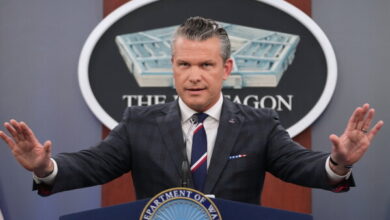
Meanwhile, Trump praised Hegseth after the House of Representatives dropped impeachment proceedings against the defence chief over the war, marking a political victory for the president following his party’s defeat in the midterm elections.
On the Iranian side, Supreme National Security Council Secretary Mohsen Rezaei ruled out the transfer of any enriched nuclear material outside the country. In an interview with Lebanon’s Al-Mayadeen television, he said Iran needed the material to develop nuclear-powered ships and submarines and had informed Russia that it intended to retain and use its enriched uranium domestically.
Adding to the country’s domestic challenges, the Iranian government has warned of a worsening natural gas shortage this winter. Government spokeswoman Fatemeh Mohajerani forecast a supply deficit of 430 million cubic metres this year, compared with shortages of around 300 million cubic metres in previous years.