Can global leaders put their money where their mouth is on climate?
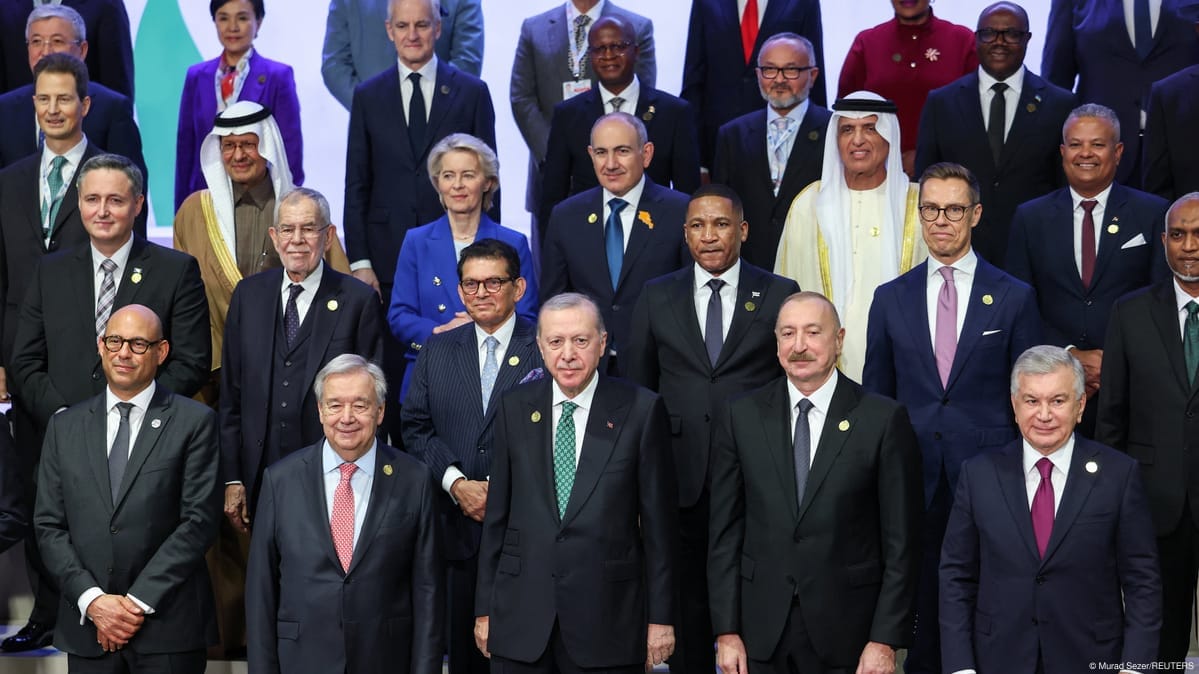
World leaders warn that geopolitical divisions are distracting from the climate crisis as negotiations focus on clean energy and financing, while Iran calls for compensation for war-related environmental damage.
With extreme weather intensifying, climate finance declining and global temperatures nearing dangerous levels, UN chief Antonio Guterres urges world leaders to turn climate promises into urgent, practical action.
The discussions at COP31 highlight a widening gap between climate commitments and actual implementation.
The world is falling behind in the fight against climate change, with rising temperatures, extreme weather events and declining climate finance threatening to undermine international efforts to prevent catastrophic global warming, UN Secretary-General Antonio Guterres warned at the COP31 climate conference in Antalya, Türkiye.
“The brutal truth is that the climate crisis is outrunning us,” Guterres told world leaders gathered for the UN climate summit, stressing that the slow international response has put the world on a dangerous path. However, he said countries still had the power to ensure that the temporary breach of the agreed temperature limit does not become permanent.
A United Nations report published last month warned that the world is set to exceed the temperature threshold countries committed to pursuing under the Paris Agreement. The warning comes amid a year marked by devastating climate-related disasters, including extreme heatwaves, worsening droughts and a glacier collapse in Nepal that triggered flooding, killing more than 1,400 people and leaving thousands missing.
The impact of rising temperatures is also becoming increasingly visible across Europe, where rivers and lakes have been drying up amid prolonged heat and drought. These developments underline the growing urgency of reducing greenhouse gas emissions and strengthening the resilience of communities exposed to extreme weather.
With representatives from nearly 200 countries attending COP31, discussions are focusing on turning climate commitments into practical action, particularly by expanding electrification, accelerating clean energy investment and reducing dependence on fossil fuels.
However, the absence of the United States, the world’s largest historical emitter of greenhouse gases, has raised further concerns about international cooperation. Washington is not attending for the second consecutive year following President Donald Trump’s decision to withdraw the country from the Paris Agreement in 2025. Several other major economies, including Germany, France, Italy, Canada and Japan, have also not sent their top leaders.
Climate finance remains one of the biggest obstacles to progress, with developing countries demanding greater financial support from wealthier nations to address a crisis to which they have contributed relatively little but whose consequences they often face most severely.
Turkish President Recep Tayyip Erdogan called on developed countries to take greater responsibility for climate financing, saying previous commitments and proposals had not been adequately translated into action. He said the objective of COP31 was to make it an implementation-focused summit.
The funding challenge has become more pressing following a decline in international financial commitments. A recent Carbon Brief analysis found that public climate funding pledged under the Paris Agreement for developing countries fell by more than 70 percent in 2026. Several multi-year funding commitments expired in 2025, while the United States stepped back from international climate efforts and some European countries reduced aid budgets.
European Commission President Ursula von der Leyen said the European Union remained committed to supporting developing countries, noting that Europe contributed more than 32 billion euros last year towards climate action. She stressed that moving away from fossil fuels was in the common interest, pointing to the growing economic, environmental and energy-security costs of maintaining the existing energy system.
The vulnerability of developing countries was highlighted by Marshall Islands President Hilda Heine, who warned that every fraction of a degree of additional warming would bring greater destruction, loss and financial pressure.
Australian Prime Minister Anthony Albanese described the current period as a critical decade for climate action and called for stronger international cooperation to unlock investment in clean energy technologies, accelerate electrification and increase protection for the world’s oceans.
A key proposal at COP31 is the 35-by-35 electrification pledge, which aims to raise electricity’s share of global final energy consumption to 35 percent by 2035. Supporters argue that electrification, backed by renewable energy, can reduce emissions while improving energy security and limiting exposure to fossil fuel price fluctuations.
Guterres noted that three-quarters of humanity live in countries that import fossil fuels, leaving them vulnerable to price shocks beyond their control. He said the transition to renewable energy could help address both energy insecurity and the cost-of-living crisis.
The conference has also brought attention to the environmental consequences of armed conflicts. Iranian President Masoud Pezeshkian called for compensation for environmental damage allegedly caused by US and Israeli strikes since February, including oil leaks linked to attacks on tankers.
Brazilian President Luiz Inacio Lula da Silva warned that international attention had shifted away from climate action towards wars and trade disputes, weakening the momentum built at previous climate conferences. He urged governments to maintain cooperation and reaffirmed Brazil’s commitment to protecting the Amazon rainforest, which plays a critical role in regulating the global climate.
The discussions at COP31 highlight a widening gap between climate commitments and actual implementation. With temperatures continuing to rise, extreme weather becoming more damaging and financial support remaining uncertain, the summit faces the challenge of turning political promises into measurable action before the consequences of global warming become increasingly difficult to reverse.