- As tensions between Washington and Tehran remain high amid diplomatic efforts to prevent a return to full-scale hostilities, China to send a special envoy to Iran, Oman and Saudi Arabia in early to mid-November.
The United States has carried out limited defensive strikes against Iranian targets in the Strait of Hormuz, a US official said, as tensions between Washington and Tehran remain high amid diplomatic efforts to prevent a return to full-scale hostilities.
The strikes took place on Monday, on the eve of US midterm elections. Iranian state television reported explosions on Qeshm Island, while the US official said the targets were Iranians using surface-to-air missiles against American assets. The official spoke on condition of anonymity because he was not authorized to comment publicly, according to news reports.
The operation appeared limited in scope rather than a resumption of full-scale military operations. However, it marked a new military development after the US administration’s last known attacks on Iran in early September. The strikes also came despite President Donald Trump previously saying Washington would not attack Iran before Tuesday’s midterm elections.
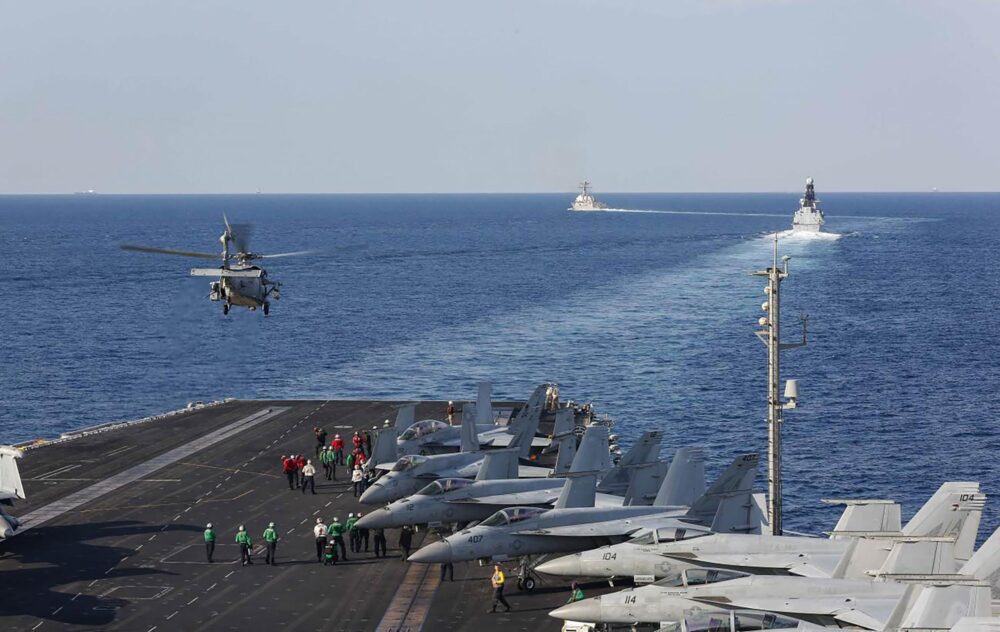
Thousands of US troops remain in waters off Iran as part of a naval blockade intended to prevent tankers carrying Iranian oil from reaching international markets. A third US aircraft carrier, accompanied by thousands of additional troops, is also heading to the Middle East.
At the same time, diplomatic efforts are continuing to prevent further military escalation. US Vice President JD Vance expressed cautious optimism on Monday that Washington and Tehran could reach a negotiated settlement, saying both he and Trump were encouraged by the prospects of an agreement.
Vance said he had held discussions with Trump about the negotiations and that the administration would continue working towards a settlement. He also stressed that a key US demand was a firm and verifiable Iranian commitment not to rebuild its nuclear program.
The diplomatic contacts include a letter Vance sent last week to Iran’s security chief, Mohsen Rezaei. Although the White House provided few details, Trump said the correspondence focused on offering Iran medical supplies and other assistance. Rezaei acknowledged receiving the letter but said he had not responded. He described the change in Washington’s tone as a positive sign.
Meanwhile, Israeli Prime Minister Benjamin Netanyahu has been pressing Trump to launch another wave of strikes against Iran after the US midterm elections, according to regional officials and a person familiar with the discussions.
Netanyahu reportedly raised the possibility of military action during a telephone conversation with Trump over the weekend, but the US president did not commit to a decision.
Two regional officials said diplomatic efforts had made progress, with Qatari mediators holding two rounds of talks with Iranian officials last week. The discussions are aimed at establishing a framework under which Iran would stop attacks in the Strait of Hormuz in return for the United States lifting its blockade of Iranian ports. Further talks are planned for this week.
However, some US allies in the Middle East have warned against renewed military action, cautioning that further strikes could destabilize the region and trigger wider attacks. Concerns include possible increased attacks by Iran-aligned Houthi rebels in Yemen against Saudi Arabia and Red Sea shipping, as well as the potential involvement of Iran-backed militias in Iraq.
The conflict also remains a major concern for the US administration ahead of the midterm elections, with higher fuel prices and the economic impact of the war weighing on the Republican Party.
Oil prices fell sharply on Monday amid signs of progress in diplomatic efforts. Trump sought to play down the scale of the conflict, saying the United States had not been engaged in fighting for months.
Iran, meanwhile, has maintained that it is prepared for both military confrontation and diplomacy. Supreme Leader Ayatollah Mojtaba Khamenei, in a meeting with military chiefs, called for an immediate response to any threat from the United States or Israel, without geographical limits, and urged an expansion of potential targets.
Iran’s security chief Rezaei has also said Tehran wants guarantees that Washington will honour any agreement, noting that the United States and Israel had previously attacked Iran while negotiations over its nuclear program were underway.
The Strait of Hormuz remains a major flashpoint. October recorded the highest number of attacks on commercial vessels in the waterway since March, as Iran sought to increase economic pressure on Washington to lift its blockade.
Regional concerns were also voiced at the Manama Dialogue security summit in Bahrain. UAE presidential adviser Anwar Gargash warned that the differences between the US and Iranian positions remained significant, adding that failure to bridge them could lead to a worst-case scenario. Egypt’s Foreign Minister Badr Abdelatty warned that further escalation would be more dangerous and destructive.
Separately, China announced that it would send a special envoy to Iran, Oman and Saudi Arabia in early to mid-November.