Kuwait and UN reaffirm diplomacy as cornerstone of peace and global stability
Foreign Minister Sheikh Jarrah Al-Sabah and UN Resident Coordinator Ghada Al Taher highlight Kuwait’s legacy of mediation, humanitarian assistance and international cooperation on UN Day 2026
The Times Kuwait Report
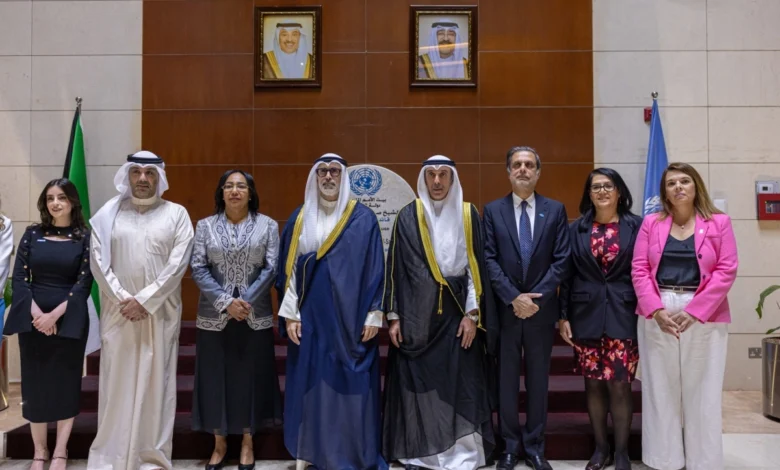
Kuwait has reaffirmed its commitment to diplomacy, international law and multilateral cooperation, with Foreign Minister H.E. Sheikh Jarrah Jaber Al-Ahmad Al-Sabah and United Nations Resident Coordinator in Kuwait Ghada Al Taher underscoring the critical role of dialogue in preventing conflicts, containing crises and building lasting peace.
Marking United Nations Day on October 24 under the theme ‘The Power of Diplomacy’, both highlighted the importance of peaceful engagement, respect for national sovereignty and international cooperation amid escalating geopolitical tensions, protracted conflicts and mounting global challenges.
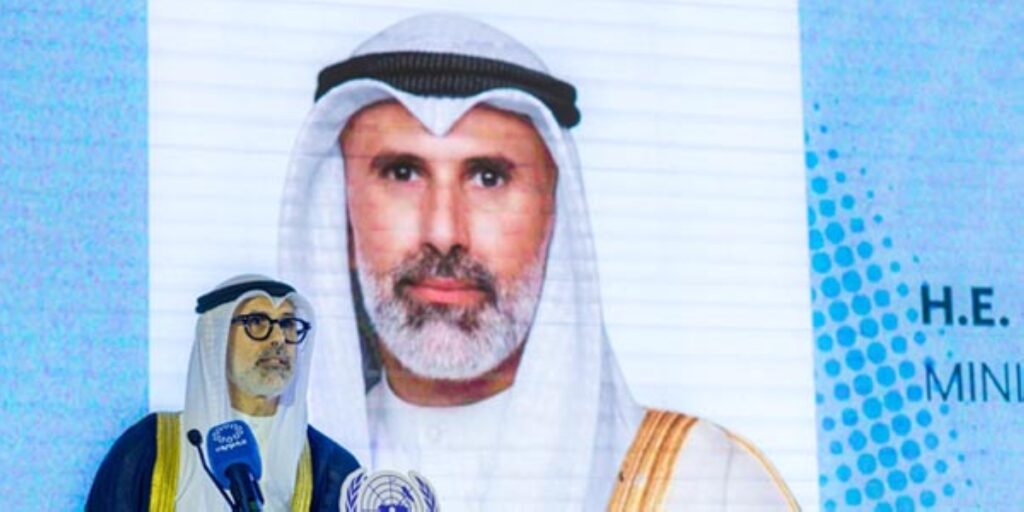
Sheikh Jarrah said diplomacy remains an essential instrument for preserving peace, preventing disputes, bridging differences and building trust among nations, even under the most complex circumstances. Its effectiveness, he stressed, depends on adherence to the UN Charter, respect for international law and strengthening a multilateral system that provides countries with a framework for resolving disputes and protecting their rights and interests.
Al Taher echoed these sentiments, describing diplomacy as a strategic choice and an indispensable tool for conflict prevention and peacebuilding. Eighty-one years after the establishment of the United Nations in 1945, she said, the international community continues to need stronger multilateral cooperation and a renewed commitment to dialogue over confrontation.
She emphasised that diplomacy extends beyond managing relations between states, reflecting political courage, wisdom and moral responsibility. The willingness to engage with adversaries, listen to differing perspectives and seek common ground is essential to overcoming divisions.
The true measure of strength, she noted, lies not in the ability to destroy, but in the capacity to prevent conflicts and protect civilians.
Drawing on nearly three decades of experience in conflict and war-affected environments, Al Taher warned that civilians, particularly women, children and older people, bear the greatest burden of armed conflicts. Disregard for international law and international humanitarian law can devastate lives, damage essential infrastructure and deprive entire generations of opportunities for education, development and stability.
Kuwait’s diplomatic legacy and the UN partnership
For Kuwait, the power of diplomacy is not merely a theoretical principle but a fundamental pillar of its national identity and foreign policy. Since joining the United Nations in 1963, Kuwait has consistently advocated respect for state sovereignty, territorial integrity and non-interference in internal affairs.
Guided by these principles, the country has pursued a balanced foreign policy centred on dialogue and mediation, contributing over several decades to efforts aimed at resolving regional and international disputes and easing tensions.
Sheikh Jarrah noted that some Kuwaiti diplomatic initiatives have been publicly recognised, while others have been conducted quietly behind the scenes, reflecting the country’s enduring belief that diplomacy can open doors that conflict closes.
Al Taher similarly praised Kuwait’s contribution to multilateral cooperation, describing the country as an active partner in mediation, humanitarian diplomacy and development assistance. Kuwait has helped bring parties closer together, facilitate dialogue and support efforts to contain crises and resolve disputes. It has also hosted major humanitarian conferences that mobilised international assistance for millions affected by conflicts and natural disasters.
UN support during Kuwait’s liberation
The foreign minister recalled the historic role played by the United Nations and its institutions, particularly the Security Council, following Iraq’s invasion of Kuwait in 1990. The international community’s decisive response, grounded in justice and international law, contributed to Kuwait’s liberation and restoration of sovereignty in 1991.
Sheikh Jarrah described this episode as one of the United Nations’ most significant success stories, demonstrating the importance of the UN Charter and the international community’s collective responsibility to uphold international law.
The experience reinforced Kuwait’s conviction that the rule of law and multilateral cooperation are essential safeguards for national sovereignty, particularly during times of crisis.
Humanitarian diplomacy and development assistance
Kuwait’s partnership with the United Nations, spanning more than six decades, has produced significant humanitarian and development initiatives, including assistance to communities affected by conflict and natural disasters, support for sustainable development and cooperation with UN agencies, programmes and funds.
Al Taher highlighted that Kuwaiti development assistance has reached more than 100 countries over six decades, reflecting the country’s commitment to international solidarity and investment in people. Humanitarian action, she said, is deeply rooted in Kuwait’s national identity. The tradition of helping others predates the discovery of oil and has since become an integral component of the country’s foreign policy.
A major milestone in this commitment was the establishment of the Kuwait Fund for Arab Economic Development in 1961. Through the fund and its partnerships with international organisations, Kuwait has continued to support development projects, strengthen communities and promote sustainable growth.
The exhibition ‘Diplomacy Through Development’, held alongside the UN Day celebrations, highlights the connection between diplomatic engagement and development assistance, illustrating how these efforts can improve people’s lives and strengthen their resilience.
Sheikh Jarrah stressed that peace and development are inseparable, noting that sustainable peace cannot be achieved without development, just as development cannot flourish without peace. Al Taher also paid tribute to the late Amir Sheikh Sabah Al-Ahmad Al-Jaber Al-Sabah, whom the United Nations recognised as a Humanitarian Leader in honour of his outstanding contributions to humanitarian action and international solidarity.
Multilateral cooperation amid global challenges
Both officials stressed that effective diplomacy and international cooperation are increasingly necessary as the world confronts overlapping crises and emerging threats. Beyond armed conflicts and geopolitical tensions, these challenges include climate change, water scarcity, pressure on food systems, pandemics, forced displacement, widening inequality, misinformation and rapid advances in artificial intelligence.
Al Taher said no country, regardless of its resources or capabilities, can tackle these challenges alone. Coordinated international action, shared responsibility and a common vision are essential to achieving security, stability and sustainable development.
She added that multilateralism draws its strength not simply from the existence of international institutions, but from member states’ willingness to uphold the UN Charter, respect international law and UN resolutions, honour their commitments and cooperate despite differences.
In this context, Al Taher welcomed Kuwait’s re-election to the United Nations Human Rights Council, expressing the UN’s commitment to continued cooperation with the country in advancing human rights, promoting decent work and protecting the rights of all segments of society.
She particularly highlighted the importance of safeguarding migrant workers’ rights, recognising their contribution to Kuwait’s economy and social development.
Kuwait pledges continued support for the United Nations
Sheikh Jarrah reaffirmed that, under the leadership of His Highness the Amir Sheikh Meshal Al-Ahmad Al-Jaber Al-Sabah and His Highness the Crown Prince Sheikh Sabah Khaled Al-Hamad Al-Sabah, Kuwait will remain an active and trusted partner of the United Nations.
The country will continue to support multilateral cooperation, advocate peaceful diplomatic solutions and contribute to humanitarian initiatives aimed at advancing global peace, stability and prosperity, he said. Both officials called for sustained efforts by diplomats, policymakers and institutions across society to strengthen dialogue, prevent escalation and reinforce respect for international law.
Al Taher also encouraged young people to participate in volunteer work and UN initiatives, saying such engagement can develop their skills and enable them to become active partners in achieving the Sustainable Development Goals in Kuwait.
Concluding his message, Sheikh Jarrah said United Nations Day offers an opportunity not only to reflect on the organisation’s achievements, but also to renew commitment to the principles upon which it was founded, particularly the belief that dialogue can overcome divisions and collective action can address shared challenges.
Together, the messages from Kuwait’s foreign minister and the UN resident coordinator underscored a common conviction: building a safer, fairer and more peaceful world requires political will, respect for international law and a commitment to translating the principles of diplomacy into practical action.
Kuwait’s commitment remains central to its foreign policy and its longstanding partnership with the United Nations, as the country continues to champion humanitarian assistance, peaceful solutions and international cooperation in pursuit of a more stable and prosperous future for generations to come.