World Bank Sees Tougher Road Ahead: Can Kuwait and the GCC Turn Global Uncertainty into Opportunity?

The Times Kuwait Report
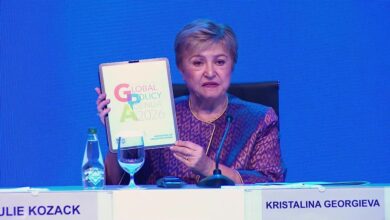
The World Bank’s latest Global Economic Prospects report offers a sobering assessment of where the global economy is headed. While it stops short of predicting a crisis, it warns that the world is entering a period of slower growth, heightened uncertainty and persistent geopolitical risks that could weigh on investment, trade and consumer confidence.
For Kuwait and its Gulf neighbours, the report carries particular significance. As energy exporters with strong financial reserves, the GCC countries are in a better position than many economies to weather global shocks. But the World Bank makes it clear that relying on oil revenues alone will not be enough to secure long-term prosperity.
The report suggests that the coming years will test how quickly countries can adapt, diversify and build more resilient economies.
The World Bank expects global growth to remain subdued as economies grapple with geopolitical tensions, tighter financial conditions, elevated debt levels and weaker investment. While inflation has eased in many countries, uncertainty continues to cloud the outlook, especially as conflicts in several parts of the world threaten supply chains and energy markets.
Rather than predicting an imminent downturn, the Bank cautions that risks remain firmly tilted to the downside. Any escalation of geopolitical conflicts or prolonged disruptions to global trade could further weaken economic activity. For an interconnected region like the Gulf, developments far beyond its borders can quickly influence economic performance at home.
Kuwait enters this period from a position of financial strength. Its sizeable sovereign wealth assets, relatively low public debt and substantial hydrocarbon reserves provide important buffers against external shocks.
Yet the World Bank’s message is that financial strength should not breed complacency. Periods of elevated oil prices can provide welcome fiscal support, but they can also create a false sense of security. If global demand weakens or investment slows, oil revenues may not remain as robust as they have in recent years.
That reinforces the importance of reforms already outlined under Kuwait Vision 2035, including strengthening the private sector, improving the business climate and reducing dependence on government spending as the primary engine of growth.
The Gulf’s Balancing Act
One of the report’s more interesting observations is the complex relationship between geopolitics and energy markets.
Periods of regional tension often push oil prices higher, benefiting exporting countries in the short term. But those same tensions also increase shipping costs, raise insurance premiums, unsettle investors and contribute to higher inflation globally. The result is a paradox.
Higher oil prices may boost government revenues, but they can also coincide with weaker global growth and more volatile financial markets. That is why the World Bank argues that long-term resilience will depend less on commodity cycles and more on the ability of countries to diversify their economies.
Diversification Moves to Centre Stage
The report reinforces a message that Gulf policymakers have increasingly embraced over the past decade: diversification is no longer simply desirable it is essential.
Future growth, the Bank argues, will increasingly come from higher productivity, innovation, technology adoption, stronger institutions, improved education and greater private-sector participation.
Across the GCC, governments have launched ambitious programmes aimed at expanding sectors such as logistics, tourism, financial services, manufacturing, renewable energy and digital technologies. Countries that implement reforms consistently and attract investment into these emerging sectors are likely to be better positioned to withstand future global shocks.
For investors, the World Bank expects volatility to remain a defining feature of international markets. That does not necessarily mean opportunities will disappear. Instead, it suggests that diversification, careful risk management and a longer-term investment horizon will become increasingly important.
Technology, artificial intelligence, digital infrastructure, clean energy and advanced manufacturing continue to feature among sectors with strong long-term potential.
The report also underscores the strategic role of Gulf sovereign wealth funds, whose scale and financial flexibility allow them to invest during periods when global markets become unsettled.
Oil Still Matters
Oil remains central to Gulf economies, and the World Bank acknowledges that energy prices will continue to be influenced by geopolitical developments. However, it also cautions against viewing higher prices as a substitute for sustainable economic growth.
History has shown that price spikes driven by conflict or supply disruptions are often accompanied by slower global demand, higher inflation and tighter financial conditions factors that eventually weigh on economic activity worldwide. For Kuwait, that reinforces the need to use periods of strong revenues to accelerate reforms rather than postpone them.
Looking Ahead
Perhaps the report’s most important takeaway is that resilience has become as valuable as growth itself. Countries that strengthen their institutions, diversify their economies, encourage entrepreneurship and invest in people are likely to emerge stronger from an increasingly uncertain global environment.
For Kuwait, the foundations are already in place. Strong public finances, one of the world’s largest sovereign wealth funds and significant natural resources provide advantages that many countries would envy.
The next step is ensuring those strengths translate into a more dynamic, competitive and diversified economy capable of creating opportunities well beyond the oil sector.
The World Bank’s report is therefore more than a set of economic forecasts. It is a reminder that while global uncertainty cannot always be controlled, the way countries prepare for it can make all the difference. For Kuwait and the wider GCC, the challenge is not simply to withstand the next period of volatility, but to use it as a catalyst for building a stronger and more sustainable future.