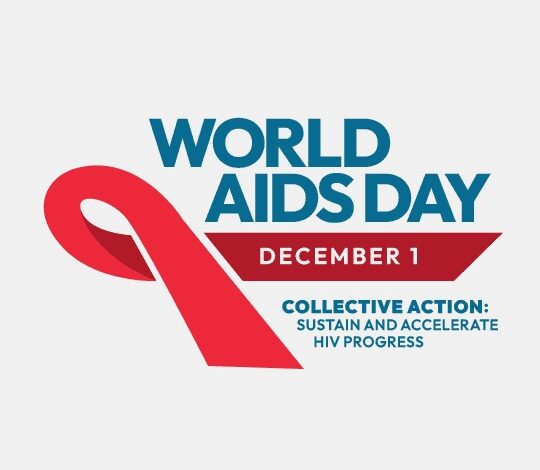
As the world marks World AIDS Day on December 1, 2025, UN Women has urged governments and the international community to recommit to empowering women and girls at the center of the global AIDS response.
This year’s theme, “Overcoming disruption, transforming the AIDS response,” underscores the need for urgent and sustained action amid widespread uncertainty.
Despite decades of progress, gender inequality remains a driving force behind the AIDS pandemic. Women and girls now represent 53 percent of the 40.8 million people living with HIV.
In sub-Saharan Africa, adolescent girls continue to face disproportionate risk — acquiring HIV at six times the rate of boys.
Factors such as gender-based violence, unequal access to healthcare, and limited representation in leadership roles further compound their vulnerability, while women continue to shoulder the majority of unpaid care and support work.
These challenges are intensifying as global funding declines, threatening critical programs that protect and empower women and girls.
‘UN Women’ stresses that women living with HIV are not passive victims but leaders, advocates, and agents of change whose rights and leadership must be recognized and adequately supported.
In 2024, UN Women expanded efforts to strengthen women’s leadership and advance health access. More than 35,000 women across 36 countries received training to enhance their leadership capacities, while community-based prevention, treatment, outreach, and legal empowerment programs were scaled up across Africa and Central Asia.
The Beijing+30 Political Declaration reaffirmed global commitments to women’s health as a core priority of the Beijing Platform for Action, emphasizing the need to uphold and advance the health and rights of all women and girls.
On this World AIDS Day, UN Women calls on governments and partners to reverse disinvestment, prioritize gender equality and human rights, and sustain political determination for prevention, care, and treatment. This includes increasing national funding, ending violence against women and girls, and supporting the vital networks of women whose leadership is driving meaningful progress.
“AIDS is not over — and neither is our fight,” the statement concludes. “Now is the time to safeguard hard-won gains and move forward, together.”