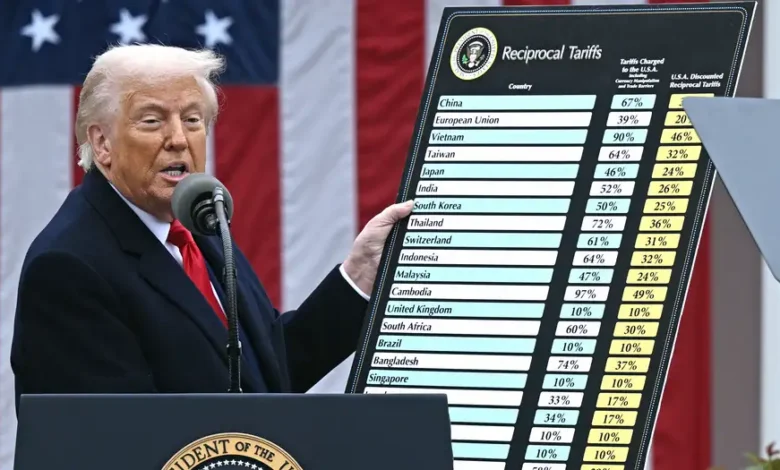
In a major legal setback for US President Donald Trump, the Supreme Court of the United States, in a much anticipated verdict, ruled that most of the tariffs imposed during his presidency over the past 13 months were unconstitutional, saying the president exceeded his legal authority in how they were introduced.
In a 6–3 decision, the court found that the administration improperly relied on the International Emergency Economic Powers Act (IEEPA) of 1977 to impose sweeping tariffs on several US trading partners.
The ruling focused less on tariffs themselves and more on defining the constitutional limits of presidential power, dw.com reports.
Despite the decision, the administration is expected to move quickly to reinstate similar tariffs using alternative legal pathways.
Officials had anticipated the ruling and prepared backup plans allowing tariffs to be imposed under other trade laws that grant presidential authority under specific conditions.
Among the available options is Section 122 of the Trade Act of 1974, which allows temporary tariffs of up to 15% for 150 days without congressional approval.
Other routes include Section 232 of the Trade Expansion Act of 1962, permitting tariffs on national security grounds, and Section 301 of the Trade Act of 1974, which enables tariffs against countries accused of unfair trade practices following formal investigations.
The ruling could also trigger significant financial consequences. US importers who paid tariffs may seek refunds, potentially costing the government billions of dollars in lost revenue.
In 2025 alone, US Customs and Border Protection collected about $287 billion in customs duties, taxes, and related fees — a sharp increase compared to the previous year.
Businesses that challenged the tariffs argued they raised costs and disrupted planning, while critics claimed many measures were used as political leverage rather than strictly for trade imbalances.
Although refunds would primarily go to importers rather than consumers, the decision adds new uncertainty for companies navigating US trade policy.
Legal experts expect continued disputes as the administration pursues alternative methods to maintain tariffs as a central pillar of its economic strategy.