Tehran not seeking escalation, but any attack will be met firmly: Iranian envoy
We seek de-escalation, region’s wisdom key to stability; No tension with Kuwait, no fear of threats -- H.E. Mohammad Totonji

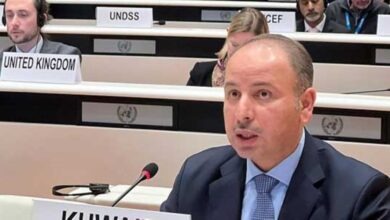
The Ambassador of the Islamic Republic of Iran to Kuwait, H.E. Mohammad Totonji, has affirmed Tehran’s confidence in the wisdom of regional leaders and their ability to take balanced decisions, saying that the positions adopted by neighboring countries in recent weeks reflect a clear commitment to restraint and the preservation of regional stability.
Speaking at a press conference on Tuesday attended by Kuwaiti media representatives, Totonji said he was confident this approach will continue, contributing to de-escalation and the containment of tensions in the region.
In response to a question on the possibility of the situation spiraling if Iran were subjected to military action in light of recent US threats, the ambassador said, “Iran is not seeking escalation. However, in accordance with the United Nations Charter, any attack on Iran will be met with a firm and appropriate response.”
Security situation in Kuwait
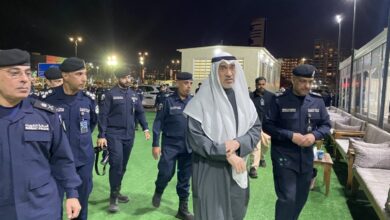
Addressing questions on whether the Iranian embassy in Kuwait had requested enhanced security measures, Totonji confirmed that no such request had been made and that “things are proceeding normally.”
He praised the existing cooperation between the Kuwaiti ministries of Foreign Affairs and Interior and expressed his appreciation for the ongoing coordination and efforts of the relevant authorities.
Totonji also revealed that Iranian Foreign Minister Abbas Araqchi had held talks over the past two days with several counterparts in the region, noting that these consultations will continue as part of efforts to contain crises and reduce tensions.
Criticism of US rhetoric
Commenting on repeated US statements threatening the use of military force, Totonji described such rhetoric as “inflammatory” and a clear violation of international laws and conventions, particularly when issued by United Nations member states. He warned that normalizing such language poses a direct threat to global security and peace.
He stressed that Iran’s policy is based on resolving disputes through diplomatic channels and adhering to mutual respect, adding that Tehran relies primarily on its people and their resilience, as well as on its relations with friendly countries.
The ambassador expressed hope that countries will take clear positions against what he described as hostile statements by the United States and Israel, saying such rhetoric does not contribute to regional security or stability.
He also pointed to what he described as a declining European role in addressing regional and international issues, saying this has negatively affected political solutions, and criticized Western “double standards,” particularly on human rights and sanctions, which he said are used as “inhumane tools of political pressure” against Iran.
Protests and internal developments in Iran
Addressing the recent protests in Iran, Totonji said the unrest, which began in late December 2025 and early January, was driven primarily by economic and living conditions, particularly the rise in foreign currency exchange rates.
He said the government responded with a package of measures, including food assistance, regulation of essential imports and cash compensation for currency differences, which helped reduce exchange rates. He added that the economy is currently in a phase requiring difficult decisions.
Totonji emphasized that the initial protests were peaceful and based on legitimate economic demands, and that the authorities dealt with them within legal frameworks. He stressed that peaceful protest is constitutionally guaranteed, but must be clearly distinguished from violence and rioting.
He outlined what he described as four stages of the unrest: beginning with peaceful demonstrations, followed by acts of violence, then the involvement of armed and “terrorist” elements allegedly supported from abroad, with the aim of destabilizing the country and provoking foreign intervention.
The ambassador said security forces were able to restore control, arrest armed elements and seize more than 1,300 weapons, adding that investigation results will be announced later. He also presented a documentary film during the conference showing what he described as the activities of terrorist groups during the unrest.