Success of Mega Projects Vital to Driving ‘Vision 2035’
THE TIMES KUWAIT REPORT
Prioritizing the implementation of vital projects is crucial to realizing Kuwait’s Vision 2035 development plan of transforming the country into a financial, commercial and cultural hub in the region. In particular, infrastructure projects outlined in the plan, including in transportation, communication, energy, and urban development, are critical to drive economic growth, enhance productivity, create jobs, attract foreign and local investment, and improve overall quality of life for citizens.
Kuwait has been disadvantaged for long by poor infrastructure, relative to its more dynamic and investment-friendly peers in the region.This is a drawback that the current government appears keen to address rapidly. Since taking office in May 2004, the government has prioritized the development of infrastructure projects, with the country currently having nearly 300 active projects, valued at approximately KD35 billion, with large infrastructure projects making up nearly half of that total.
Modern infrastructure forms the spine of thriving economies, boosting productivity by reducing operational costs, time delays, and enhancing efficiencies in public services and for businesses. A robust infrastructure also demonstrates stability and growth potential of the country, positioning it as an attractive destination for investments. Direct domestic and foreign investments, or through public-private partnerships, are a key mechanism for mobilizing capitaI and expertise needed to implement large-scale projects.
Implementation of mega infrastructure projects are also key to Kuwait’s economic diversification plan, as they encourage private sector participation, generate employment opportunities, drive demand for goods and services, and create a positive multiplier effect in the overall economy. Additionally, infrastructure projects in transportation facilitate regional economic integration, expand market access, and enhance global competitiveness.
Meanwhile, investments in communication infrastructure, with emphasis on latest digital networks, promote technological advancement, drive innovation and digital transformation, and support new-age industries, such as AI and big data that further drive economic growth. It is encouraging that the government has initiated several infrastructure initiatives central to Kuwait’s development goals, with the draft budget for 2025-26 allocating over KD1.8 billion for ongoing projects.
Upcoming mega construction projects focused on urban development, transportation, and tourism are either ongoing or in the project pipeline. While work on Kuwait International Airport Expansion, Mubarak Al Kabeer Port, and the Kuwait National Railroad Network are ongoing, project work on developing Kuwait Islands and Madinat Al Hareer (Silk City) are in planning stages. These mega projects, vital to Kuwait’s Vision 2035, have a combined value of over KD92 billion, with a breakup of their estimated costs being:
Kuwait Islands Development: The plan envisages transforming the five islands of Awha, Miskan, Warba, Failaka, and Boubyan into tourism, logistics, and investment hubs at a cost of over KD49 billion.
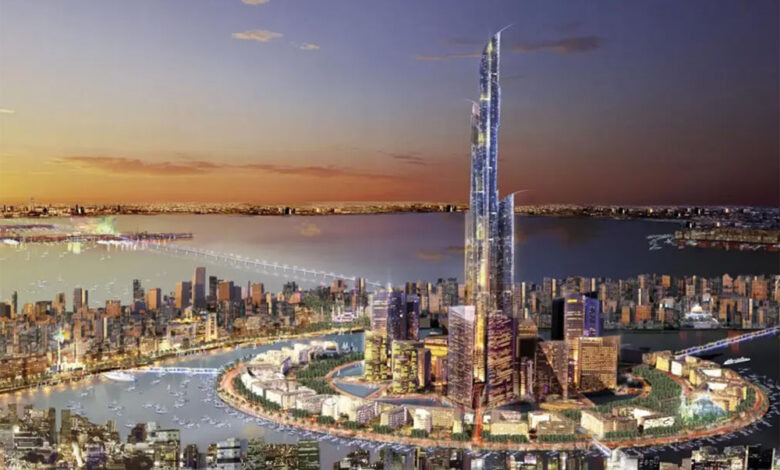
Madinat Al Hareer (Silk City): The planned greenfield mega-city spanning 250 sq km and valued at over KD40 billion will offer residential, commercial, and recreational spaces, including Burj Mubarak al-Kabir, set to be among the tallest buildings in the world when completed.
Kuwait International Airport Expansion: Ongoing work at expansion of Terminal 2 to handle 13 million passengers annually, with future potential increase to 25-50 million is slated to cost KD1.4 billion.
Mubarak Al Kabeer Port: Work on the 24-berth port on Boubyan Island with an annual container capacity of over 8 million Twenty-foot Equivalent Units (TEUs) is valued at more than KD980 million.
Kuwait National Rail Road (KNRR) Network: A 265km railway line with double track, connecting Kuwait City to Nuwaiseeb and Boubyan Port is planned at around KD920 million.
In addition to the above mega projects, the government has green-lighted projects in energy and in urban development that are planned to come online over the medium-term. Although a major oil producer, Kuwait has been grappling with a perennial power shortage problem caused by rapid population growth, urban expansion, soaring annual temperatures, aging equipment, and maintenance delays at some plants, which have led to power cuts being imposed in some areas during peak summer months.
To address the country’s persistent power and water shortages, Kuwait is fast-tracking several projects in the energy and water sector. In September, Minister of Electricity, Water, and Renewable Energy (MEWRE), Subaih Al-Mukhaizim, said that Kuwait would add over 14 gigawatts (GW) of power generation capacity by 2031. Elaborating on the minister’s promise, a ministry spokesperson outlined some of the ongoing and upcoming projects.
Al-Zour North Phases 2 and 3: In August the government signed contracts worth over KD1 billion for the Al-Zour North Phases 2 and 3 project, with Saudi Arabia’s utility-giant ACWA and Gulf Investment Corporation. The project, expected to be completed by 2029 will add 2.7 GW of power and 120 million gallons of water daily.
Shagaya Renewable Energy Project: Bidding is underway for the first and second phases of this large-scale solar project, to be built under a public-private partnership model, which aims to have a combined capacity of 1.6 GW. A further 3 GW of power is planned to come online when phases three and four are completed in cooperation with Chinese state enterprises.
Al Khairan IWPP-Phase 1: Bidding for the first phase of this integrated water and power project (IWPP) opened in September to pre-qualified consortiums. The project is set to add 1.8 GW under a Public Private Partnership scheme..
Nuwaiseeb Projects: Parts of the mega 7.2 GW Nuwaiseeb project will be built in stages, with the 3,600 MW Nuwaiseeb II Combined Cycle Power Plant expected to come online by 2027, while the Nuwaiseeb I Desalination Power Plant is anticipated to begin commercial operation in 2026. The remaining portion is scheduled for completion after 2031 and into the next decade.
Development of residential cities is another infrastructure priority for the government. Increase in population among nationals has led to a growing demand for public housing, with figures from the Public Authority for Housing Welfare (PAHW) showing that currently there are over 105,000 housing applications that remain pending. This number is expected to soar to 197,244 by 2035, with an annual increase of around 8,000 applications. Acknowledging the limits of PAHW to provide sufficient residential units to overcome the growing backlog in demand, the government has decided to engage the services of the private sector in housing development. To this end, the authorities are in the process of amending development policies and drafting a new mortgage law aimed at facilitating home ownership.
Affirming these positive steps, Minister of State for Municipal Affairs and Minister of State for Housing Affairs Abulatif Almeshari recently stated that new residential projects would be executed in future through public-private partnerships (PPP). He added that the ministry is keen to shorten waiting duration, increase ownership of houses, and ensure high quality of construction.
Pointing out that PAHW plans to build 170,000 new housing units through PPPs over the next ten years, Minister Almeshari said this would be in addition to constructing a total of 10,000 houses in Sulaybiya, Taimaa, Saad Al-Abdullah and Mirgab areas over the short-term. He also stressed that the new residential areas would be fully integrated communities with all urban facilities, including schools, commercial areas, health centers, and public services.
However, implementing infrastructure projects on their own will not drive economic growth. For this, the government will need to introduce critical structural reforms that accelerate economic diversification, improve business environment, enhance labor-market productivity, elevate public-sector efficiency, and raise the level of investment flows.
With constraints from political instability and bureaucratic hassles a thing of the past, the government should push through much-needed reforms vital to the nation, even if they are initially unpalatable to the public.