Stability begins at home, a new housing equation for Kuwaiti women
. . . policy shifts, practical solutions and a human-centric approach

Women’s housing has moved decisively to the forefront of official policymaking in Kuwait, increasingly recognized as a cornerstone of family cohesion and social stability. As demand expands and waiting lists grow, authorities are reshaping their approach through concrete measures and updated executive frameworks designed to secure dignified housing for eligible Kuwaiti women.
This shift was underscored by Sheikha Bibi Al-Yousef Al-Sabah, head of the Women’s Housing Committee at the Public Authority for Housing Welfare, who outlined a series of new procedures signaling what she described as a more transparent, balanced and responsive phase in managing this long-standing file.
Speaking during a seminar held Sunday evening at the Writers Association, Sheikha Bibi emphasized that official attention to women’s housing — particularly for single and widowed women — is steadily increasing.
The event was attended by Faisal Al-Shaitan, representing the Credit Bank and serving on the Women’s Housing Committee, and Aziza Al-Musailim, Director of Legal Affairs at the Housing Authority, alongside a large gathering of female citizens.
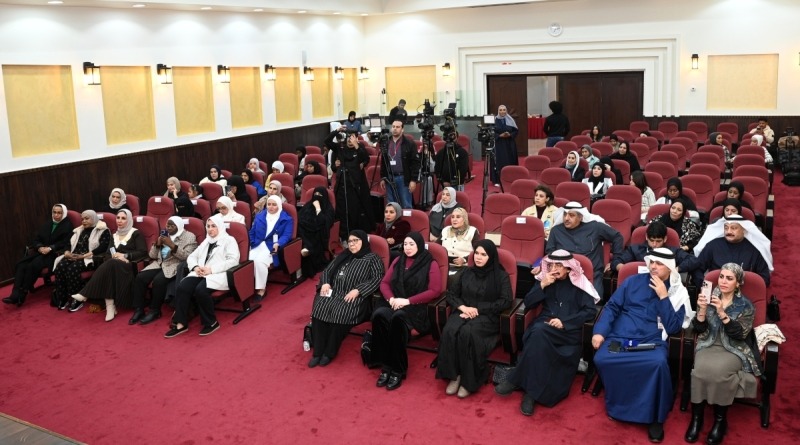
Sheikha Bibi confirmed that the coming period will bring broader and more flexible solutions tailored to the real needs of women applicants.
She highlighted close coordination between the Housing Authority and the Credit Bank to recalibrate housing entitlements and ensure the availability of suitable accommodation. Among the measures adopted is a mechanism allowing two sisters without children to share a single housing unit, while special consideration is being given to widows and single women to support their long-term stability.
Turning to project timelines, Sheikha Bibi revealed that the low-cost housing project is expected to be fully completed by 2028, comprising approximately 9,800 housing units. Around 3,000 of these will be allocated to Ministry of Defense personnel, while the remaining units will be distributed to eligible female citizens residing in Taima and Sulaibiya, following the completion of data updates.
She also explained that inspection teams now operate during both morning and evening hours, enabling visits while residents are present. This step aims to ensure that housing units are occupied by rightful beneficiaries and to detect violations such as subletting or misuse, alongside comprehensive data audits.
In a move reflecting social sensitivity, the Authority has decided to postpone the evacuation of withdrawn houses in Taima and Sulaibiya until after Ramadan, allowing families time to secure alternative accommodation. Cases involving school-aged children or those awaiting completion of new homes will see evacuations deferred until summer.
Sheikha Bibi praised the efforts of Housing Minister Abdul Latif Al-Mashari, as well as the ministries of Defense and Interior, in reclaiming housing units from ineligible occupants and returning them to the Authority for redistribution. She noted that the handover process is already underway, with approximately 600 houses distributed so far. Allocation will continue at a pace of about 200 houses every two weeks until all eligible women are settled.
Addressing concerns over suitability, she announced the formation of a specialized committee to review requests from beneficiaries who believe the housing allocated to them in Taima or Sulaibiya is unfit for habitation. Applicants may also choose to wait for future distribution following project completion if they prefer not to enter the current lottery.
In a notable policy development, Sheikha Bibi said that, for the first time, housing units can be transferred from a military serviceman to his wife, his son’s wife, or his Kuwaiti daughter, provided an updated housing application meets all eligibility conditions.
She reaffirmed that Kuwaiti women’s right to housing is fully protected once eligibility criteria are met. These include a monthly income ceiling of 1,500 dinars, the absence of business ownership or alternative residences, permanent residence in Kuwait, and the submission of all required documentation.
Regarding the Sabah Al-Salem complex, Sheikha Bibi said residents will be relocated to the Al-Nuwair complex in the Sabah Al-Ahmad area after data updates are finalized. This relocation precedes the demolition of the current complex and its transfer to the Housing Authority. Summoning of residents for this process has already begun.
She concluded by stressing that humanitarian considerations remain central to the committee’s work, particularly for families with elderly members, people with disabilities, and children of deceased female citizens. She underscored the importance of adhering strictly to usage regulations to safeguard housing for those most in need.
During the seminar, Sheikha Bibi invited several attendees to visit the committee’s headquarters after it became evident that their cases involved humanitarian circumstances requiring further review.
Reflecting on her role, she said her most fulfilling moments come during the bi-weekly housing lotteries and when beneficiaries offer heartfelt prayers. She attributed these moments to divine grace and the political leadership’s clear commitment to supporting Kuwaiti women through secure and appropriate housing.
The discussion also generated proposals for the Credit Bank, including suggestions to assist single, divorced or widowed women in purchasing homes under flexible arrangements, and to reconsider restrictions related to apartment size and family dependency conditions.
Responding to questions, Faisal Al-Shaitan noted that current regulations prohibit financing apartments smaller than 120 square meters, while expressing optimism that future amendments will align with the government’s broader direction toward inclusive housing solutions for women across all categories.
The evening concluded after more than two hours of open dialogue, with Sheikha Bibi and her team addressing all inquiries in a manner widely described by attendees as both decisive and deeply humane — reinforcing confidence in a housing policy increasingly shaped by fairness, accountability and social responsibility.