- Airlines raising fares as fuel prices surge — Major carriers including Qantas, Scandinavian Airlines and Air New Zealand have increased ticket prices after jet fuel costs jumped from about $85–$90 per barrel to as high as $150–$200 following the Middle East conflict.
- Airspace disruptions and route changes — Ongoing tensions have disrupted Middle Eastern airspace, forcing airlines to reroute flights and shift capacity toward alternative routes such as Europe, while carriers like Cathay Pacific add extra flights to meet changing travel demand.
- Rising costs threaten aviation and tourism — Higher fuel prices, increased surcharges by airlines such as Hong Kong Airlines, and shrinking airspace are putting pressure on airline profitability and raising concerns about a slowdown in global travel and tourism.
Major global airlines are raising ticket prices as the cost of jet fuel surges following the conflict involving the United States, Israel and Iran, sending shockwaves through the aviation industry.
Carriers including Qantas, Scandinavian Airlines, and Air New Zealand have announced airfare increases as operating costs climb sharply due to the spike in fuel prices.
Jet fuel, which was trading between $85 and $90 per barrel before the escalation of the conflict, has surged to as high as $150–$200 per barrel, according to Air New Zealand.
The airline has also suspended its financial outlook for 2026, citing uncertainty surrounding the geopolitical crisis and its impact on energy markets.
The conflict has disrupted shipping routes and heightened volatility in global oil markets, pushing travel costs higher and raising concerns about a possible slowdown in international tourism.
A spokesperson for Scandinavian Airlines said the carrier had implemented a temporary fare adjustment to offset the sudden increase in fuel costs.
The airline had earlier revised its fuel hedging strategy amid uncertain market conditions and currently has no fuel consumption hedged for the next 12 months, reports Al-Jazeera.
In contrast, several airlines including Lufthansa, Ryanair and Finnair have hedged a portion of their fuel supplies at fixed prices to cushion the impact of market volatility. Finnair, which had hedged more than 80 percent of its first-quarter fuel purchases, warned that a prolonged conflict could threaten not only fuel prices but also supply availability.
The turmoil has also disrupted airspace across the Middle East. According to flight tracking service Flightradar24, several aircraft arriving in Dubai were temporarily placed in holding patterns amid reports of a potential missile threat before eventually landing safely.
Meanwhile, Qantas said it is considering shifting more flight capacity toward Europe as airlines attempt to avoid disrupted Middle Eastern airspace. Demand on Asia–Europe routes has already surged due to airspace closures and limited flight capacity.
Hong Kong-based Cathay Pacific has responded by adding extra flights to European destinations including London and Zurich to meet rising passenger demand.
At the same time, airlines are increasing surcharges. Hong Kong Airlines said it will raise fuel surcharges by as much as 35.2 percent, with the steepest increases affecting routes between Hong Kong and destinations such as the Maldives, Bangladesh and Nepal.
Despite the disruption, some European carriers are not yet adjusting ticket prices. International Airlines Group, the parent company of British Airways, said it remains well hedged for the near term and has no immediate plans to raise fares.
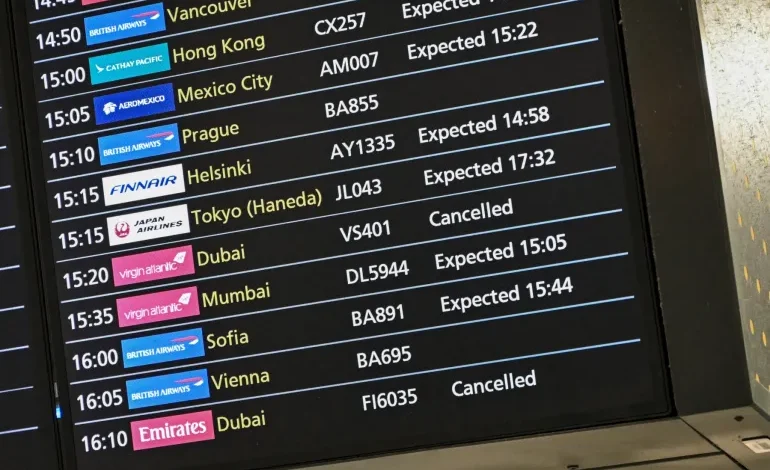
However, British Airways has brought forward the end of its winter-season flights to Abu Dhabi due to continuing uncertainty, canceling services scheduled to run until April.
Fuel is typically the second-largest expense for airlines after labor, accounting for roughly 20 to 25 percent of operating costs.
Combined with shrinking airspace and longer flight routes due to regional conflicts, the surge in fuel prices is adding significant pressure to the global aviation industry.