Peace, Inclusivity, Equity, Vital to Social Justice
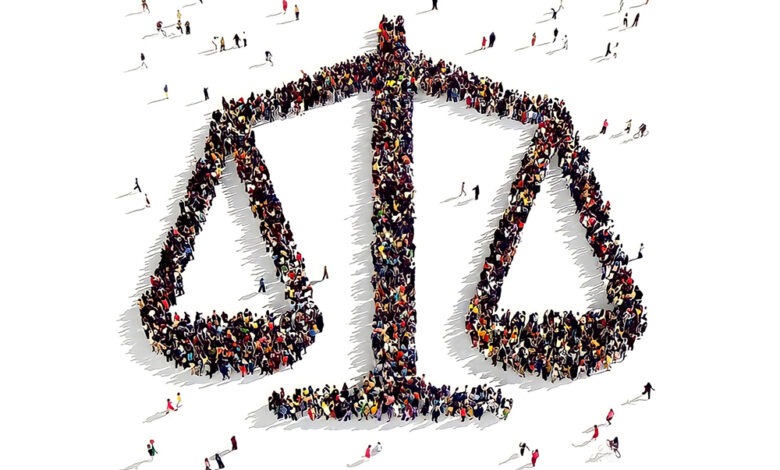
Social justice is not just an ideal to strive for, but an actionable commitment to ensure fair, inclusive and sustainable societies, based on the principle of peaceful and prosperous coexistence within and among nations.
The Times Kuwait Report
Significant advancements achieved over the past many decades in several dimensions of human development have made the world healthier, wealthier, more knowledgeable, and socially better protected than at any time before. However, this progress has not been uniform and headways made in certain areas have stalled or remain limited, exacerbating the stark inequalities that endure around the world.
The ‘Copenhagen Declaration on Social Development’, signed by world leaders at their United Nations Summit in 1995, recognized the significance of social development and human well-being for all. The seminal document affirmed that economic and social development, human rights, justice, environmental protection, and international peace and security are deeply intertwined and central to sustainable development.
The Declaration asserted that the most productive economic and social policies and investments are those that empower people to maximize their capacities, resources and opportunities. It also emphasized that people are at the center of sustainable development and are entitled to a healthy and productive life, while underscoring that gender equity and equality in opportunities and rewards were pivotal to realizing sustainable economic and social development.
The theme for this year’s World Day of Social Justice, commemorated annually on 20 February is ‘Renewed Commitment to Social Development and Social Justice’. The theme, which reiterates the people-centric approach to social development, comes in the wake of the Second World Summit for Social Development held in Doha, Qatar in November 2025.
The Doha Declaration reaffirmed commitment to the 1995 Copenhagen Declaration and noted that poverty eradication, full and productive employment, and social inclusion, were interrelated pillars of social development.
The Declaration emphasized the need for macroeconomic frameworks that, among others, promotes gender equality, expands opportunities for youth, supports the transition from informal to formal economy, ensures fair and inclusive transformations in the digital and green economies, and encourages the implementation of universal social protection.
At Doha, leaders applauded the progress achieved over the past three decades, noting the significant gains recorded in poverty reduction, education and social protection coverage, but also acknowledged the persistent and emerging challenges to realizing social development for all. They noted that structural inequalities, labor market informality, gender disparities, and declining trust in institutions continue to impede inclusive and sustainable development.
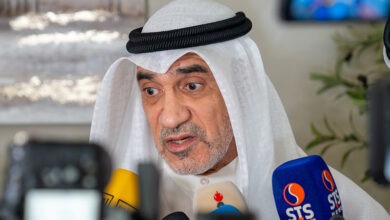
Representing His Highness the Amir Sheikh Meshal Al-Ahmad Al-Jaber Al-Sabah at the Summit, His Highness the Prime Minister Sheikh Ahmad Abdullah Al-Ahmad Al-Sabah reaffirmed Kuwait’s commitment to comprehensive and and sustainable social development and to the United Nations 2030 Sustainable Development Goals. He also underlined the need for collective global action aimed at poverty eradication and social justice through a human-centered approach that focuses on social protection, equality, employment, and inclusivity.
For her part, Minister of Social, Family and Childhood Affairs, Dr. Amthal Al-Huwailah, speaking on the sidelines of the summit at an event titled, ‘SheBuilds: Women Innovating Social Solutions for an Inclusive Future’, stated that women in the region and the world are a driving force for positive transformation and for building a more inclusive, just, and equitable future for all. She added that investing in women is not only a commitment to equality but a genuine investment in creating sustainable solutions for entire societies.
In her address at the high-level event, Minister Al-Huwailah said that women in Kuwait and elsewhere are redefining the very meaning of development and social justice from a human-centered perspective. Pointing out that an innovative mindset is important in tackling social challenges and transforming ideas into practical solutions, she presented real-life stories and experiences of women-led innovations in Kuwait that creatively and constructively addressed social challenges.
She noted that women-led social innovation is inherently inclusive, as it is grounded in a deep understanding of the needs of marginalized groups and dedicated to removing barriers to their participation in development. She praised the event for celebrating women’s creativity in social development and their ability to devise solutions that make a real difference in communities and people’s lives. Kuwait’s humanitarian approach and strategic commitment to supporting social development of countries worldwide, were further highlighted in mid-February.
Speaking at a function honoring employees of the Kuwait Fund for Arab Economic Development (KFAED), Minister of Foreign Affairs and Chairman of KFAED Board of Directors, Sheikh Jarrah Jaber Al-Ahmad Al-Sabah, affirmed that the Fund continues to engage in humanitarian and development roles and strengthen its international partnerships.
Pointing out that the Fund has implemented development projects in 106 countries across vital sectors, the foreign minister said that this support is contributing to improving the quality of life for millions and reinforcing Kuwait’s status as a trusted partner in achieving sustainable development worldwide. He also indicated that the Fund is one of the most prominent tools of Kuwait’s foreign policy and a key pillar of its socio-development diplomacy.
The Fund’s people-centric and humanitarian approach to social development, stems from the belief that investing in people is a fundamental pillar for building a more prosperous and just future world, said Sheikh Jarrah Al-Sabah. He added that it also reflects Kuwait’s continued commitment to promoting solidarity and cooperation, and building bridges of friendship with nations worldwide.
There have been several remarkable achievements around the world since the Copenhagen Declaration three decades ago—child labor has dropped from 20.6 percent in 1995 to 7.8 percent in 2024; extreme poverty has fallen from 4 in 10 in 1995 to 1 in 10 by 2023; and working poverty—those employed but still in poverty—has decreased from 27.9 percent in 2000 to 6.9 percent by 2024. Also, output per worker, which was 78 percent three decades ago, has risen to 215 percent in upper-middle-income countries; and 50 percent of the global population is now covered by some form of social protection.
Despite these advances, latest figures from UN entities show that in 2024 nearly 12.5 percent of the world population, or 817 million people, lived in ‘extreme poverty’ (less than US$3 per day); over half the world’s population lacks essential health services coverage; around 27 percent of school-age (5–17) children were out of primary and secondary levels of education; and that the top 1 percent of the world population, holding over 40 percent of global wealth, owns more than the combined wealth of the bottom 95 percent of humanity.
The figures from the UN and other agencies reveal that pursuing social justice has become more critical than ever before. Social justice refers to fair and equitable societies where all individuals, irrespective of their background or identity, have equal access to rights, opportunities, and resources. Globalization, once expected to bring about social equity, while undoubtedly giving a boost to global economic development, has also created and widened inequalities and social injustices.
Today there is widespread consensus that economic growth alone does not guarantee social justice and that efforts should be made to support and promote the enhancement of equitable social development throughout the world. This would enable all men and women, especially those most vulnerable and socially excluded, to exercise their rights, share the responsibilities and utilize the resources that enable them to lead satisfying lives, and contribute to the well-being of their families, communities and humanity.
It bears stressing that social justice is not just an ideal to strive for, but an actionable commitment to ensure fair, inclusive and sustainable societies, based on the principle of peaceful and prosperous coexistence within and among nations. Ultimately, social justice is inseparable from human dignity. Ensuring access to quality education, healthcare, employment, and strengthening social and legal protection mechanisms, fosters individual well-being and stable, resilient societies, promoting long-term peace worldwide.