Governments around the world are scrambling to contain the economic fallout from surging oil prices, which have fluctuated between $100 and $120 per barrel amid escalating tensions in the Middle East and fears of a new wave of global inflation.
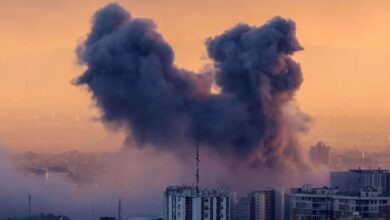
Oil markets experienced one of the largest daily jumps in history after fresh U.S. and Israeli strikes inside Iran targeted key sites, including oil storage facilities.
The attacks intensified concerns over supply disruptions, particularly as the conflict coincides with ongoing restrictions on shipping through the strategic Strait of Hormuz, a critical global energy corridor, reports Al-Qabas daily.
On Monday, oil prices surged by nearly 30 percent, briefly surpassing $115 per barrel. Although gains later eased, the rally still marked one of the sharpest price increases in recent decades.
Benchmark West Texas Intermediate crude rose 13.41 percent to $103.09 per barrel, while Brent crude climbed 16.33 percent to $107.83 per barrel.
U.S. President Donald Trump attempted to reassure markets, stating that the current spike in oil prices is temporary and tied to geopolitical tensions.
Writing on his Truth Social platform, Trump said short-term price increases were “a very small price to pay for the security and safety of the United States and the world,” adding that prices would fall quickly once the Iranian nuclear threat is removed.
Severe Market Turmoil
Since the beginning of the military confrontation involving the United States, Israel and Iran, the price of West Texas Intermediate crude has surged by nearly 70 percent — an unprecedented rise in such a short period.
Analysts note that even the start of the Russian invasion of Ukraine in 2022, when oil briefly climbed above $130 per barrel, did not trigger such extreme volatility in global markets.
The disruption has already forced several Middle Eastern producers to scale back output as storage facilities fill up and shipping operations face security risks in the Gulf.
The United Arab Emirates and Kuwait have reportedly begun cutting production as storage capacity tightens, while production in Iraq has fallen sharply.
Meanwhile, Saudi Arabia has diverted large volumes of crude to Red Sea export terminals to bypass shipping disruptions in the Gulf. Shipments from its western ports have reached around 2.3 million barrels per day this month, according to shipping data compiled by Bloomberg.
However, that volume remains significantly below the roughly 6 million barrels per day the Kingdom had been exporting through Gulf routes in recent months.
Analysts at JPMorgan Chase estimate that production cuts across the Middle East could exceed four million barrels per day if storage facilities continue to fill and tanker shipments remain restricted.
Andy Lipow, president of Lipow Oil Associates, warned that the $100-per-barrel level may only be a temporary milestone in a broader price rally.
Escalating Security Risks
Energy markets are also under pressure from rising threats to critical infrastructure. Saudi Arabia recently intercepted drones targeting the Shaybah oil field, which has a production capacity of about one million barrels per day.
Meanwhile, Iranian strikes targeting facilities in Bahrain and Qatar have heightened fears of broader regional disruption.
Inflation Risks Grow
The surge in oil prices is already pushing up fuel costs worldwide. In the United States, gasoline prices have recorded one of their largest weekly increases since Hurricane Katrina disrupted refinery operations in 2005.
Officials warn that the spike could feed directly into higher global inflation in the coming months.
Managing Director of the International Monetary Fund, Kristalina Georgieva, cautioned that sustained increases in oil prices could significantly impact the global economy.
She noted that every 10 percent increase in oil prices sustained over most of the year could add roughly 0.4 percentage points to global inflation, while prolonged instability could weaken economic growth and investor confidence.
Asia Feels the Greatest Impact
Asia — the region most dependent on Middle Eastern energy supplies — is already experiencing significant pressure.
In Japan, which imports more than 90 percent of its crude oil from the Middle East, refiners are seeking permission to tap national strategic reserves.
Meanwhile, China has reduced fuel exports to secure domestic supply, while South Korea is considering reintroducing price controls on oil products for the first time in three decades.
Emergency Measures Under Discussion
In response to the surge in prices, finance ministers from the Group of Seven are discussing the possibility of a coordinated release of strategic oil reserves in cooperation with the International Energy Agency.
According to sources cited by the Financial Times, officials are considering releasing between 300 million and 400 million barrels of oil — roughly a quarter of the emergency reserves held collectively by the agency’s member countries.
Analysts warn that if supply disruptions continue for several months, oil prices could reach record highs later this year.