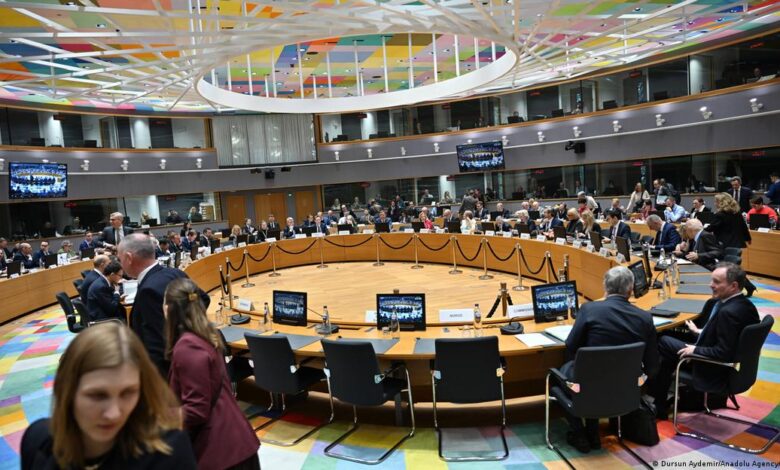
The European Union is advancing its toughest migration measures in years as member states rush to tighten deportation procedures and expand the use of detention for rejected asylum seekers.
Despite claims from Washington that Europe is being overwhelmed, EU officials note that irregular arrivals are actually declining — yet political pressure continues to fuel a more restrictive agenda.
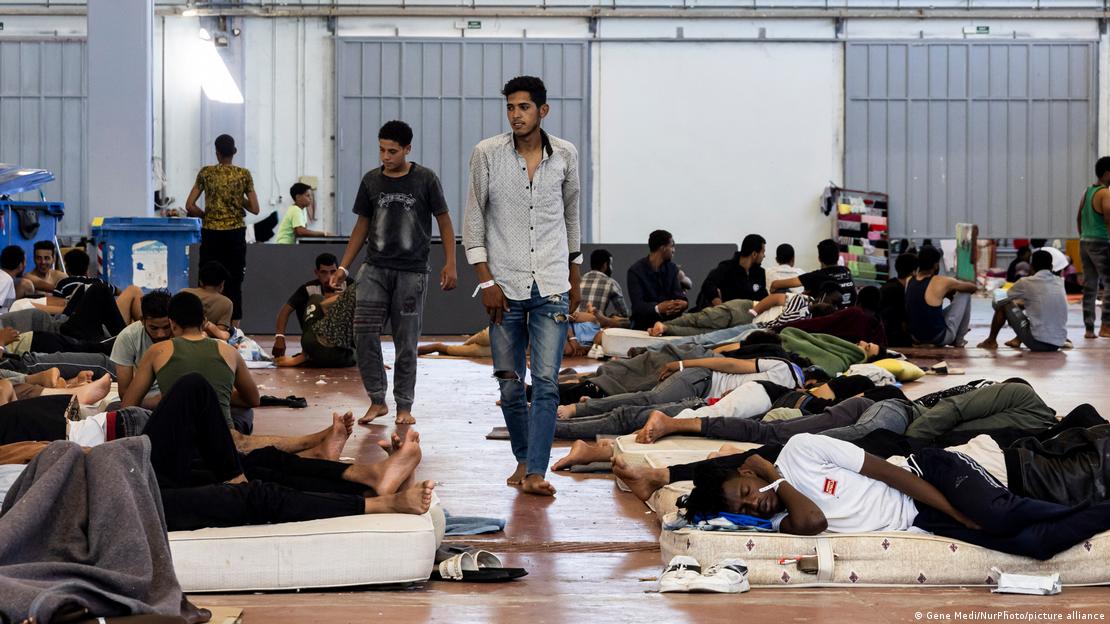
At the center of the reforms is a proposal to speed up deportations and make it easier for countries to detain migrants awaiting removal.
Denmark’s Immigration Minister Rasmus Stoklund said the updated rules aim to fix what he described as a “dysfunctional” system and restore public confidence that the EU has control over its borders, according to DW.COM
But the measures have drawn intense criticism from human rights groups. Amnesty International accused the EU of echoing what it called the “dehumanizing and unlawful mass detentions and deportations” seen in the United States, warning that the reforms risk undermining basic protections.
A key element of the package is the formal endorsement of so-called “return hubs” — detention centers located outside EU territory.

Under the proposal, individual member states would be able to sign deals with non-EU countries and send migrants there to have asylum claims processed or to wait for deportation, even if the individuals have no connection to the host country.
Italy has already experimented with the concept, partnering with Albania to set up offshore processing centers.
However, the initiative has been mired in legal challenges. Rome hopes the new political backing from EU ministers will allow the Albanian centers to resume operations and serve as the bloc’s first functioning return hub.
Migration analyst Helena Hahn said significant questions remain — particularly about which third countries would be willing to host such centers and under what conditions. She cautioned that the broader European model for offshore processing has yet to take shape.
EU ministers also moved forward on new rules to accelerate deportations. The plan includes stricter penalties for migrants who ignore expulsion orders and a shared list of “safe” countries to fast-track asylum rejections.
Bangladesh, which has a low acceptance rate for asylum claims, tops the list, followed by countries such as India, Egypt, Morocco, Tunisia, and EU candidate nations including Serbia and Montenegro.
Alongside harsher enforcement tools, ministers approved a “solidarity pool” designed to ease pressure on frontline countries like Greece, Italy, and Spain. Under this system, Northern and Eastern EU states must either relocate a certain number of asylum seekers or pay into a joint fund supporting border states. Analysts view this as a rare example of burden-sharing in an otherwise restrictive reform package.
The political landscape is central to the EU’s shift. Across the continent, voters rank irregular migration among their top concerns, second only to Russia’s war in Ukraine.
Far-right parties have capitalized on these anxieties, pushing mainstream governments to adopt tougher policies and seek what they describe as “innovative solutions.”
Yet experts warn that many of these proposals face substantial diplomatic, legal, and operational hurdles. “There’s a growing appetite for restrictive measures,” said Hahn, “but very few have proven workable in practice.”
She noted that moving migrants to third countries may sound straightforward politically, but implementing such ideas is far more complex in reality.