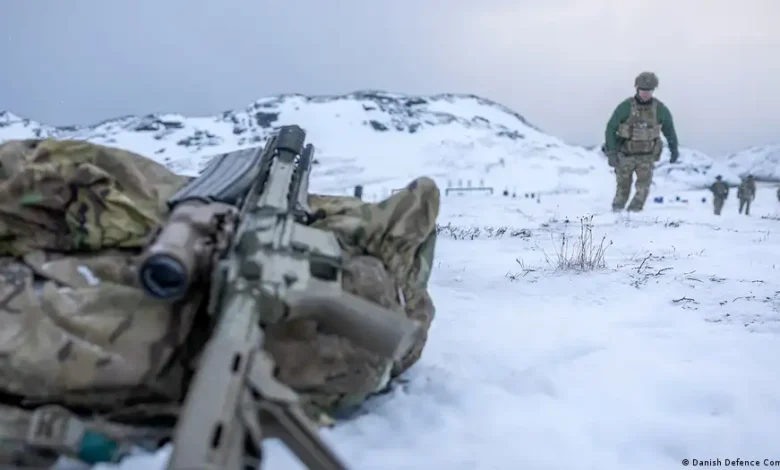
NATO has announced the launch of a new mission, dubbed “Arctic Sentry,” aimed at bolstering the alliance’s military presence and coordination in the Arctic region, including around Greenland, in an effort to ease recent tensions among member states and address emerging security challenges.
The mission, unveiled on February 11, 2026, will bring together the activities of NATO allies in the High North under a unified command structure for the first time.
Rather than immediately deploying a large, permanent force, Arctic Sentry will initially oversee and integrate existing and planned military exercises by member nations in the region, such as Denmark’s Arctic Endurance and Norway’s Cold Response drills.
According to NATO’s Supreme Allied Commander Europe, U.S. Air Force General Alexus Grynkewich, the operation “underscores the alliance’s commitment to safeguard its members and maintain stability in one of the world’s most strategically significant and environmentally challenging areas,” and will “leverage NATO’s strength to protect our territory and ensure the Arctic and High North remains secure.”
The timing of the mission reflects broader geopolitical concerns in the Arctic, particularly following controversial remarks by U.S. President Donald Trump in recent months suggesting that the United States should take control of Greenland — a semi-autonomous territory of the Kingdom of Denmark — citing alleged strategic threats from Russia and China.
Those comments triggered the deepest transatlantic rift within NATO in years and prompted calls among some European allies for a stronger NATO role in Arctic defense.
After a January meeting in Davos between Trump and NATO Secretary General Mark Rutte, the U.S. leader stepped back from his more extreme proposals, and the two agreed on a framework for enhanced cooperation on the security of Greenland and the wider Arctic.
As part of that process, NATO allies have worked to refocus attention on collective defense rather than unilateral actions.
In addition to Denmark and Norway, several NATO members have signaled their involvement in Arctic Sentry. Germany plans to contribute forces including Eurofighter jets and transport aircraft, while the United Kingdom has pledged to nearly double its troop presence in nearby Norway over the next three years and play a “vital” role in the mission.
Despite these commitments, it is not yet clear whether Arctic Sentry will lead to the deployment of additional forces beyond planned exercises and operations, or whether new capabilities will be permanently based in the region.
NATO officials have emphasized that the mission’s main goal is to enhance coordination, surveillance, and readiness across air, sea, and land domains, enabling the alliance to better assess and fill any security gaps in the strategically vital Arctic.
NATO Secretary General Rutte has rejected the notion that the mission is merely a rebranding effort to appease Washington, saying that bringing allied activities under one command will improve operational effectiveness and help the alliance anticipate future threats posed by increased Russian and Chinese activity in the High North.
By consolidating its presence and planning in the Arctic, NATO aims to demonstrate cohesion among its members while addressing shifting geopolitical realities in a region that is becoming more accessible and strategically significant as climate change alters sea routes and resource access.