Modi arrives in Oman as India, Oman poised to seal major trade deal
. . . scheduled to hold talks with Sultan Haitham bin Tarik on strengthening the strategic partnership, with discussions expected to cover trade, investment, energy, defense, security, technology, agriculture and cultural cooperation, in addition to regional and global issues of mutual interest.
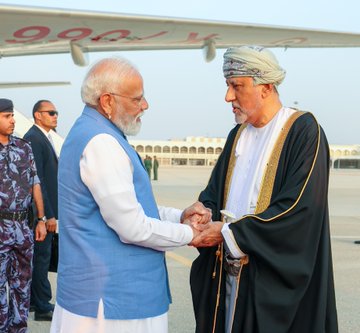
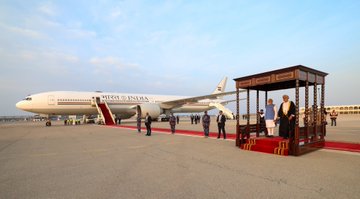
Indian Prime Minister Narendra Modi arrived in Muscat on Wednesday on a two-day official visit to the Sultanate of Oman, the final leg of his three-nation tour, aimed at strengthening bilateral relations and finalizing a major trade agreement.
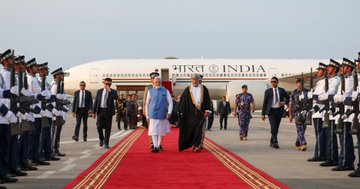
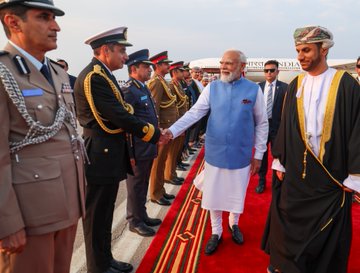
Prime Minister Modi was warmly received at the airport by Oman’s Deputy Prime Minister for Defence Affairs, Sayyid Shihab bin Tariq Al Said, and was accorded a ceremonial guard of honor. The visit is being held at the invitation of Sultan Haitham bin Tarik.
This marks Modi’s second visit to Oman and coincides with the 70th anniversary of the establishment of diplomatic relations between the two countries.
A key focus of the visit is the expected signing of a Comprehensive Economic Partnership Agreement (CEPA), which aims to significantly enhance trade and investment ties.
The Indian government has expressed strong optimism about finalizing the agreement, which was approved by India’s Union Cabinet last week. Negotiations for the pact began in November 2023 and concluded earlier this year.
Indian officials said the agreement would open a new chapter in bilateral trade relations and substantially deepen economic cooperation between the two countries.
During his stay, Prime Minister Modi is scheduled to hold talks with Sultan Haitham bin Tarik on strengthening the strategic partnership, with discussions expected to cover trade, investment, energy, defense, security, technology, agriculture and cultural cooperation, in addition to regional and global issues of mutual interest.
Modi will also address members of the Indian community in Muscat.
Oman is India’s third-largest export destination among Gulf Cooperation Council countries. Bilateral trade between the two nations reached approximately $10.5 billion in 2024–25, with India importing mainly petroleum products and urea, while exporting mineral fuels, chemicals, iron and steel, machinery, food products and textiles.