The global economy is entering a period of severe turbulence as the escalating conflict in the Arabian Gulf spreads beyond the battlefield, shaking financial markets, disrupting global supply chains and driving energy prices sharply higher.
With the world closely watching the security of navigation through the strategic Strait of Hormuz, international reports warn that global financial stability now depends largely on whether the conflict can be contained.
Economists fear the crisis could revive the specter of stagflation, a damaging mix of rising prices and weak economic growth that could reshape the global economic landscape reports Al-Rai daily.
Energy and Supply Chain Risks
A recent report by the London-based Chatham House warned that the widening military confrontation in the Middle East could trigger a “double shock” affecting both the energy sector and global supply chains.
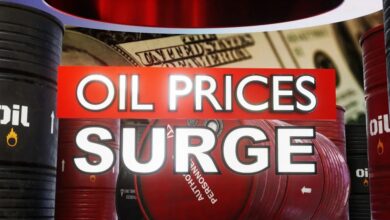
The institute noted that nearly 20 percent of the world’s oil consumption passes through the Strait of Hormuz. Any disruption to shipping in this critical waterway could send crude prices soaring and reignite global inflationary pressures that central banks have spent years trying to control.
Beyond oil, the report highlighted risks to liquefied natural gas supplies, which are crucial for many economies in Europe and Asia. Rising geopolitical uncertainty has already driven investors toward safe-haven assets, causing volatility in global stock and currency markets.
The conflict has also increased shipping and marine insurance costs. Diverting vessels away from the Gulf could lengthen shipping routes and increase fuel consumption, eventually pushing up prices for consumer goods worldwide and worsening the cost-of-living crisis in many countries.
Automotive Industry Feels the Impact
According to a report by CNBC, the global automotive industry has begun to feel the ripple effects of the crisis as supply chains face new logistical and financial hurdles.
Major manufacturers including Toyota and Hyundai Motor Company are grappling with disruptions to shipping routes, particularly through the Strait of Hormuz and Bab al Mandab Strait, two vital maritime corridors for global trade.
Toyota is reportedly studying alternative shipping routes that could significantly increase transport costs, potentially pushing vehicle prices higher. Meanwhile, Hyundai has already reduced its first-quarter sales outlook as geopolitical uncertainty affects key markets.
Chinese automakers that were planning to expand into Iran and neighboring markets are also facing obstacles as sanctions and military tensions complicate trade and logistics.
Inflation Fears Rise
The British newspaper The Guardian warned that the conflict could undermine global efforts to control inflation, especially as oil prices surge and shipping disruptions increase costs across industries.
Economists say the situation resembles the energy shocks of the 1970s, when supply disruptions triggered a wave of inflation and economic slowdown.
Higher fuel costs are likely to push up prices for transportation, food and manufactured goods. Central banks such as the Federal Reserve System and the Bank of England may be forced to reconsider plans to reduce interest rates if inflation accelerates again.
Global Markets on Edge
Financial markets are already showing signs of strain. According to analysis published by The Global Angle, the conflict has pushed global stock markets toward sharp declines, with investors shifting rapidly toward traditional safe-haven assets.
Demand for gold, the U.S. dollar and the Swiss franc has surged as investors seek protection from market volatility. Meanwhile, rising oil prices and airspace closures have hit sectors such as aviation and technology.
Economists warn that markets could enter a full bear market if diplomatic efforts fail to reduce tensions in the near future.
Investors Turn to Defensive Strategies
Amid the uncertainty, major investors and financial institutions are implementing contingency plans to safeguard their capital.
These strategies include increasing exposure to safe-haven assets such as gold and government bonds, investing in energy and defense companies that may benefit from higher oil prices and increased military spending, and avoiding high-risk assets such as volatile emerging-market equities and cryptocurrencies.
Financial derivatives such as options are also being used as insurance against further declines in major stock indices like the S&P 500.
Analysts say that in the current environment, the focus is not on maximizing profits but on preserving capital and minimizing losses amid escalating geopolitical uncertainty.